

Walk down the body wash aisle and every bottle promises something: "natural," "clean," "gentle," "plant-powered." But flip them over and read the ingredient list — and what you find tells a different story. Synthetic fragrance. Sulfates. PEG compounds. Preservatives that have no business being on sensitive skin.

The "natural body wash" category is one of the most heavily greenwashed in personal care. A company can slap a leaf on their label and call it natural without changing a single ingredient. So if you're genuinely trying to clean up your shower routine, you need to know what you're actually looking for — and what you're looking to avoid.
This guide breaks it all down.
Why Your Body Wash Actually Matters
Skin is not a perfect barrier. It absorbs. How much depends on the compound, the formulation, and the health of your skin barrier — but the idea that "nothing gets in" is a convenient myth that conventional personal care companies are happy to perpetuate.
Your shower is a daily ritual. You lather up head to toe, often in warm water that opens pores, and rinse off. Whatever's in that body wash is interacting with your skin's microbiome, its lipid layer, and to some extent, your bloodstream — every single day. Over a year, that's 365 exposures. Over a decade, 3,650.
What's in your body wash compounds over time. That's why this choice is worth thinking about.
What a Clean Natural Body Wash Actually Contains
Good formulations share a pattern. Here's what to look for on the ingredient list:
Plant-Derived Cleansers (Not Sulfates)
The cleansing agent is the core of any body wash. Conventional washes use sodium lauryl sulfate (SLS) or sodium laureth sulfate (SLES) — effective at removing dirt and oil, but also at stripping your skin's natural protective oils. They're why your skin feels tight after a shower.
Clean alternatives use gentler surfactants derived from coconut or other plant sources — coco glucoside, decyl glucoside, or saponified oils (the basis of traditional castile soap). These clean without dismantling your skin barrier.
Hydrating Oils and Butters
Look for nourishing fats that support your skin's lipid layer: coconut oil, olive oil, shea butter, jojoba oil, argan oil. These emollients moisturize as you cleanse — so you're not immediately stripping the moisture you just added with a conventional lotion afterward.
Humectants That Pull Moisture In
Ingredients like aloe vera, vegetable glycerin, and honey are humectants — they attract and hold moisture in the skin. A well-formulated natural body wash leaves skin feeling soft and balanced, not dry and ready for a follow-up moisturizer.
Botanical Extracts for Added Benefit
Herbs, plant infusions, and essential oils serve a real function — not just scent. Green tea extract delivers antioxidants. Calendula soothes irritation. Lavender balances skin. Tea tree addresses bacteria and congestion. When these appear on an ingredient list (by their actual name, not buried under "fragrance"), they're doing meaningful work.
What to Avoid in a Natural Body Wash
The red flags are consistent across formulations:
- "Fragrance" or "Parfum" — This single word can hide dozens of undisclosed synthetic chemicals, including known allergens and endocrine disruptors. Clean brands list their scent sources explicitly — lavender oil, lemon peel extract, bergamot. If it just says "fragrance," that's a problem.
- Sulfates (SLS/SLES) — Strips natural oils, disrupts the skin microbiome, and causes dryness and irritation, especially for sensitive skin.
- Parabens — Synthetic preservatives that absorb through the skin and have been detected in human tissue. Many clean brands use gentler alternatives.
- PEG compounds — Polyethylene glycol-based additives that can enhance skin penetration of other ingredients — which is not something you want when the formula is full of synthetics.
- Artificial dyes — Purely cosmetic and potentially irritating. No natural body wash needs to be teal.
- Formaldehyde-releasing preservatives — DMDM hydantoin, imidazolidinyl urea, quaternium-15. These release small amounts of formaldehyde over time as a preservation mechanism.
The Castile Soap Option: Why It Might Be the Best Natural Body Wash
Here's the thing most people overlook: you don't need a body wash at all if you're using quality liquid castile soap.
Castile soap is one of the oldest and most trusted cleansing formulations in existence. Made from saponified plant oils — traditionally olive oil, though modern versions often include coconut, hemp, jojoba, and other botanicals — castile soap cleans effectively without synthetic surfactants, without artificial fragrance, and without a list of chemical stabilizers.

It's also extraordinarily versatile. The same bottle that washes your body can clean your face (diluted), your hair (for oil-prone scalps), your hands, your dishes, and your home surfaces. It's concentrated, so a little goes a long way, making it one of the most economical clean-cleaning choices you can make.
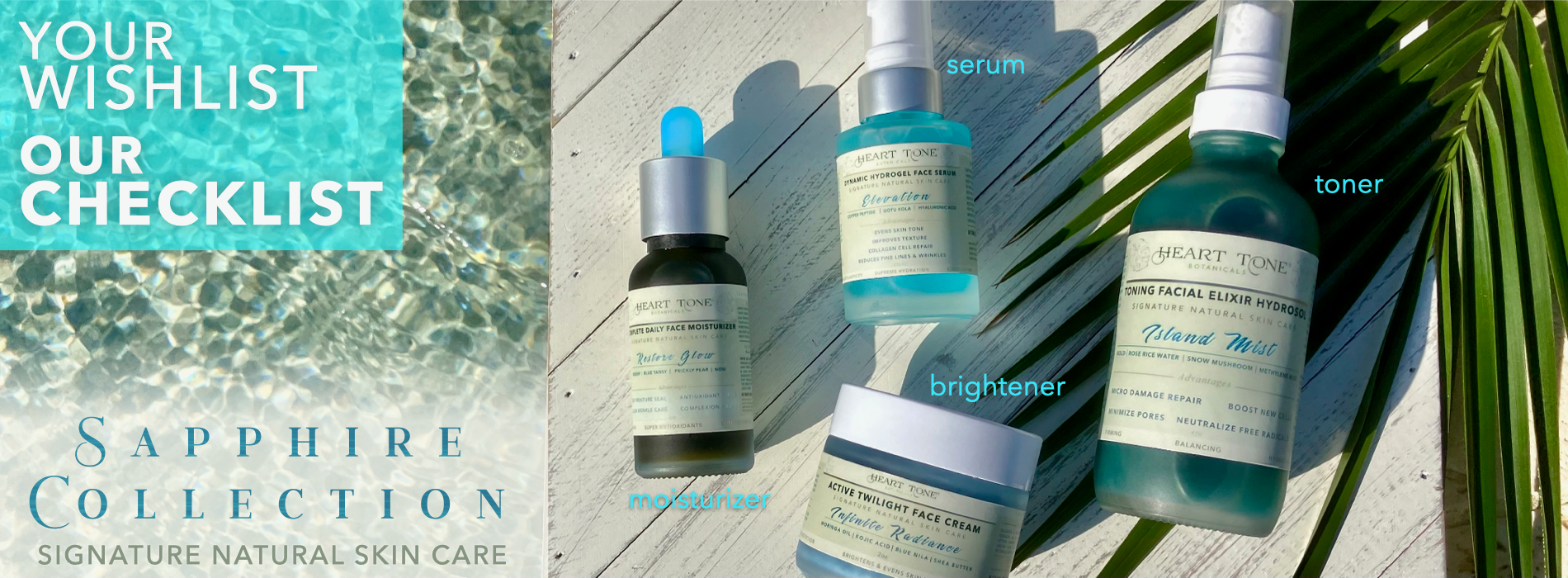
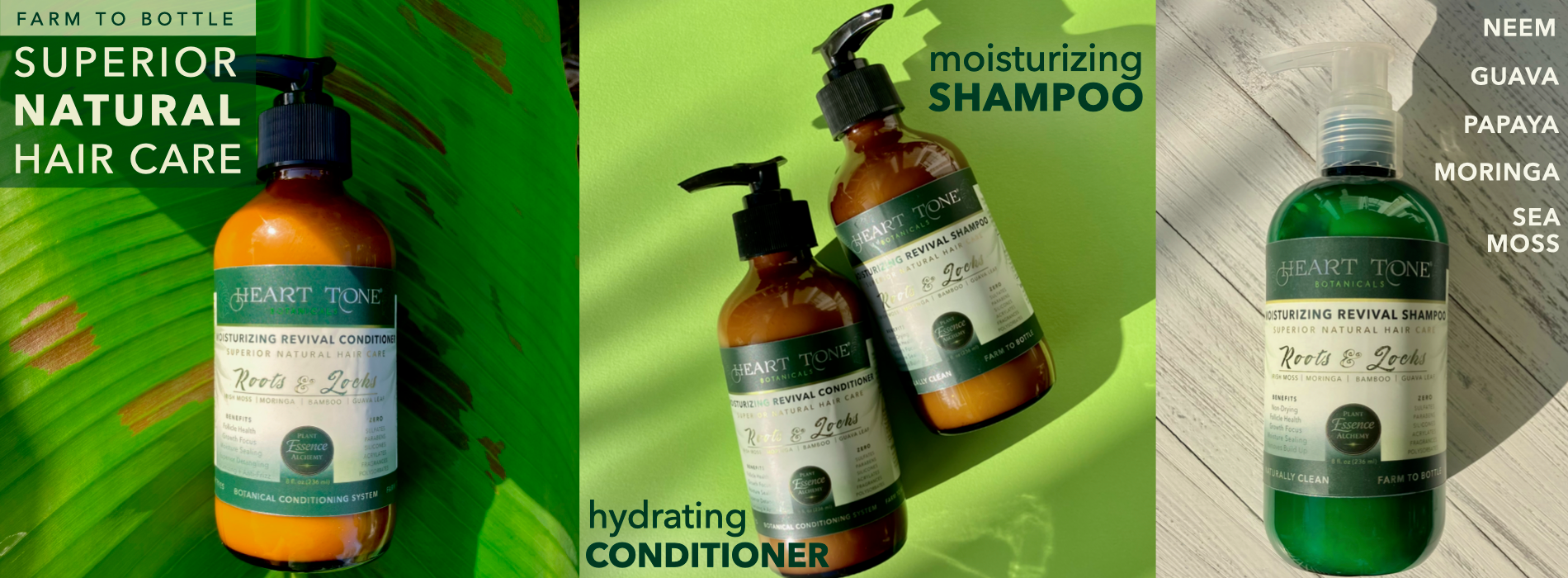
Heart Tone's Herbal Castile Liquid Soap is cold-processed from certified organic oils and infused with botanical herbs grown on their Florida farm. No synthetic surfactants. No artificial fragrance. No mystery ingredients. The scent comes from the plants themselves — the way it's supposed to be.
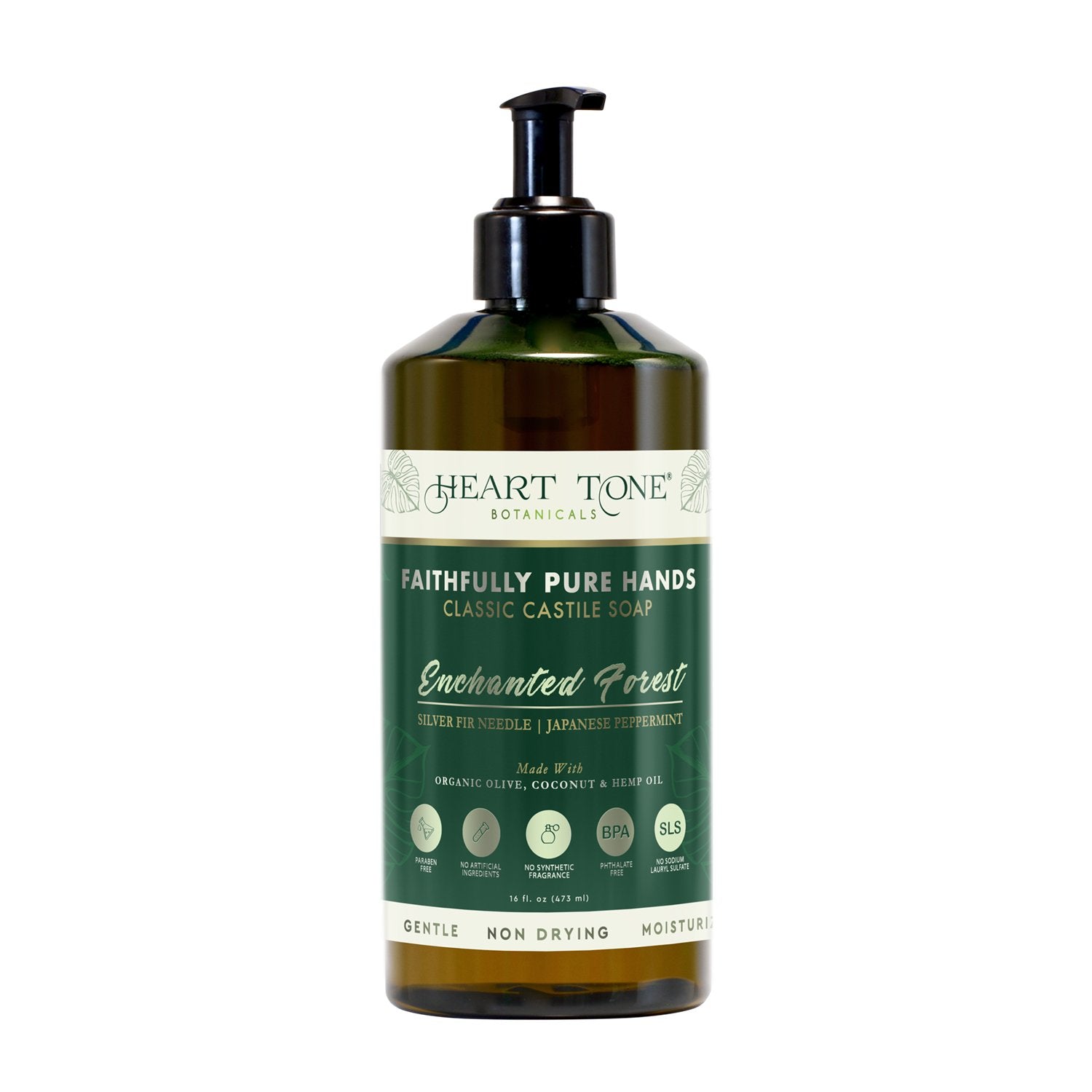
If you prefer a scented variety, the Faithfully Pure Hands Castile Soap line offers four botanically-sourced scent profiles — Enchanted Forest, Florida Citrus, Pure Native, and Wild Blossom — each formulated with the same clean-castile base, just with distinct essential oil blends for a sensory experience that doesn't compromise the formula.
For Dry Skin: What You Need Beyond the Cleanser
If you have chronically dry skin, the most important thing your body wash can do is not strip your moisture barrier. But for deep nourishment, follow your shower with a body butter or skin treatment.
Botanical Renew Body Butter is a rich, whip-style moisturizer made with shea butter, coconut oil, and farm-grown botanicals. Applied to damp skin post-shower, it absorbs quickly and creates a lasting moisture seal without the synthetic fragrance or petrochemical emulsifiers common in conventional lotions.
For targeted areas — razor burn, rough patches, elbows, knees, dry heels — the Botanical Skin Gel delivers concentrated botanical actives directly where needed. It's cooling, healing, and effective on both irritated and simply dehydrated skin.
For Exfoliation: The Forgotten Step
Most body washes don't exfoliate. If you want to genuinely refresh your skin — removing dead cell buildup that dulls texture and blocks moisture absorption — you need a dedicated exfoliant, not just a sudsy wash.
Moroccan Exfoliating Black Soap is a traditional pre-shower or hammam treatment made from saponified olive oil and Kessa plant. Used before your castile body wash, it loosens and lifts dead skin cells mechanically and enzymatically, leaving skin noticeably smoother after a single use. It's been used for centuries across North Africa for exactly this purpose — and it works.
How to Build a Clean Body Care Shower Routine
Here's a simple framework for a fully natural, effective shower ritual:
- Exfoliate 2-3x per week with Moroccan Black Soap on a loofah or exfoliating mitt
- Cleanse daily with Herbal Castile Liquid Soap or a Faithfully Pure scented variety — diluted in a foaming pump bottle if you prefer a lather closer to conventional body wash
- Pat dry (don't rub) to preserve moisture
- Apply body butter immediately to damp skin to lock hydration in before it evaporates
- Target dry patches with Botanical Skin Gel as needed
That's it. Five products, all clean, all botanical — no synthetic fragrance, no sulfates, no greenwashed labels with "natural" in the name and a page of chemicals underneath it.
The Bottom Line
Natural body wash is a category where marketing has wildly outpaced formulation. Most bottles on the shelf — even at natural grocery stores, even with certifications — contain ingredients that deserve scrutiny.
The good news: castile soap has been solving this problem for centuries, and when it's made from genuinely clean, farm-grown ingredients, it's still the best answer. Pair it with a real body butter and you have a daily skin care ritual that actually delivers on the promise that "natural" is supposed to make.
Your skin will notice the difference. So will you.
Browse Heart Tone Botanicals' full body care collection — all formulated from farm-grown botanicals with full ingredient transparency.

Leave a comment
This site is protected by hCaptcha and the hCaptcha Privacy Policy and Terms of Service apply.