












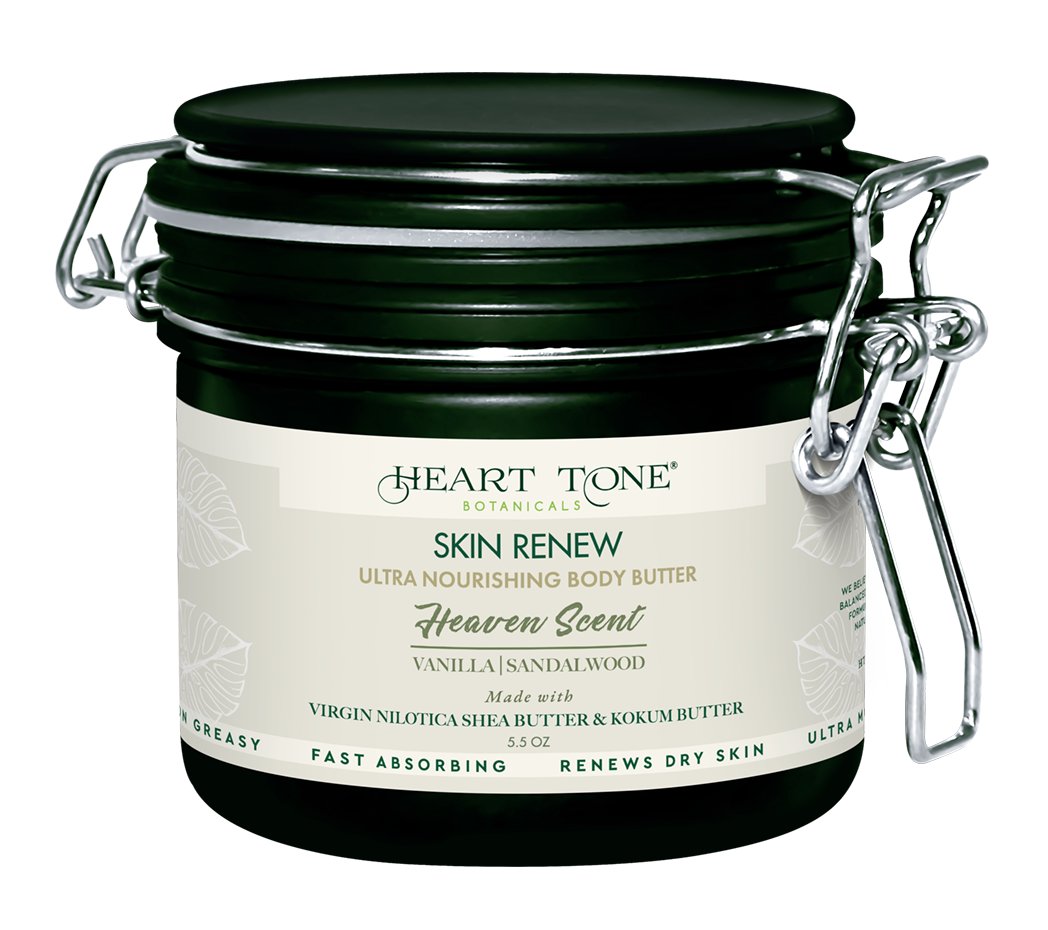
If you've ever reached for a lotion three times in a day and still felt like your skin was thirsty, body butter might be the answer you've been looking for. Unlike water-based lotions that evaporate off the skin within hours, natural body butter is a rich, anhydrous (water-free) blend of plant butters and oils that seals in moisture, nourishes at a cellular level, and leaves skin genuinely soft for hours.
This isn't a luxury upgrade. For people with dry, rough, or sensitive skin — especially elbows, knees, heels, and winter-parched legs — body butter is often the difference between skin that looks managed and skin that feels healthy.
What Is Natural Body Butter?

Body butter is a concentrated, oil-based moisturizer made from plant-derived butters — most commonly Nilotica shea butter, kokum butter, and meadowfoam seed oil — often blended with carrier oils like sweet almond, jojoba, or avocado.
Because it contains no water, it also needs no preservatives, emulsifiers, or synthetic stabilizers to stay shelf-stable. What you get is essentially a dense package of fatty acids, vitamins, and emollients with nothing added to make them work — they just do.
Compare that to most conventional lotions, which are often 60–80% water, requiring a long list of preservatives, emulsifying waxes, and fillers to hold the formula together. Not bad, necessarily — but not the same thing.
The Science Behind Why Body Butter Works So Well
Your skin has a natural protective barrier called the lipid matrix — a mix of fatty acids, ceramides, and cholesterol that holds moisture in and keeps irritants out. Dry, flaky, or cracked skin is often a sign that this barrier is depleted.
Natural body butters work by:
- Replenishing fatty acids that mirror your skin's own lipid structure
- Creating an occlusive layer that slows transepidermal water loss (TEWL)
- Delivering fat-soluble vitamins (A, E, and F) directly to the skin surface
- Softening the stratum corneum — the outermost layer — so skin feels immediately smoother
That's why dermatologists often recommend unrefined shea butter for very dry, reactive skin, very dry, reactive skin, and dry skin conditions. The fatty acid profile — particularly stearic acid, oleic acid, and linoleic acid — is genuinely beneficial, not just cosmetically pleasant.
Shea vs. Cocoa vs. Mango Butter: What's the Difference?
The best body butters use a blend because each butter brings something different to the formula.
Shea Butter
The workhorse of natural body care. Unrefined shea is rich in vitamins A, C, and E, plus a high concentration of unsaponifiables — compounds that aren't fully absorbed into the skin, leaving a protective surface film. Shea is traditionally used, which makes it especially good for sensitive or reactive skin.
Cocoa Butter
Higher in saturated fats than shea, cocoa butter melts at body temperature and sinks in quickly, leaving a smooth, almost silky finish. It's particularly good for stretch marks, scars, and rough skin on elbows and knees. It has a natural chocolatey scent that blends beautifully with essential oils.
Mango Butter
Often underrated, mango butter is light-textured for a butter — it absorbs readily without leaving a greasy residue — and it's high in vitamin E and antioxidants. It's an excellent option for those who want the benefits of body butter without a heavy feel, and it works particularly well on sensitive or breakout-prone skin.
A well-formulated natural body butter doesn't rely on just one of these. The best products combine them at thoughtful ratios to hit the right balance of moisture depth, absorption speed, and protective finish.
Body Butter vs. Lotion: Which Should You Use?
This comes down to skin type, climate, and use case.
| Factor | Body Butter | Body Lotion |
|---|---|---|
| Best for | Very dry, flaky, rough skin | Normal to mildly dry skin |
| Moisture depth | Deep, long-lasting | Light, surface-level |
| Absorption | Slower, more occlusive | Fast-absorbing |
| Preservatives needed | Usually none (no water) | Yes (water = microbial risk) |
| Best time to use | Post-shower, nighttime, winter | Daily, warm climates |
| Key ingredients | Shea, cocoa, mango, carrier oils | Water, glycerin, emulsifiers |
For serious dryness — cracked heels, very dry, reactive skin flares, post-summer skin repair, pregnancy belly — body butter wins every time. For everyday summer maintenance on normal skin, a good lotion does the job.
Many people use both: a light lotion in the morning and a richer body butter at night or after bathing when skin is still slightly damp, which helps lock in extra hydration.
How to Apply Natural Body Butter for Best Results
Application matters more than most people think. Follow this for maximum effect:
- Apply to damp skin. After a shower, pat (don't rub) dry and apply body butter while the skin is still slightly moist. The butter helps trap that surface water inside the skin.
- Use warm hands. Body butter softens with heat. Scoop a small amount, rub between your palms for 5–10 seconds, then smooth over skin.
- Start small. A little goes a long way. Start with less than you think you need — you can always add more.
- Focus on problem areas first: elbows, knees, heels, shins, and any patches of extra dryness.
- Allow time to absorb. Body butter is richer than lotion and may need a few minutes before you dress. Nighttime application solves this problem entirely.
What to Look For (and What to Avoid) in a Natural Body Butter
Look for:
- Unrefined butters — Unrefined shea is tan/ivory and has a slight nutty scent. Refined versions are bleached and deodorized, losing vitamins and beneficial compounds in the process.
- Short ingredient list — A good body butter doesn't need much. Butters, oils, and maybe essential oils for scent. If the list is long, something synthetic is probably hiding in there.
- No mineral oil or petrolatum — These create an occlusive barrier, but they don't nourish. They just sit on the skin surface. There's a reason they're cheap fillers.
- No synthetic fragrance — "Fragrance" is a catch-all that can include hundreds of undisclosed chemicals. Natural essential oils are the cleaner option.
- Cold-pressed carrier oils — Heat-extracted oils lose many of their beneficial compounds. Cold-pressed preserves the full fatty acid and antioxidant profile.
Avoid:
- Parabens, PEGs, and synthetic emulsifiers in products marketed as "natural"
- Products that list water near the top (it dilutes the butter and requires preservatives)
- Artificially whitened or odorless shea butter — it's been processed out of its best form
The Heart Tone Botanicals Approach to Body Butter
At Heart Tone Botanicals, we built our Botanical Renew Body Butter around the idea that body care shouldn't require a chemistry degree to trust.
The formula centers on unrefined shea, cocoa, and mango butter — each chosen for its specific contribution to the final texture and skin feel — blended with premium botanical oils and scented with true essential oils in three distinct expressions: Heavenly Scent, Bohemia, and Day Dream. No synthetic fragrance. No mineral oil. No fillers.
The result is a body butter that melts clean, absorbs without grease, and actually leaves skin soft the next morning — not just right after application.
We also carry a range of body care products designed to work together. If body butter is your moisture foundation, these pair naturally:
- Full Body Care Collection — everything from cleanse to hydrate
- Botanical Skin Gel — a lighter botanical option for warmer days or sensitive skin
- Ancient Organic Soaps — handcrafted bar soaps that cleanse without stripping your skin barrier
- Moroccan Exfoliating Black Soap — prep the skin with a gentle exfoliant before applying body butter for maximum absorption
The Best Time to Add Body Butter to Your Routine
If you've never used a body butter before, the easiest place to start is bedtime. Apply it after your evening shower, focus on your driest spots, and let it absorb overnight. By morning, the difference is usually noticeable — especially if you've been dealing with rough elbows, dry shins, or cracked heels.
Once you've felt that difference, it tends to become a permanent part of the routine. That's the thing about genuinely effective skincare: it doesn't need to be complicated, just honest — the right ingredients in the right amounts, doing what nature designed them to do.
Ready to try it? Explore the Botanical Renew Body Butter and the full Heart Tone Body Care collection — made with real plant ingredients, crafted with intention.

Leave a comment
This site is protected by hCaptcha and the hCaptcha Privacy Policy and Terms of Service apply.