

You pick up a bottle of moisturizer, flip it over, and squint at a wall of text that looks something like this: Aqua, Glycerin, Helianthus Annuus Seed Oil, Butyrospermum Parkii Butter, Phenoxyethanol. Most people put the bottle back down and just hope for the best.

But those labels are actually telling you something important — if you know how to read them. Once you crack the code, you'll be able to spot the difference between a product that's genuinely formulated to nourish your skin and one that buries a trendy ingredient so deep in the list it barely exists. At Heart Tone Botanicals, we believe in full transparency, so we want to give you the tools to read any label — including ours.
What Is an INCI List?
Every cosmetic product sold in the U.S., EU, Canada, and most of the world is required to disclose its ingredients using INCI names — the International Nomenclature of Cosmetic Ingredients. This is a global standardized naming system, which means the same ingredient has the same official name no matter which country made the product or what brand name is on the front.
That's why skincare labels look so intimidating. INCI uses scientific and Latin naming conventions:
- Plant-derived ingredients are listed in Latin binomial form — Helianthus Annuus Seed Oil is sunflower oil; Butyrospermum Parkii Butter is shea butter; Rosa Canina Fruit Oil is rosehip oil.
- Synthetic or processed ingredients use chemical names — Glycerin (a humectant), Phenoxyethanol (a common preservative).
Once you know that two-part Latin names almost always mean "plant ingredient," the list becomes a lot less scary. You're not looking at a chemistry experiment — you're looking at a garden, translated into Latin.
The Most Important Rule: Ingredient Order Matters
Cosmetic ingredients are listed from highest to lowest concentration — with one important caveat. Ingredients present at 1% or less can be listed in any order after the higher-concentration ingredients.
What this means in practice:
- The first five to six ingredients typically make up the majority of the formula — often 80–90% of the product by weight.
- If a product markets itself as a "vitamin C serum" but ascorbic acid appears near the very bottom of a long list, you're likely getting a cosmetic with a trace of vitamin C, not a therapeutic amount.
- Common formula bases like Water (Aqua), Aloe Vera, or Glycerin almost always appear first in aqueous products.
This is where a lot of marketing sleight-of-hand happens. A brand might plaster "with 12 plant botanicals" on the front label — but if those botanicals are all listed at the very end, each one is likely present in a fraction of a percent. That's not necessarily fraud, but it's worth knowing when you're comparing products.
How to Decode Scientific-Sounding Names
Here's a quick reference for common categories you'll see on labels:
Humectants (draw moisture into skin)
- Glycerin
- Sodium Hyaluronate (hyaluronic acid)
- Propanediol, Butylene Glycol
Emollients and occlusives (seal moisture in)
- Jojoba Oil → Simmondsia Chinensis Seed Oil
- Shea Butter → Butyrospermum Parkii Butter
- Sunflower Oil → Helianthus Annuus Seed Oil
- Coconut Oil → Cocos Nucifera Oil
Preservatives (keep the product safe)
- Phenoxyethanol — one of the most common, widely regarded as safe
- Sodium Benzoate, Potassium Sorbate — natural-origin preservatives common in clean formulas
- Ethylhexylglycerin — often paired with phenoxyethanol to reduce required concentration
Actives (the ingredients doing specific work)
- Niacinamide — brightening, barrier-supporting
- Retinol / Bakuchiol — skin renewal
- Ascorbic Acid / Sodium Ascorbyl Phosphate — vitamin C forms
- Salicylic Acid — exfoliation, acne
- Allantoin — soothing, works at very low concentrations
The Fragrance Problem
Here's one ingredient entry that deserves its own section: Fragrance (or Parfum in EU-labeled products).
Fragrance is a legally protected "trade secret" ingredient in the U.S. A product can list a single word — "Fragrance" — and that single entry can contain anywhere from a handful to hundreds of individual compounds. Many of these compounds are known sensitizers and potential allergens, particularly for people with reactive skin, eczema, or rosacea.
In the EU, 26 specific fragrance allergens must be individually disclosed when present above a certain threshold, which is why you sometimes see long, unfamiliar-looking names at the end of European-market labels like Limonene, Linalool, Geraniol, Citronellol. These are naturally occurring fragrance components found in essential oils — but they can still trigger reactions in some people.
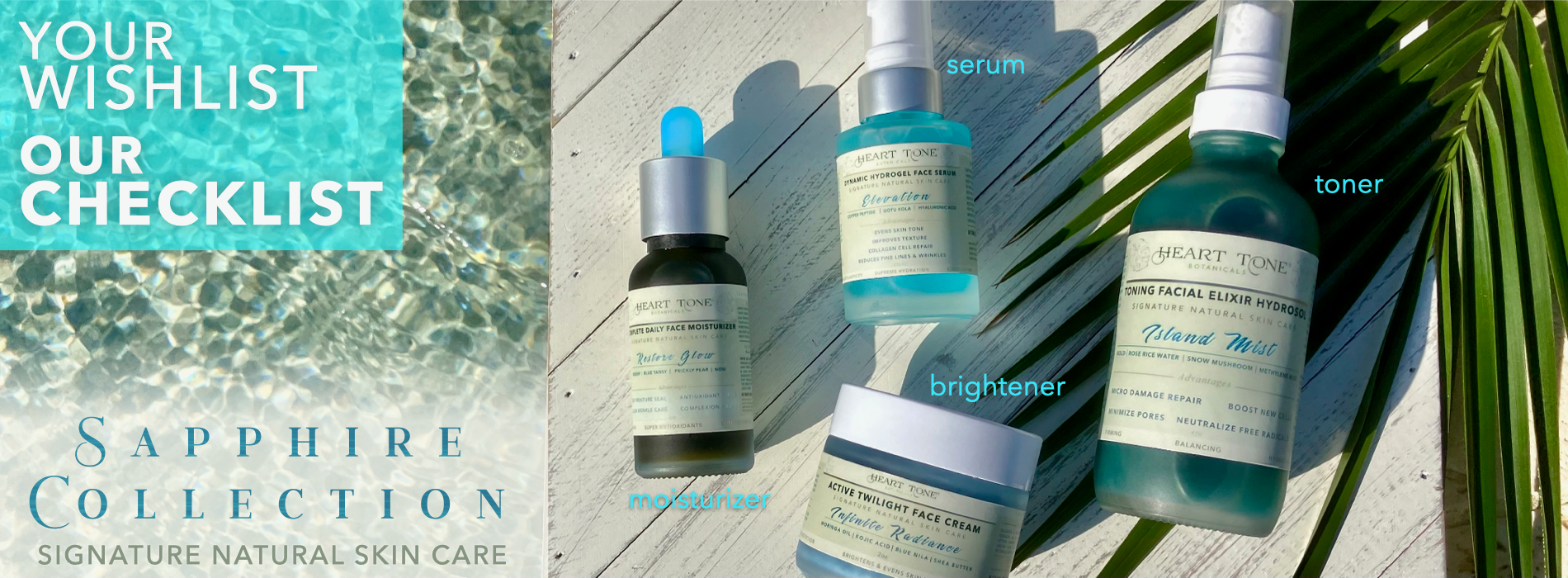
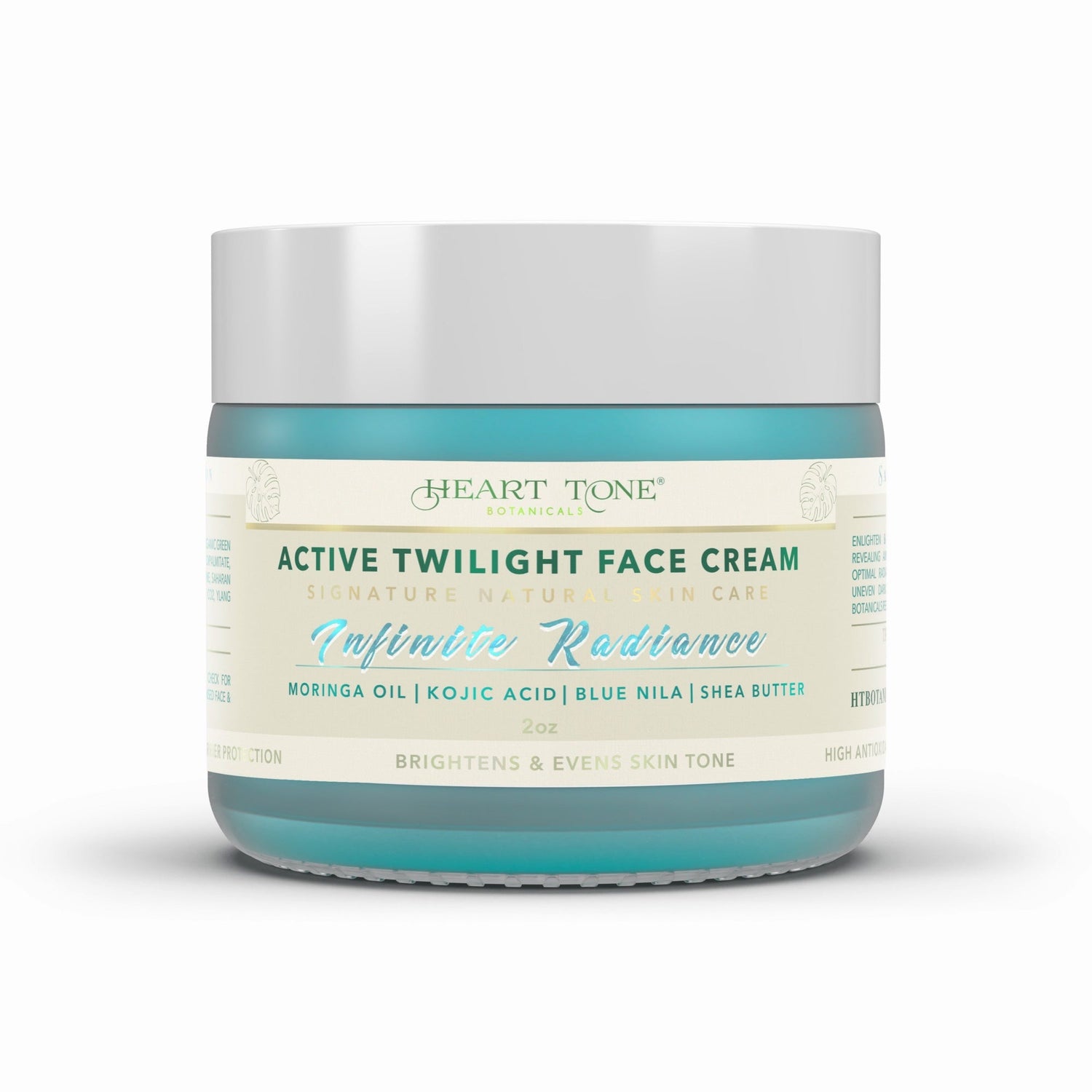
At Heart Tone Botanicals, we don't use synthetic fragrance in our products. Where a product has a scent, it comes from the botanicals and essential oils themselves — and those are disclosed individually, not hidden under a single "fragrance" listing. Our Active Twilight Face Cream and Dynamic Hydrogel Face Serum, for example, are formulated without any synthetic fragrance.
Watch for These Red Flags
Now that you understand the basics, here are the patterns that should prompt a closer look:

1. Hero ingredient buried at the bottom
If the featured ingredient — the one on the front label — appears after preservatives and colorants, it's likely present in a cosmetically negligible amount. Real actives need to be present at meaningful concentrations to do anything.
2. "Fragrance" or "Parfum" high on the list
If fragrance appears in the top half of the ingredient list, it's present in a substantial amount. That's worth paying attention to if your skin tends to react, or if you're trying to minimize your exposure to undisclosed compounds.
3. A list that only shows "key ingredients"
Some brands — especially online — only show a curated list of their star ingredients rather than the full INCI disclosure. That's a red flag. The full list should always be available on the packaging and, ideally, on the product page. If a brand won't show you everything that's in the bottle, ask yourself why.
4. Vague "extract blend" or proprietary complex names
These can sometimes obscure what's actually inside. Reputable brands will tell you exactly what's in their "botanical complex" if you ask.
Why Latin Plant Names Are Actually a Good Sign
Here's something counterintuitive: the more Latin plant names you see on a label, the more likely you're looking at a thoughtfully formulated product. Those names mean a brand is using real botanical ingredients and disclosing them properly by INCI standards — not hiding them behind vague marketing language.
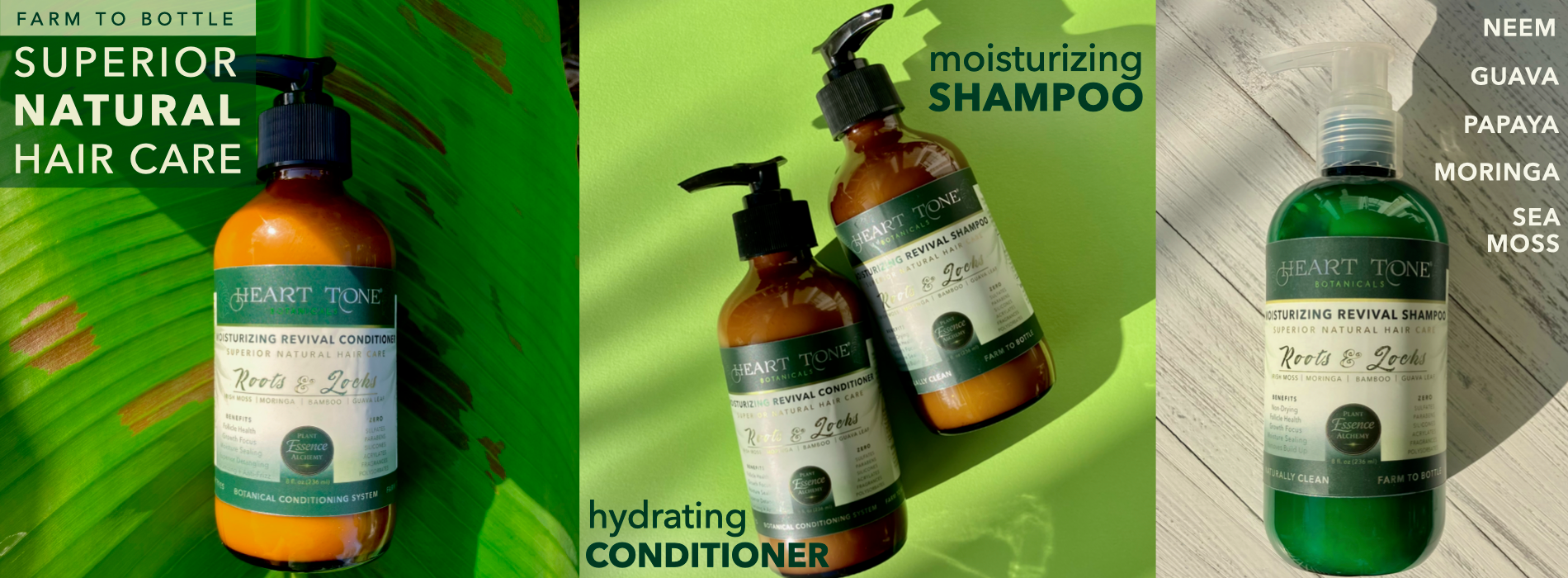
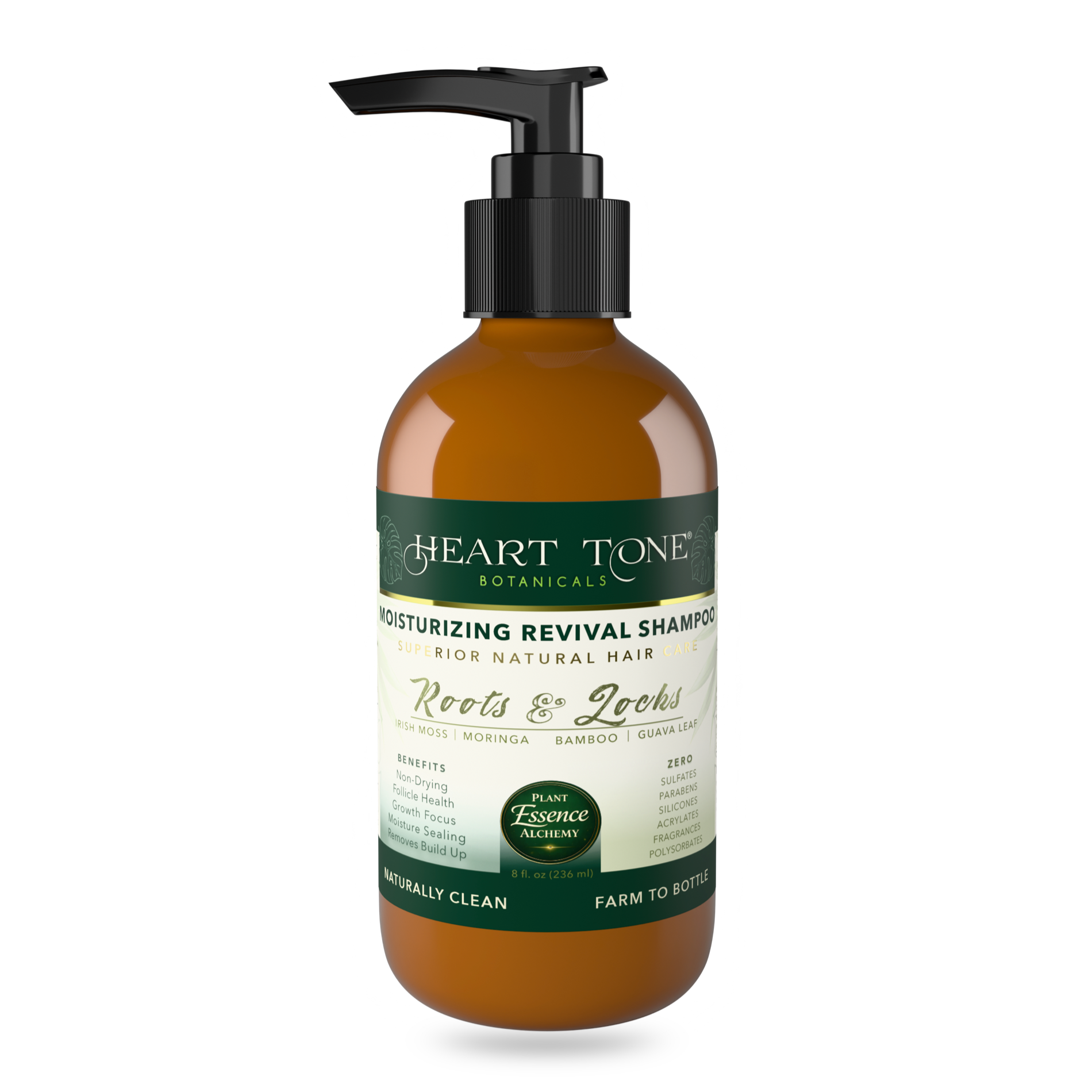
Our products are formulated with farm-grown botanicals from JD's property in Vero Beach, Florida. Ingredients like moringa, aloe vera, and papaya leaf are grown and processed close to the source — not imported as concentrated extracts from distant supply chains. When you see Moringa Oleifera Leaf Extract or Aloe Barbadensis Leaf Juice near the top of one of our labels, that ingredient is actually present in a meaningful amount. That's the point of the farm-to-bottle model: the botanicals are the formula, not the afterthought.
You'll see this in products like our Botanical Renew Body Butter, our Botanical Skin Gel, and our Ancient Organic Soap line — where the ingredient list reflects what's actually on the front of the bottle.
Tools That Can Help
Reading labels takes practice, but you don't have to do it alone. A few resources worth bookmarking:
- EWG Skin Deep (ewg.org/skindeep) — rates ingredients and products on a hazard scale from 1–10 based on available safety data. Not perfect, but useful for flagging ingredients you want to research further.
- INCIDecoder (incidecoder.com) — paste any ingredient name and get a clear explanation of what it is, what it does, and how common it is in cosmetics.
- Think Dirty app — scan a product barcode to get a quick breakdown of ingredients and safety concerns.
- Paula's Choice Ingredient Dictionary — thorough, research-backed explanations of virtually every cosmetic ingredient you might encounter.
A Simple Label-Reading Checklist
Next time you're evaluating a product, run through this quick mental checklist:
- Is the full INCI list visible? If not, that alone is worth noting.
- What are the first five ingredients? Those make up most of the product.
- Where is the hero ingredient? Is it in the top third of the list, or buried near the bottom?
- Does "Fragrance" or "Parfum" appear? If so, how high on the list?
- Do you see plant Latin names? Good sign — they're real botanicals, not marketing copy.
- Are preservatives present? They should be. A well-formulated product without proper preservation is a safety risk, not a selling point.
Reading labels isn't about fear — it's about informed confidence. Once you understand what you're looking at, you stop feeling like a product's customer and start feeling like its editor. You get to decide what goes on your skin, with full information.
That's the standard we hold ourselves to at Heart Tone Botanicals. Every ingredient in every product is disclosed on the label and on the product page — because transparency isn't a marketing angle for us. It's how we were built, from JD's farm in Florida to your bathroom shelf.
Browse our full product line — and feel free to read every single label.

Leave a comment
This site is protected by hCaptcha and the hCaptcha Privacy Policy and Terms of Service apply.