

Most people build their skincare routine the wrong way — not because they're careless, but because the beauty industry has trained us to reach for more. More steps. More actives. More products promising to fix things the last product broke. The result? Sensitized skin, a cluttered bathroom shelf, and the nagging feeling that nothing is actually working.

Here's a different approach. A clean skincare routine isn't about stripping everything down to one product and hoping for the best — it's about understanding what your skin actually needs, choosing ingredients that support it rather than stress it, and building a ritual you can sustain. Step by step.
Why Most Skincare Routines Are Built Backwards
Walk into any beauty retailer and you'll find hundreds of products each promising to be the answer. Exfoliating acids. Brightening serums. Barrier-repair creams. Retinol layered over vitamin C layered over AHA. The message is that more complexity equals more results.
In practice, the opposite is true. Synthetic fragrances mask irritation. Silicones create the illusion of smooth skin while trapping buildup underneath. PEGs and mineral oil sit on top of the skin rather than working with it. When you layer product after product of synthetic ingredients, you're not treating your skin — you're managing the symptoms of a stressed barrier with the very things causing the stress.
A natural skincare routine works differently. Plant-based botanicals are biocompatible — they speak your skin's language. When you reduce the noise and focus on clean, functional ingredients in the right sequence, your skin gets a chance to regulate itself. And that's when you start seeing real, lasting results.
The 4 Core Steps That Actually Matter
A complete non-toxic skincare routine doesn't require ten products. It requires the right four, done consistently.
Step 1: Cleanse
Cleansing is the foundation, and it's also where most routines go wrong first. Foaming cleansers with sulfates strip the skin of its natural oils, leaving the barrier compromised before you've even started. A clean cleanser should remove impurities and environmental residue without disrupting your skin's pH or moisture barrier.
Signs your cleanser is too harsh: tightness immediately after rinsing, dryness that appears within an hour, or the sensation of "squeaky clean" skin. That squeaky feeling is your barrier crying, not a sign you got clean.
Step 2: Tone and Prep
Toning is the most underestimated step in skincare — and the most skipped. A quality toner does three things: it restores your skin's pH after cleansing, it preps the surface so your serum can actually absorb, and it delivers a light layer of hydration before you seal it in.
Alcohol-based toners tighten pores temporarily but strip the barrier further. What you want instead is a botanical hydrosol or a gentle pH-balancing toner that works with your skin chemistry, not against it.
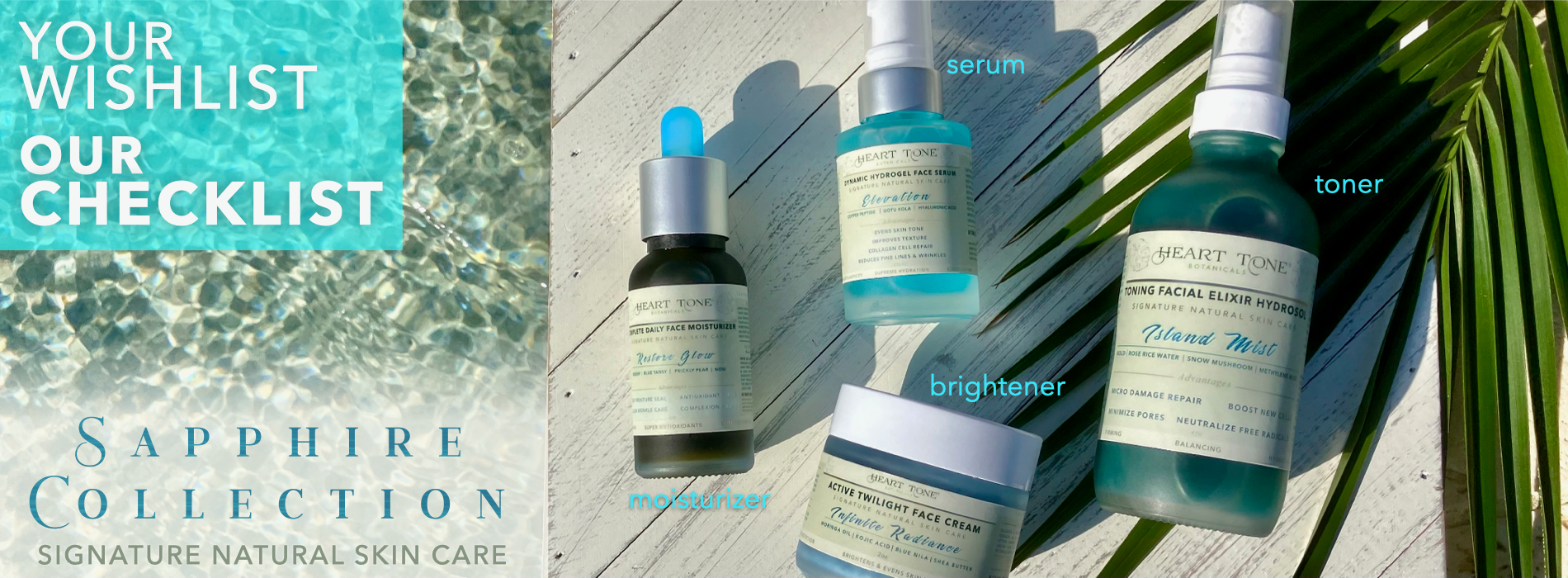
Heart Tone's Island Mist Toning Facial Elixir Hydrosol was formulated specifically for this step — a living botanical hydrosol misted directly onto the skin to prep, hydrate, and balance in seconds.
Step 3: Treat (Serum)
Your serum is where targeted treatment happens. This is the step where people tend to go overboard — layering multiple actives that conflict with each other, cause irritation, and ultimately do more harm than good.
In a clean routine, less is more. Choose one serum that addresses your primary concern and do it well. A hydrating serum supports the moisture barrier. An antioxidant serum defends against environmental stress. A brightening botanical serum addresses uneven tone over time — gently, without acids that sensitize.
The Complete Face Ritual includes Heart Tone's Dynamic Hydrogel Face Serum, a botanical-dense formula that delivers deep hydration while supporting skin elasticity — no synthetic thickeners, no fragrance, just plant intelligence at work.
Step 4: Moisturize
The final step is to lock in everything you've applied and reinforce the skin barrier. This is where the right moisturizer matters enormously. Film-forming ingredients like mineral oil or heavy silicones sit on top of the skin and create a temporary plump effect — but they can also trap congestion and prevent your skin from breathing.
A clean moisturizer uses plant oils and botanical emollients that mimic your skin's own lipids, supporting the barrier from within rather than just coating the surface.
Heart Tone's Complete Daily Face Moisturizer — part of both the Complete Face Ritual and the AM/PM Face System — does exactly this: rich botanical hydration that absorbs fully and leaves your skin balanced, not greasy.
What "Clean" Actually Means in a Routine Context
Here's something the clean beauty conversation often misses: it's not just about the hero products. You can swap to a clean serum and a clean moisturizer, but if your cleanser still contains sulfates and your toner still contains synthetic fragrance, you're layering clean over stress. The effects cancel each other out.
Building a truly organic skincare routine means auditing the whole stack together — each product, in sequence, as a system. Does your cleanser preserve the barrier your moisturizer is trying to support? Does your toner's pH work with your serum's formulation? Are there synthetic fragrance compounds in one product that will undo the calming botanicals in another?
This is why a curated system designed to work together is so much more effective than assembling products from five different brands. When every step is formulated around the same clean philosophy and the same botanical foundation, the whole becomes more than the sum of its parts.
AM vs PM: What Changes and Why
Your morning and evening routines have different jobs, and your products should reflect that.

Morning Routine
In the morning, your skin has been regenerating overnight and needs to be prepped to face the day. Your AM routine priorities:
- Gentle cleanse — a light rinse or mild cleanse to remove overnight buildup without stripping
- Tone and prep — restore balance, prime for absorption
- Lightweight serum — antioxidant protection against UV and environmental stress
- Moisturizer + SPF — hydration and sun protection, every single morning
SPF is non-negotiable in a clean morning routine. UV exposure is the single largest driver of premature aging, hyperpigmentation, and barrier breakdown. Look for mineral SPF (zinc oxide or titanium dioxide) over chemical sunscreen filters if you're committed to clean formulations.
Evening Routine
At night, your skin shifts into repair mode. The PM routine is where you can lean into richer, more active botanicals — your skin is more receptive, there's no sun exposure to worry about, and the longer application window lets actives do their work.
- Double cleanse if needed — especially if wearing SPF or makeup
- Tone — restore and prep
- Richer treatment serum — focus on repair, hydration, and regeneration
- Richer night moisturizer — support overnight recovery without clogging
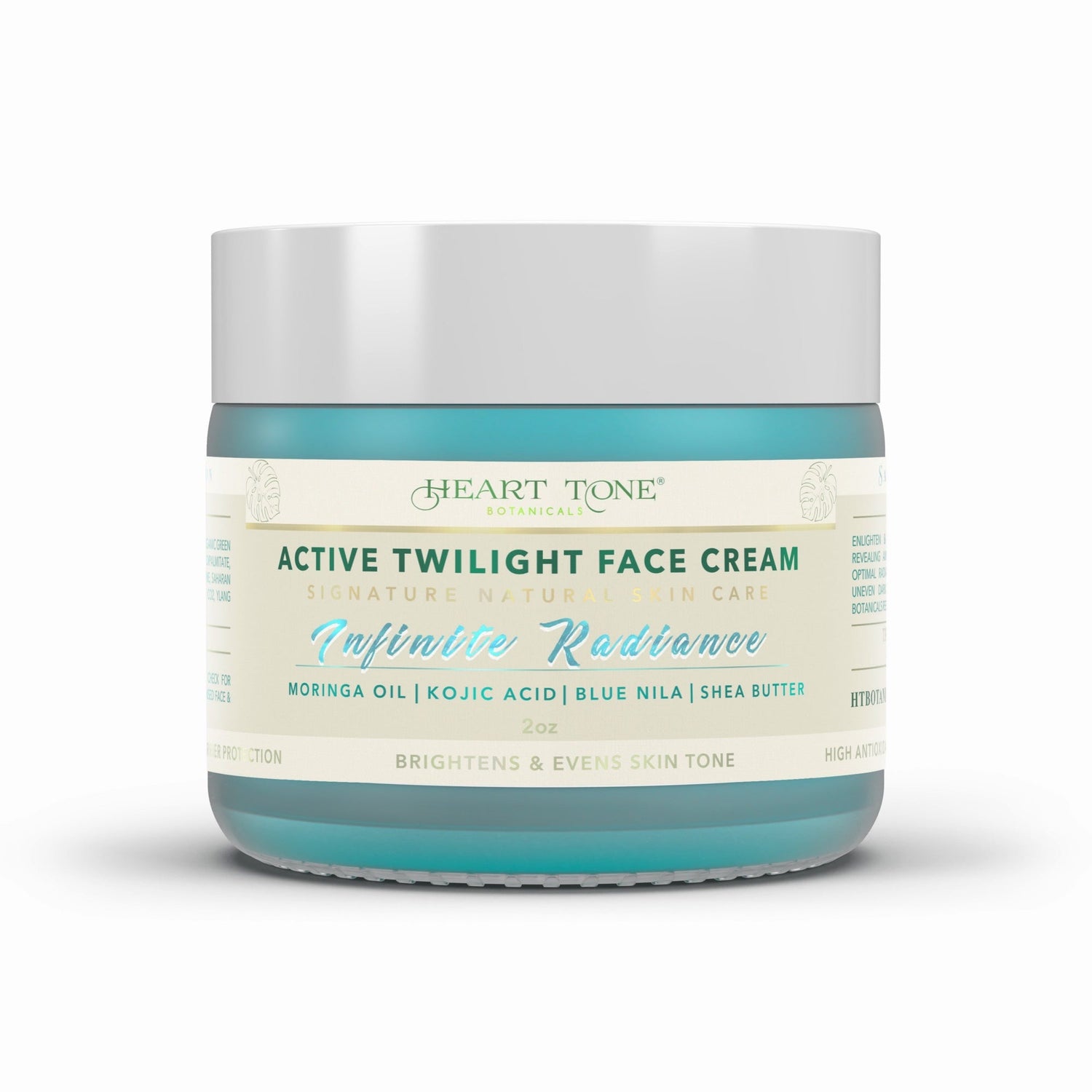
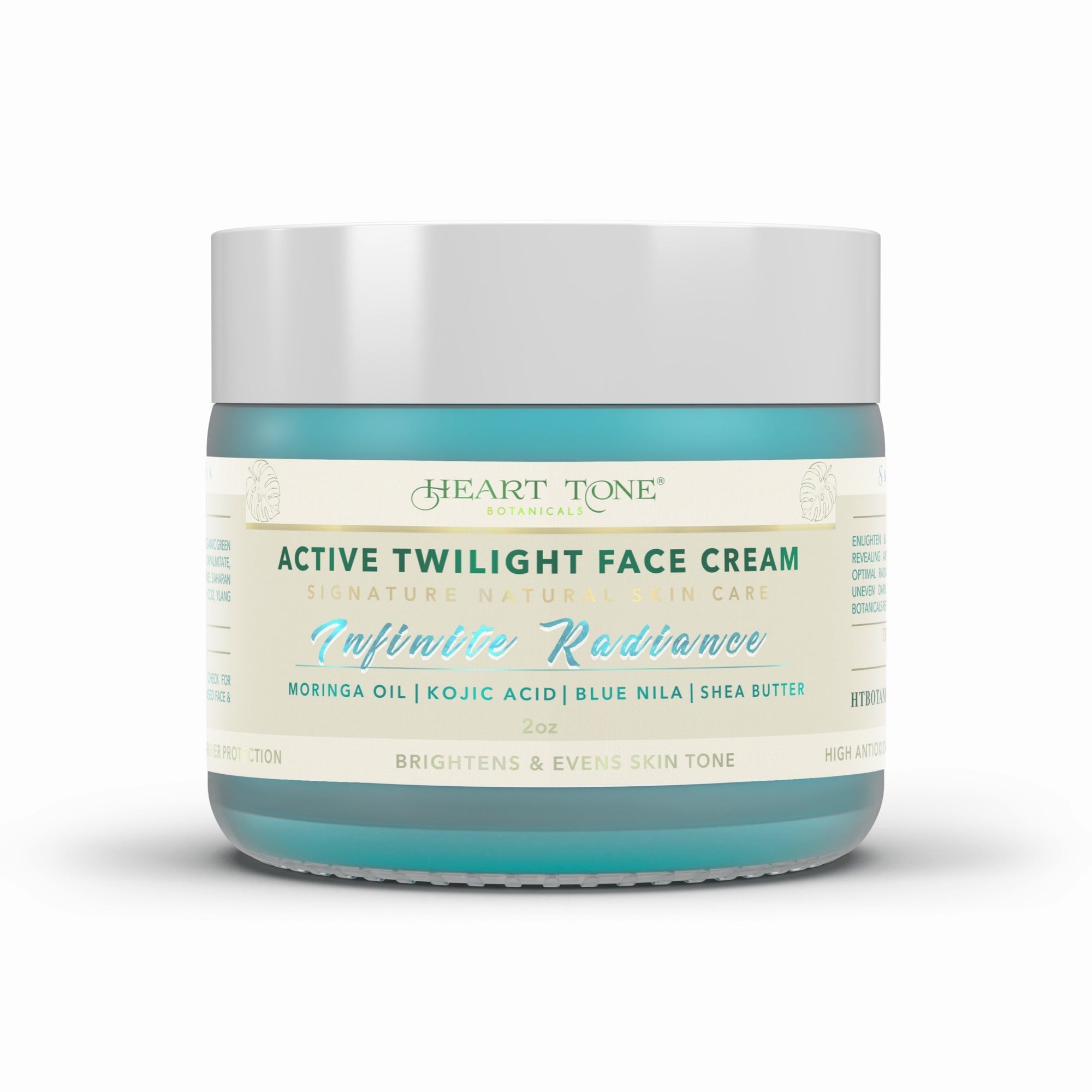
Heart Tone's Active Twilight Face Cream was formulated specifically for the PM step — a richer botanical emulsion designed to support the skin's overnight regeneration cycle with farm-grown plant actives.
The AM/PM Face System takes the guesswork out of this entirely — every product is designed for its specific time of day, so your morning and evening routines work in sync rather than competing.
How to Read Your Skin's Signals
A well-built clean routine creates less drama, not more. Here's how to know whether your routine is actually working:
Signs your routine is working:
- Skin feels balanced within 30 minutes of application — not tight, not greasy
- Fewer breakouts over 4–6 weeks, not more
- Texture becomes more even without manual exfoliation
- Less sensitivity to wind, cold, and heat over time
- Makeup sits better on the skin
Signs something is disrupting your barrier:
- Persistent redness or flushing after application
- A "purging" phase that never ends — real purging from active botanicals resolves in 2–4 weeks
- Increased sensitivity to temperature or touch
- Skin feels tight or uncomfortable after cleansing
- New breakouts in areas that weren't previously prone to congestion
If you're seeing disruption signals, the most common culprits are: your cleanser stripping too aggressively, a fragrance compound in one of your products, or two actives conflicting. Simplify before adding anything new.
Ingredients to Audit Out of Your Current Routine
If you're ready to go non-toxic, start here. These are the most common offenders in conventional skincare:
- Synthetic fragrance — labeled as "fragrance" or "parfum," this single ingredient can contain dozens of undisclosed compounds, many of which are known irritants and endocrine disruptors. It's the number one cause of contact sensitivity in skincare.
- Parabens (methylparaben, propylparaben, butylparaben) — preservatives with documented hormonal activity. Even at low concentrations, cumulative daily exposure adds up.
- Silicones (dimethicone, cyclopentasiloxane, cyclomethicone) — create a smooth texture and lock in moisture short-term, but can trap congestion and degrade naturally over time. Not inherently harmful, but not serving your barrier either.
- PEGs (polyethylene glycols) — synthetic emulsifiers that can enhance penetration of other ingredients — including ones you'd rather keep out. Often contaminated with 1,4-dioxane, a probable carcinogen.
- Mineral oil — a petroleum derivative that sits on top of the skin. Creates a temporary moisture-trapping effect but contributes nothing to skin health and can clog pores.
You don't have to throw everything out at once. Audit as products run out, and replace them with clean alternatives one step at a time.
Why a Complete System Beats Assembling Products Yourself
One of the most common frustrations with building a natural skincare routine from scratch is the research overhead. You find a clean cleanser — but does it work with your toner? You find a botanical serum — but will it layer well under your moisturizer? Does anything in the lineup contain hidden fragrance or synthetic fillers that undo everything else?
This is exactly why Heart Tone Botanicals built complete systems rather than selling individual products in isolation.
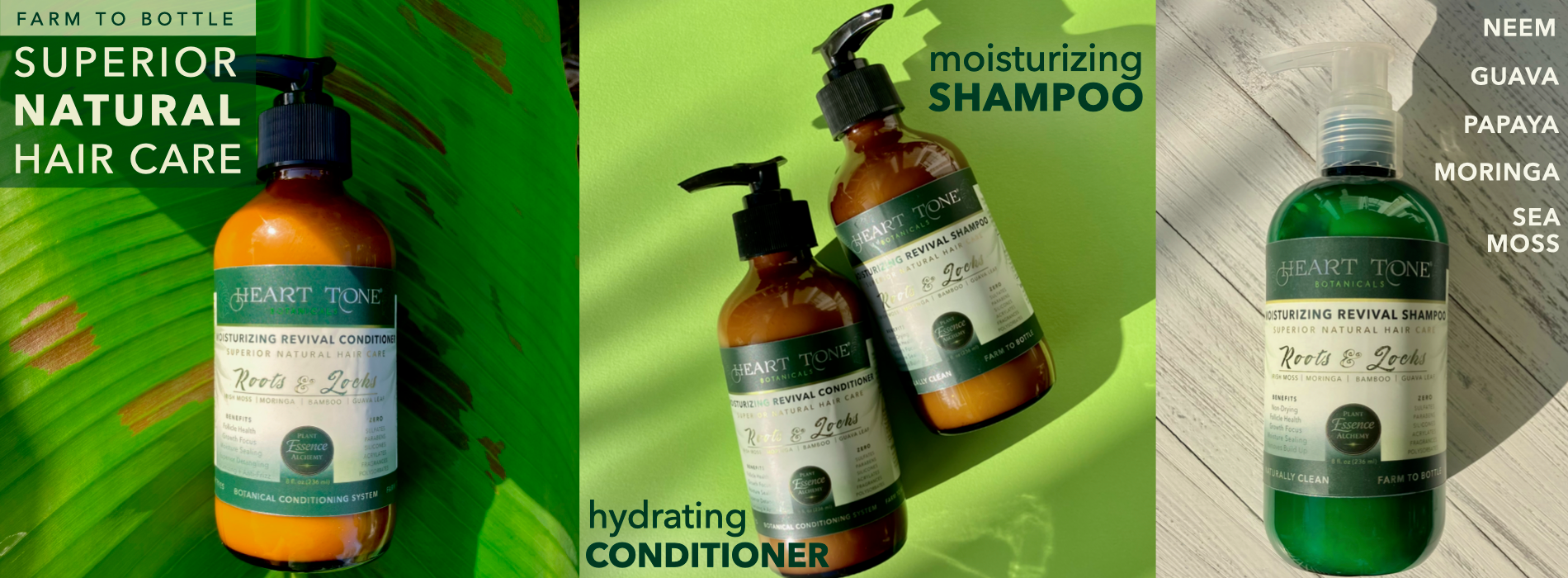
Every product in the Heart Tone line is formulated around the same clean standard: farm-grown botanicals from JD's Vero Beach farm, no synthetic fragrance, no parabens, no unnecessary fillers. When you use a Heart Tone system, you know the whole stack is working together — not just each individual product.
The The Complete Face Ritual gives you every step of a clean daily routine in one curated system — cleanser, hydrosol toner, serum, moisturizer, and treatment cream — formulated to work as a complete protocol.
The The AM/PM Face System takes it further, with dedicated AM and PM formulations for each step. If you're serious about clean skincare and want the results that come from a truly optimized routine, this is the most direct path.
No research. No compatibility concerns. Just clean, farm-to-face botanicals doing exactly what they're designed to do.
Ready to Build Your Clean Routine?
The path to healthy, balanced skin isn't complicated — but it does require the right foundation. Start with the right products in the right order, formulated with ingredients your skin can actually recognize and use.
Explore the full line and find the system that fits your skin:
- 👉 The Complete Face Ritual — everything you need for a clean daily routine
- 👉 The AM/PM Face System — dedicated AM and PM formulations for maximum results
- 👉 Shop All Facial Care — explore the full Heart Tone botanical skincare collection
Your skin doesn't need more products. It needs the right ones.

Leave a comment
This site is protected by hCaptcha and the hCaptcha Privacy Policy and Terms of Service apply.