

If you've ever stepped out of the shower and reached for a lotion that just doesn't quite cut it — skin still tight, elbows still rough, heels still cracked — you're not imagining things. Most conventional lotions are 60–80% water with synthetic thickeners and fragrance added in. They feel good for about twenty minutes, then your skin is back where it started.

Natural body butter works differently. Here's why — and how to find one that's actually worth using.
What Is Natural Body Butter?
Body butter is a concentrated moisturizer made almost entirely from plant butters and carrier oils — no water base, no synthetic stabilizers needed. The most common base ingredients are shea butter, cocoa butter, mango butter, and coconut oil, though formulas vary widely by brand and intended use.
Because there's no water to evaporate, body butter delivers a much higher concentration of skin-nourishing fats per application. A small amount goes a long way, and the hydration tends to last significantly longer than conventional lotion.
What makes a body butter natural? Look for formulas that skip:
- Mineral oil or petrolatum (synthetic, petroleum-derived occlusives)
- Parabens and synthetic preservatives
- Artificial fragrance (listed as "fragrance" or "parfum")
- PEGs and other chemical emulsifiers
A clean ingredient list should be short, readable, and plant-derived from start to finish.
The Real Benefits of Natural Body Butter for Dry Skin
1. Deep, Lasting Moisture That Doesn't Evaporate
Shea butter is rich in oleic and stearic fatty acids — the same fats that keep your skin's natural barrier intact. When applied to damp skin (more on that below), body butter seals moisture in rather than just sitting on the surface. You'll notice the difference within a day or two of consistent use: skin that stays soft throughout the day, not just right after application.
2. Barrier Repair for Chronically Dry Skin
Dry skin is often a barrier problem. The outermost layer of the skin — the stratum corneum — is supposed to hold moisture in, but when it's depleted of lipids (from over-washing, harsh soaps, dry climates, or age), it can't do its job. Natural plant butters are lipid-rich by nature. They help replenish what's missing and physically reduce transepidermal water loss, the technical term for moisture escaping through the skin.
This is especially important in winter or in low-humidity environments, where skin can lose moisture quickly without adequate barrier support.
3. Soothes Irritation, Redness, and Sensitivity
Shea butter contains triterpene alcohols, which have documented anti-inflammatory properties. If your skin tends toward redness, sensitivity, or occasional flares of dry-skin-related irritation, a natural body butter without synthetic fragrance is often significantly gentler than conventional options. The fewer the ingredients, the lower the risk of triggering a reaction.
4. Actually Works on Problem Spots
Rough elbows. Cracked heels. Dry shins. Ashy knees. These are places where lotion simply isn't rich enough. Body butter's thicker, more occlusive texture is designed for exactly this — concentrated care for the spots that need it most. A small amount worked into cracked heels and covered with socks overnight produces noticeable softness within a few applications.
5. No Toxins, No Guessing
Your skin is your largest organ and it absorbs a portion of what you put on it. With conventional body moisturizers, that can mean daily low-level exposure to synthetic fragrance (a catch-all term for hundreds of undisclosed chemicals), parabens, and petroleum derivatives. A clean natural body butter removes that guesswork entirely — what you see on the label is exactly what goes on your skin.
How to Use Natural Body Butter for Best Results
Apply on damp skin. This is the most important tip. After showering, pat down (don't fully dry off) and apply body butter while your skin is still slightly wet. The butter seals the existing moisture in. On completely dry skin, it still works — but the damp-skin method dramatically amplifies results.
Use a small amount. A little goes a long way with body butter. Start with a pea-sized amount per limb and work up from there. If it feels greasy, you used too much or applied it to dry skin.

Focus on the driest zones first. Elbows, knees, heels, shins, and the backs of hands are typically the driest areas on the body. Give them extra attention before moving to less-affected skin.
Consider an overnight treatment. For very dry or cracked skin, apply a generous layer of body butter before bed. Wear lightweight cotton socks over heels and you'll wake up to noticeably softer skin. The body's overnight repair cycle plus the occlusive butter creates a compounding effect.
Be consistent. Unlike lotion, which can give the appearance of quick fix and then disappear, body butter works best when used daily over time. The cumulative effect on skin texture and barrier health is what makes the real difference.
Body Butter vs. Lotion: When to Use Each
This is a common question and the answer is simple:
- Body lotion: Best for everyday, all-over use on normal to mildly dry skin when you want something lighter that absorbs quickly. Good for before getting dressed.
- Body butter: Best for dry to very dry skin, problem areas, overnight use, or anytime you want serious, lasting hydration. Slightly heavier feel but unmatched results for thirsty skin.
Many people use both: a light lotion for most of the body, and body butter reserved for chronically dry zones. Others switch entirely to body butter once they experience the difference. There's no wrong approach — it depends on your skin type and how much moisture it actually needs.
What to Look for in a Natural Body Butter
Not all "natural" body butters are created equal. Here's what a high-quality formula should have:
- Shea butter as a primary ingredient — look for it near the top of the ingredient list, not buried at the bottom
- A complementary oil base — jojoba, sweet almond, argan, or coconut oil add skin-softening fatty acids and help with spreadability
- No mineral oil or petrolatum — these are cheap occlusives derived from petroleum that can sit on the skin without nourishing it
- No artificial fragrance — if scented, the scent should come from essential oils, not "fragrance"
- A short, readable ingredient list — complexity isn't quality
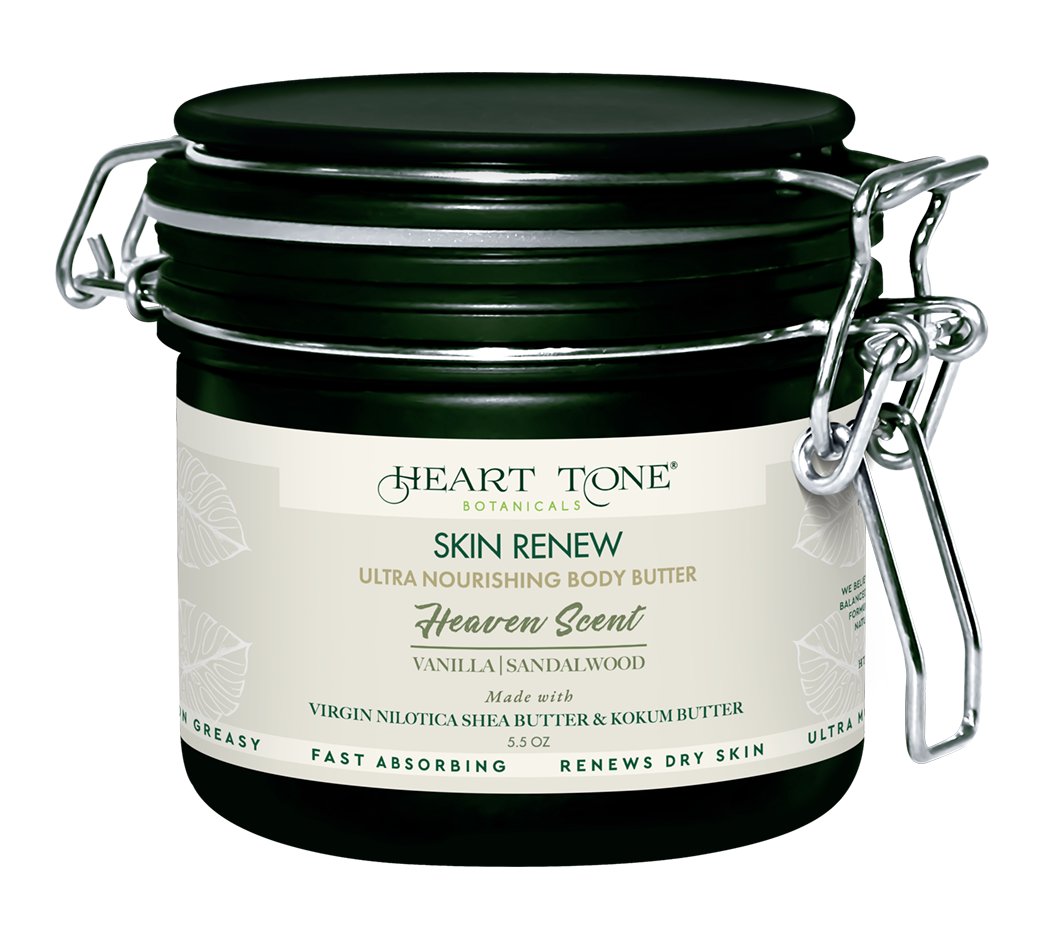
Heart Tone Botanicals Body Butter
Our Botanical Renew Body Butter is formulated exactly this way — a concentrated plant-butter base with no synthetic fillers, no artificial fragrance, and no petroleum derivatives. It's part of our broader commitment to making body care that actually does what it's supposed to do: repair the skin barrier, deliver lasting hydration, and keep the ingredient list honest.
If you're looking for a complete natural body care routine, pair it with our Botanical Skin Gel for everyday skin support, or explore our full Body Care collection — which includes our bioactive deodorants, castile soaps, and more.
For serious self-care, our Bath collection makes a great companion — natural bar soaps and castile washes that clean without stripping, so your skin barrier isn't depleted before you've even reached for the body butter.
The Bottom Line
Natural body butter isn't a luxury — it's one of the most efficient ways to care for dry skin with clean, plant-based ingredients. The formula is simple, the mechanism is sound (lipids replenish lipids), and the results compound with consistent use.
If you've been reaching for the same conventional lotion and wondering why your skin still feels dry, body butter might be the most straightforward upgrade you can make to your routine.
Start with damp skin. Use a small amount. Be consistent. Your skin will tell you the rest.

Leave a comment
This site is protected by hCaptcha and the hCaptcha Privacy Policy and Terms of Service apply.