












The Short Answer: It Depends on Your Hair, Not the Calendar

Search "how often should I do a protein treatment" and you'll find a dozen different rules — every four weeks, once a month, twice a year. The honest answer is that a fixed schedule is the wrong tool. How often your natural hair benefits from a protein treatment depends on your porosity, how much heat or color processing your hair has seen, and how much protein is already built into the products you use every day. A routine built around a calendar date instead of what your hair is actually telling you is how people end up over-doing it — which comes with its own set of problems.

What "Protein Treatment" Actually Means
Hair strands are made mostly of keratin, a structural protein. Everyday wear — brushing, heat styling, sun exposure, chemical color or relaxer processing — can leave the hair shaft feeling rougher and less resilient over time. A protein treatment is simply a product formulated with protein-derived ingredients (hydrolyzed proteins, plant peptides, amino acids) that temporarily coat or fill in along the strand, which is why hair often looks and feels smoother, fuller, and more resilient right after use. It's a texture and appearance effect, not a permanent structural change — which is exactly why it needs to be repeated on a schedule that fits your hair rather than once and forgotten.
If you're not sure whether your hair is asking for protein or asking for moisture in the first place, that's worth sorting out before you build a schedule — the two show up differently, and supporting one when you need the other is the most common reason a "protein treatment" doesn't seem to help.
Building a Schedule by Porosity
Porosity — how easily your hair shaft lets moisture and other ingredients in and out — is the single biggest factor in how often protein-forward products should show up in your routine.
- Low porosity hair has a tightly closed cuticle, so protein tends to sit on the surface rather than being absorbed quickly. Low porosity hair generally needs protein treatments less often — think every 6-8 weeks — because products already have a harder time penetrating, and over-application can leave hair feeling coated or stiff.
- Medium porosity hair is the most forgiving, and most people land here without much trial and error. A protein-forward treatment every 4-6 weeks, alongside a protein-containing conditioner in regular rotation, tends to keep hair feeling balanced.
- High porosity hair — often from color, chemical processing, or heat — has a more open cuticle that loses moisture (and can lose the benefit of protein) faster. High porosity hair often does best with lighter protein support built into a regular wash routine, roughly every 2-4 weeks, rather than one occasional intensive treatment.
Damage level matters as much as porosity. Hair that's seen recent color treatment, frequent heat styling, or chemical processing generally wants protein support more often than hair that's never been processed. Hair in good condition with minimal styling stress often does fine with protein appearing naturally in a shampoo and conditioner routine, with no separate treatment needed at all.
Signs You're Overdoing It
Protein overload is a real thing, and it throws the routine off balance just as much as skipping protein altogether does. Watch for:
- Hair that feels stiff, straw-like, or brittle rather than soft
- Increased breakage despite "supporting" the hair
- Strands that feel coated rather than conditioned
- A rougher texture that doesn't improve with more product
If any of that sounds familiar, the fix isn't more protein — it's backing off and reaching for a moisture-forward conditioner for a few washes instead. This is exactly why "how often" matters more than "how much": consistent, appropriately-spaced protein support built into a daily conditioner tends to serve natural hair better than an occasional heavy-handed treatment.
Building Protein Into the Routine, Not Just the Treatment
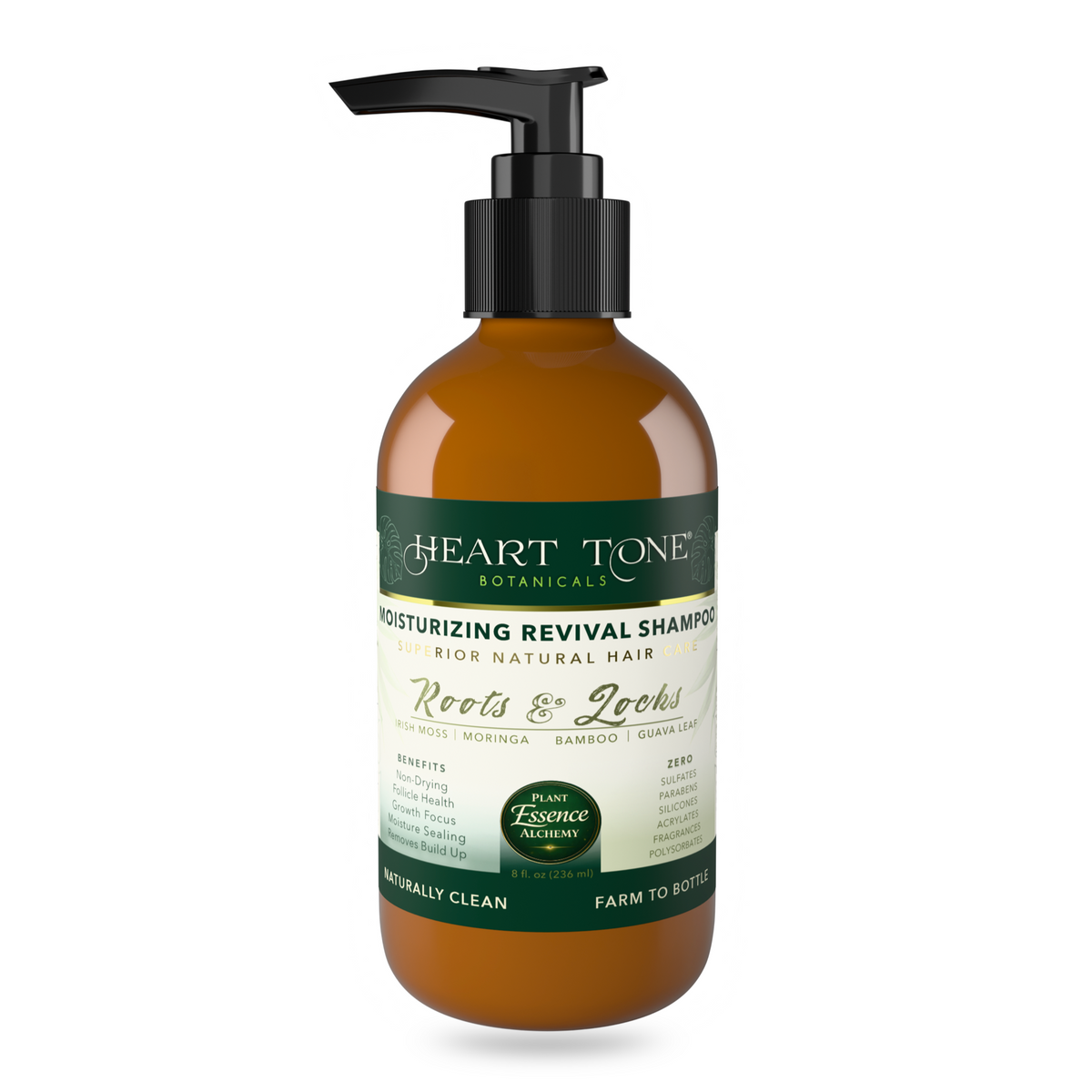
One of the simplest ways to avoid the overload-vs-deficiency guessing game is to let a lighter, protein-containing conditioner do steady work in the background, rather than relying only on an occasional intensive treatment. Our Roots & Locks Moisturizing Revival Conditioner is formulated with pisum sativum peptide (a plant-derived pea peptide) alongside botanical leaf extracts like papaya, moringa, neem, and guava — the kind of gentle, farm-grown blend that fits into a wash-day routine every time, not just during an occasional treatment week.

Pairing that with the Roots & Locks Moisturizing Revival Shampoo, which carries the same pea peptide alongside coconut milk and botanical leaf extracts, means the cleanse step isn't stripping out what the conditioner is trying to build back — a small routine detail that matters more than any single "treatment day."
The Bottom Line
There's no universal answer to how often natural hair needs a protein treatment — porosity, damage level, and what's already in your everyday products all shape the right interval. Low porosity hair generally needs it least often, high porosity and heavily processed hair generally needs it most, and almost everyone does better with steady, lighter protein support built into regular wash days than with one intensive treatment and nothing in between. Pay attention to how your hair feels — strong and resilient versus stiff and straw-like — and let that guide the schedule, not the calendar.
Ready to build that routine? Explore the full natural hair care collection from Heart Tone Botanicals, starting with the Roots & Locks Moisturizing Revival Shampoo and Conditioner.

Leave a comment
This site is protected by hCaptcha and the hCaptcha Privacy Policy and Terms of Service apply.