












High porosity hair is one of the most talked-about topics in the natural hair community — and for good reason. If your hair absorbs water quickly, feels dry again within hours of washing, or tends toward tangling and frizz, you have probably already heard the term. Understanding what your hair actually needs is the first step toward building a routine that works.
What Is High Porosity Hair?

Hair porosity describes how easily moisture moves in and out of the hair strand. The outer layer of each strand — the cuticle — is made up of overlapping scales, similar to shingles on a roof. In high porosity hair, those scales sit more open or are spaced further apart, which means moisture enters quickly but also escapes just as fast.
High porosity can be something you are born with, or it can develop over time. Heat styling, chemical processing, color treatments, and environmental factors like sun exposure and hard water can all affect how the cuticle lies. Many people have high porosity hair without knowing it — they just know their hair never quite feels as moisturized as they would like.
Signs Your Hair Might Be High Porosity
A few common experiences point toward high porosity:
- Your hair absorbs water rapidly and gets wet very quickly
- It dries fast but feels dry and brittle not long after
- Products seem to absorb immediately but do not seem to last
- Your hair tends to tangle easily, especially when wet
- You notice significant frizz in humid weather
One test many naturalists use: drop a clean strand into a glass of room-temperature water. If it sinks quickly, that is often associated with high porosity. A strand that floats near the top for a while before sinking tends to suggest lower porosity. It is not a definitive measurement, but it can be a useful starting point.
What High Porosity Hair Actually Needs
Because moisture leaves high porosity hair easily, the focus is typically on two things: gentle cleansing that does not strip what moisture is there, and richer conditioning that helps the hair feel moisturized for longer.
Harsh surfactants — particularly sulfates like sodium lauryl sulfate and sodium laureth sulfate — can leave the hair feeling rough and dry after washing. For high porosity hair, a gentler cleanse tends to feel more comfortable and leaves the hair in a softer state.
On the conditioning side, high porosity hair often responds well to richer, more emollient formulas. Botanical butters and nourishing oils contribute a more moisturized feel. Botanical ingredients with a long history in traditional hair care are commonly included in formulas designed with moisture and softness in mind.
What to Look For in a Natural Shampoo
When reading a shampoo label for high porosity hair, these are ingredients worth knowing:
- Gentle, plant-derived cleansers — coco taurate and coco betaine are derived from coconut oil and produce a creamy, comfortable lather. They are among the most widely used gentle surfactants in natural hair care and are much milder than traditional sulfates.
- Tropical leaf extracts — papaya, moringa, guava, neem, and bay leaf each have long histories of use in hair and scalp care traditions across South Asia, the Caribbean, and West Africa. Their use in botanical hair care stretches back generations.
- Aloe leaf juice extract — a staple in botanical hair care for centuries. Known for the soft, comfortable feel it leaves behind.
- Fermented botanicals — radish root ferment, lactobacillus ferment, and bamboo ferment appear in natural hair care formulas for the texture and conditioning feel they contribute.
- Irish moss extract — a seaweed-derived ingredient with a long tradition in botanical body and hair care; appreciated for its rich, conditioning character.
- No sulfates, no silicones, no parabens — for high porosity hair especially, a simpler and gentler formula tends to feel better long-term.
What to Look For in a Conditioner
Richer conditioning is often the cornerstone of a high porosity hair routine. When reading conditioner labels, look for:
- Organic shea butter — a deeply emollient botanical ingredient with a long history of use in hair and skin care across West Africa. Known for its rich, softening, and nourishing feel.
- Coconut milk — adds a creamy, moisturizing quality to a conditioner formula. It has a long tradition in South and Southeast Asian hair care for the soft, comfortable feeling it contributes.
- Plant-based conditioning agents — brassica-derived ingredients such as brassicyl valinate esylate and brassica alcohol are used in natural conditioners as gentle, plant-sourced alternatives to conventional synthetic conditioning agents.
- Botanical peptides — pisum sativum peptide (pea-derived) and bamboo ferment are included in natural hair formulas for the texture and feel they contribute.
- Alpha bisabolol — derived from chamomile; used in botanical skin and hair care for its gentle, calming sensory character. Has a long history of use in natural formulation.
- Botanical essential oils — lavender tea tree, clary sage, rosemary CO2, cardamom, and vetiver each carry long traditions of use in scalp and hair care. Their botanical aromatic profile makes the conditioning experience feel intentional and grounding.
Building a High Porosity Hair Routine
A framework that many people with high porosity hair find works well:
- Cleanse gently, not too often — for many people with high porosity hair, washing once or twice a week with a gentle, sulfate-free formula is more comfortable than daily washing.
- Condition generously and let it sit — apply conditioner from mid-shaft to ends and let it work for several minutes rather than rinsing immediately. High porosity hair tends to benefit from longer conditioning time.
- Apply styling products to damp, not soaking wet, hair — many naturalists find that slightly damp hair holds product better than very wet hair.
- Detangle gently — a wide-tooth comb or finger-detangling with conditioner in the hair puts less mechanical stress on the strands.
- Protect at night — a satin or silk pillowcase or bonnet can reduce friction overnight and help your hair feel more comfortable in the morning.
Products Worth Exploring
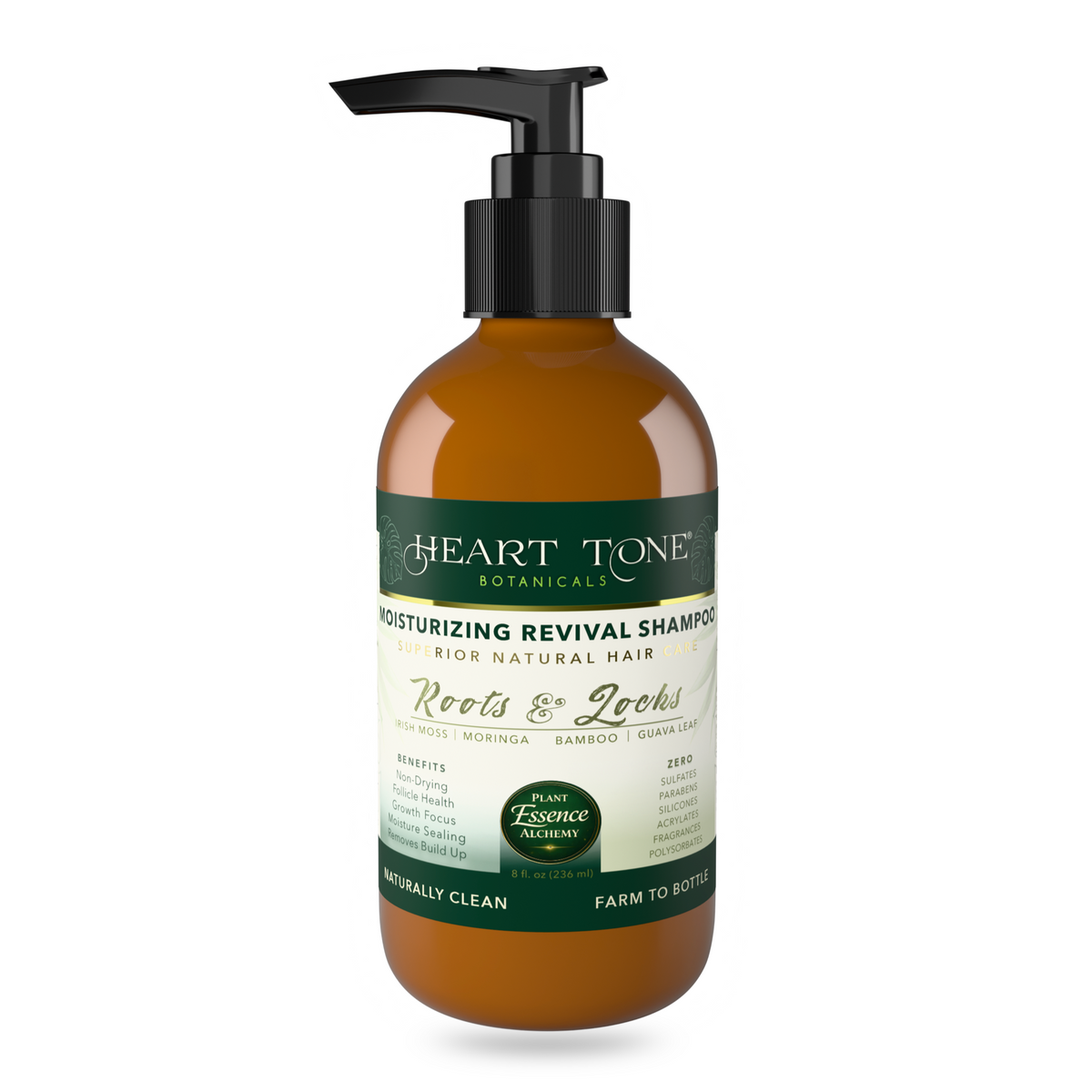
The Roots & Locks Moisturizing Revival Shampoo uses coco taurate and coco betaine as its primary cleansers — gentle, coconut-derived surfactants — along with a blend of tropical leaf extracts including papaya, moringa, guava, neem, and bay leaf, each with long traditions of use in botanical hair care. Aloe leaf juice, Irish moss extract, chamomile, and a botanical essential oil blend round out the formula. It is sulfate-free and silicone-free.
The Roots & Locks Moisturizing Revival Conditioner features organic shea butter, coconut milk, Irish moss extract, and pea-derived peptides alongside the same tropical leaf extract blend. The botanical essential oil profile — clary sage, lavender tea tree, rosemary, cardamom, and vetiver — gives the conditioning experience a grounded, botanical character that lingers after rinsing. Also sulfate-free and silicone-free.
Explore the full Hair Care collection at Heart Tone Botanicals.

Leave a comment
This site is protected by hCaptcha and the hCaptcha Privacy Policy and Terms of Service apply.