












The Short Answer: High Porosity Hair Doesn't Need More Moisture — It Needs to Keep the Moisture It Already Has

If you have high porosity hair, you already know the frustrating pattern: you deep condition, your hair feels amazing for about an hour, and then it's back to dry, frizzy, and reaching for humidity like a sponge. It's tempting to conclude you just need a heavier product or more of it. But the real issue usually isn't how much moisture you're putting in — it's that nothing is holding it there once it arrives.

High porosity hair has a raised, uneven cuticle layer — the outermost layer of the strand doesn't lie flat the way it does on low or medium porosity hair. That's genuinely useful for letting moisture in quickly. The catch is that the same raised structure lets moisture right back out just as fast, which is why high porosity hair can feel saturated one moment and parched a few hours later.
Why It Frizzes the Second You Step Outside
Humidity makes this cycle worse. Because the cuticle sits open rather than flat, ambient moisture in the air gets pulled into the hair shaft unevenly, causing strands to swell and separate — which reads as frizz. It's not that your hair is doing something wrong; it's responding exactly the way a raised-cuticle structure is built to respond. The fix isn't fighting the humidity. It's giving the cuticle something to hold it closed once it's had a chance to absorb what it needs.
A simple way to think about it: moisturizing fills the tank. Sealing keeps the tank from leaking. High porosity routines that skip the second step tend to feel like they're starting over every single day.
What "Sealing" Actually Looks Like in a Routine
Sealing isn't a separate product category so much as a step — applying something after your moisture layer that helps smooth the cuticle down and slow how quickly that moisture evaporates. In practice, that usually means layering in this order:
- Cleanse gently. A wash that leaves hair feeling clean without stripping it dry going in gives the rest of the routine a better starting point.
- Add moisture while hair is damp. Damp strands accept a leave-in or conditioner more evenly than fully dry hair does.
- Seal it in. A lightweight oil or butter smoothed over damp hair helps the cuticle lie down and slows how fast that moisture escapes.
- Avoid restyling with water throughout the day. Re-wetting hair mid-day re-opens the door for moisture to rush in and out again.
None of this requires more product overall — it just changes when and how it's applied.
What to Look For in a Botanical Formula
Not every "moisturizing" label means the same thing for high porosity hair. A formula that's genuinely built for this hair type tends to lean on a few traditional botanical categories:
Humectant-Rich Plant Extracts
Ingredients like aloe leaf juice and coconut milk have a long history of use in botanical hair care for their ability to draw in and hold onto moisture, giving strands a softer, more pliable feel without weighing them down.
Leaf and Root Extracts
Botanicals such as papaya leaf, moringa leaf, neem leaf, and daikon seed have traditionally been included in hair care formulations valued for supporting a healthy-looking, nourished appearance from root to end.
Lightweight Sealing Oils and Butters
Shea nut butter and glyceryl oleate are traditional choices for a finishing layer — they leave hair feeling smoother and visibly shinier without the greasy build-up that heavier oils can leave behind on fine, high porosity strands.

Botanical Ferments
Ingredients like bamboo ferment and radish root ferment are increasingly used in botanical formulations for their traditional association with a smoother, more polished-looking strand surface.
A Few Habits Worth Adjusting
- Skip the daily hot tool if you can. Heat styling on already-porous hair tends to leave it feeling even drier by the end of the day.
- Detangle before you wash, not after. Wet high porosity hair is at its most fragile-feeling; working out knots beforehand reduces unnecessary handling.
- Use silk or satin for sleep. Cotton pillowcases and bonnets pull moisture out of hair overnight; smoother fabrics don't.
- Reset expectations on wash day. High porosity hair often does best with a moisture-then-seal routine every wash, not an occasional deep treatment.
The Bottom Line
High porosity hair isn't damaged hair by default, and it doesn't need an endless parade of new products to feel balanced. It needs a routine that respects how its cuticle behaves — moisture in, then sealed in — instead of a heavier version of the same one-step approach that isn't holding up.
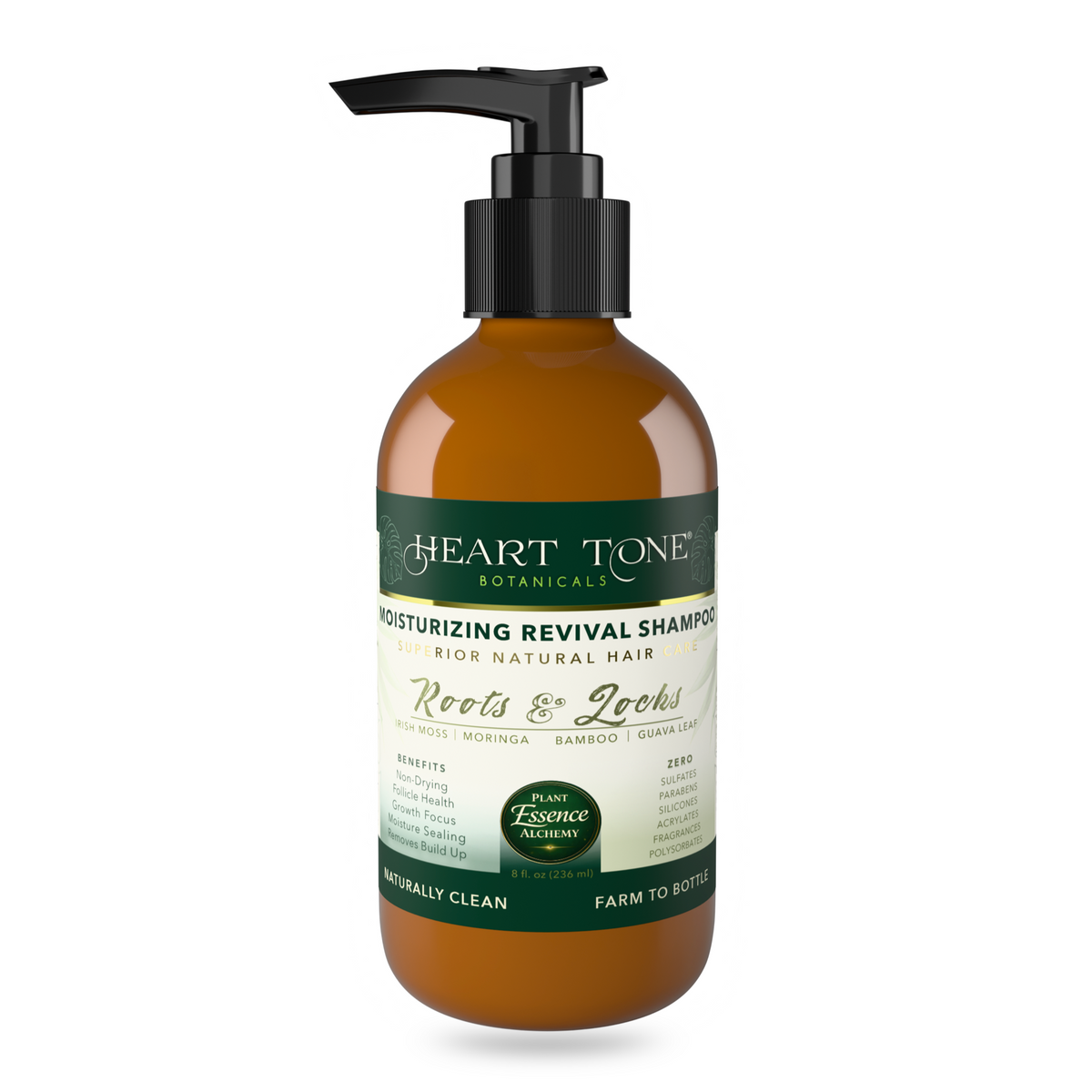
If you're building that kind of routine, the Roots & Locks Moisturizing Revival Shampoo and Roots & Locks Moisturizing Revival Conditioner from Heart Tone Botanicals are formulated with aloe leaf juice, coconut milk, shea nut butter, and a blend of leaf and root botanicals designed to leave high porosity hair feeling softer, smoother, and more manageable. You can also explore our full natural hair care collection for a complete routine.

Leave a comment
This site is protected by hCaptcha and the hCaptcha Privacy Policy and Terms of Service apply.