












The Short Answer: It Depends on What's Actually in the Bar (or the Bottle)

Bar soap and liquid soap can both leave skin feeling clean and comfortable — the format itself isn't really the deciding factor. What matters more is how each one is made, what's holding it together, and how it feels on your particular skin. A traditional cold-processed bar and a true castile liquid soap have more in common with each other than either one has with a conventional supermarket version of its own format.
Here's how the two actually differ, and how to think about which one fits your routine.
How Bar Soap and Liquid Soap Are Actually Made
Traditional bar soap is made through saponification — plant oils like coconut, olive, and sunflower are combined with an alkali (sodium hydroxide for bar soap), which reacts fully during the process so that none of it remains in the finished bar. What's left is soap and, in an unrefined formula, the natural glycerin that the oils produce as a byproduct. Glycerin is a humectant, meaning it draws moisture toward the skin rather than stripping it away — which is part of why a well-made bar can feel very different from a mass-market drugstore bar.
Liquid soap is made the same traditional way, using potassium hydroxide in place of sodium hydroxide, which produces a softer, pourable soap instead of a solid bar. A true castile liquid soap — one made from olive oil, coconut oil, and other plant oils rather than synthetic detergents — follows the same saponification principle as a bar. Many commercial liquid soaps skip this process entirely and are built on synthetic surfactant bases instead, which is a genuinely different product wearing a similar bottle.
So the real dividing line isn't bar versus liquid. It's traditional saponified soap versus synthetic detergent — and that line can run through either format.
What Each Format Actually Feels Like on Skin
A well-made bar soap, especially one that retains its natural glycerin, tends to leave skin feeling soft rather than tight or squeaky. Farm-grown botanical additions — oats, herbs, activated charcoal — can also give a bar a texture that a bottle simply can't replicate.
Liquid castile soap has a different everyday feel. It's fast to lather, easy to dilute for a lighter touch, and convenient for hands, dishes, and household use in a single bottle. Diluted with water, a true castile soap can feel notably gentler than using it at full strength, which is worth experimenting with if a liquid soap has ever felt like too much.
Neither format is inherently more moisturizing than the other. The ingredient list is what determines that — not whether it comes in a bar or a bottle.
The Sensitive Skin Question
People looking for a gentler daily wash generally do better with a shorter ingredient list and no synthetic fragrance, dye, or detergent additives — in either format. An unscented, essential-oil-free castile soap can be a comfortable choice for anyone who wants to keep their routine as simple as possible. A fragrance-free bar soap made with a small number of recognizable plant oils works the same way.
If you're building a routine for sensitive skin, start with the shortest ingredient list you can find in whichever format you already prefer, then add back scent or texture once you know how your skin responds.
Where Each Format Actually Makes Sense
- Shared or guest bathrooms: bar soap doesn't require a pump or a bottle that can leak in a travel bag, and it lasts a long time in a soap dish.
- Kitchen sink and hand-washing stations: liquid soap is faster to use one-handed and easier to keep at a sink without a dish to clean.
- Travel: a bar soap in a tin skips the liquid-restriction question entirely.
- Multi-purpose use: a true castile liquid soap can be diluted for hands, body, and light household cleaning from one bottle — a bar soap is generally a body-and-hands product only.
- Exfoliation: a bar soap can carry texture — like activated charcoal or a fine olive-oil paste — that a liquid can't hold in suspension the same way.
What to Actually Check on Any Soap Label
Whichever format you reach for, the ingredient list tells you more than the packaging does:
- Look for plant oils near the top of the list — coconut, olive, sunflower, castor — rather than "sodium lauryl sulfate" or "sodium laureth sulfate" doing the cleansing work
- Unrefined, farm-grown botanical additions (aloe, herbs, clays) suggest a smaller-batch, traditional process
- A short, recognizable ingredient list is generally a better sign than a long one, regardless of format
- If sodium hydroxide or potassium hydroxide is listed, that's expected in true soap — it's fully converted during saponification and doesn't remain in the finished product
The Bottom Line
Bar soap and liquid soap aren't really competing with each other — they're two different delivery formats for the same idea: plant oils, traditionally saponified, without synthetic detergents. The better question isn't which format wins. It's whether the specific bar or bottle in front of you was actually made that way.
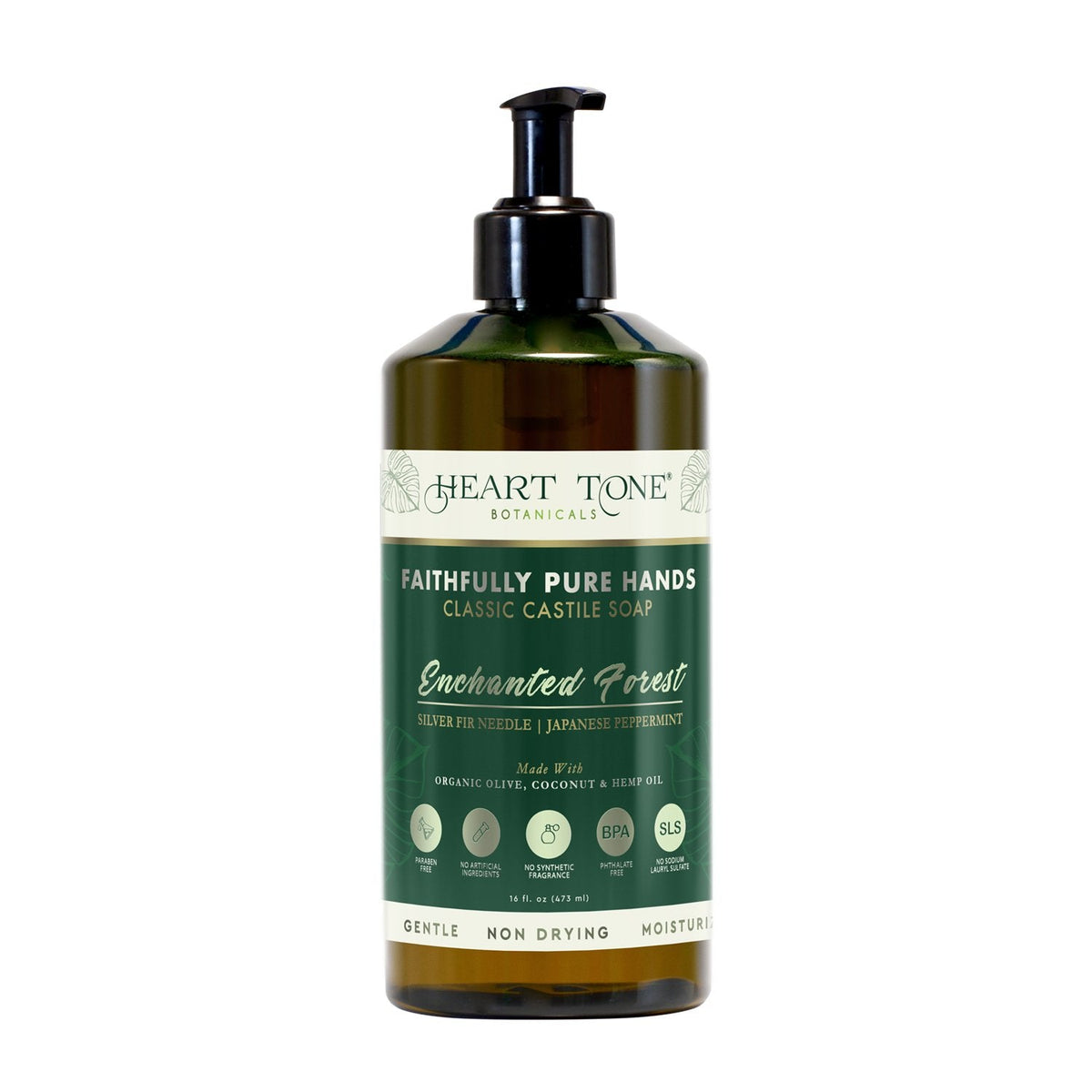
Heart Tone Botanicals makes both. Our Ancient Organic Soap Alpha Bar and Coconut Creme bars are handcrafted from farm-grown botanicals and cold-pressed oils, and our Faithfully Pure Hands Castile Liquid Soap and Herbal Castile Liquid Soap follow the same true castile formula in a pourable bottle. If you want texture along with cleansing, our Moroccan Exfoliating Black Soap is a traditional olive-oil bar built specifically for that. Explore the full lineup in our body care collection.

Leave a comment
This site is protected by hCaptcha and the hCaptcha Privacy Policy and Terms of Service apply.