

You already know alcohol-free mouthwash is gentler. But you're getting a different question answered every time you search: Do natural mouthwash ingredients actually work?

The short answer is yes — if the formula is built right. The longer answer is that "natural" is a marketing word, and the ingredients inside the bottle are what actually determine whether your rinse is cleaning your mouth or just making it smell minty for 10 minutes.
This guide covers what alcohol-free mouthwash with natural ingredients should actually contain, what the research says about those ingredients, and how to tell a quality formula from a watered-down one.
Why Alcohol-Free Mouthwash Isn't Enough on Its Own
Removing alcohol from a mouthwash formula is a smart move — alcohol dries out oral tissue, disrupts the oral microbiome, and can actually make bad breath worse over time by eliminating the protective bacteria that keep your mouth balanced.
But alcohol-free alone doesn't mean the formula does anything useful. Many drugstore alcohol-free rinses simply replace alcohol with other synthetic antiseptics like chlorhexidine (which causes staining and dysbiosis with long-term use) or cetylpyridinium chloride (CPC), which is broad-spectrum enough to wipe out the good bacteria too.
The better path is a formula that uses natural ingredients with documented antimicrobial and anti-inflammatory properties — without the collateral damage.
"The best alcohol-free natural mouthwash doesn't try to sterilize your mouth. It works with your oral microbiome to support a healthy bacterial balance while targeting the pathogens that cause bad breath, plaque, and gum inflammation."
Natural Mouthwash Ingredients That Actually Work
1. Colloidal Silver
Colloidal silver is one of the most research-backed antimicrobial ingredients in natural oral care. In vitro studies show it disrupts bacterial cell membranes and inhibits biofilm formation — the primary mechanism behind plaque development. Unlike synthetic antiseptics, it doesn't accumulate or cause microbial resistance at the concentrations used in topical oral care formulas.
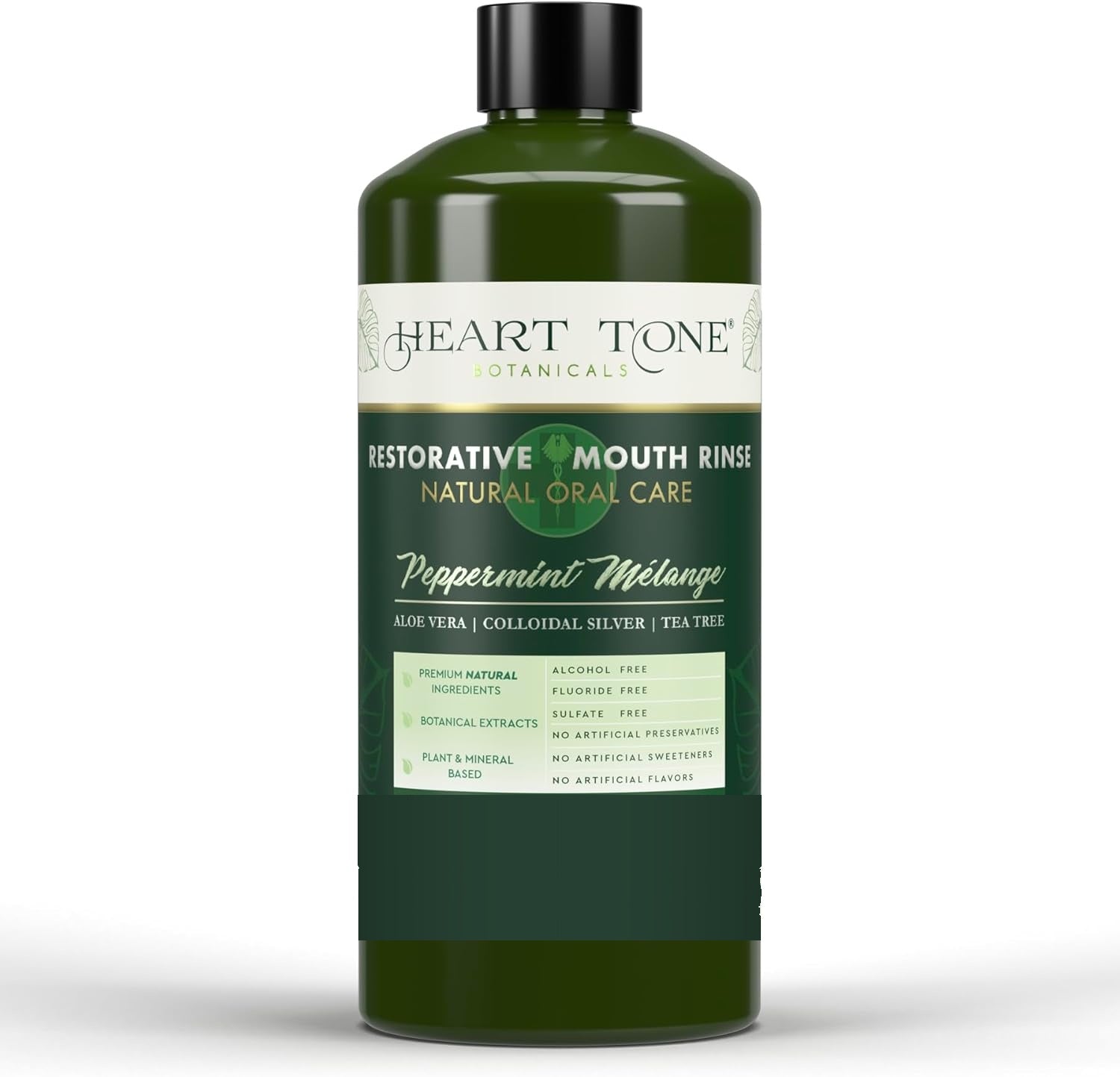
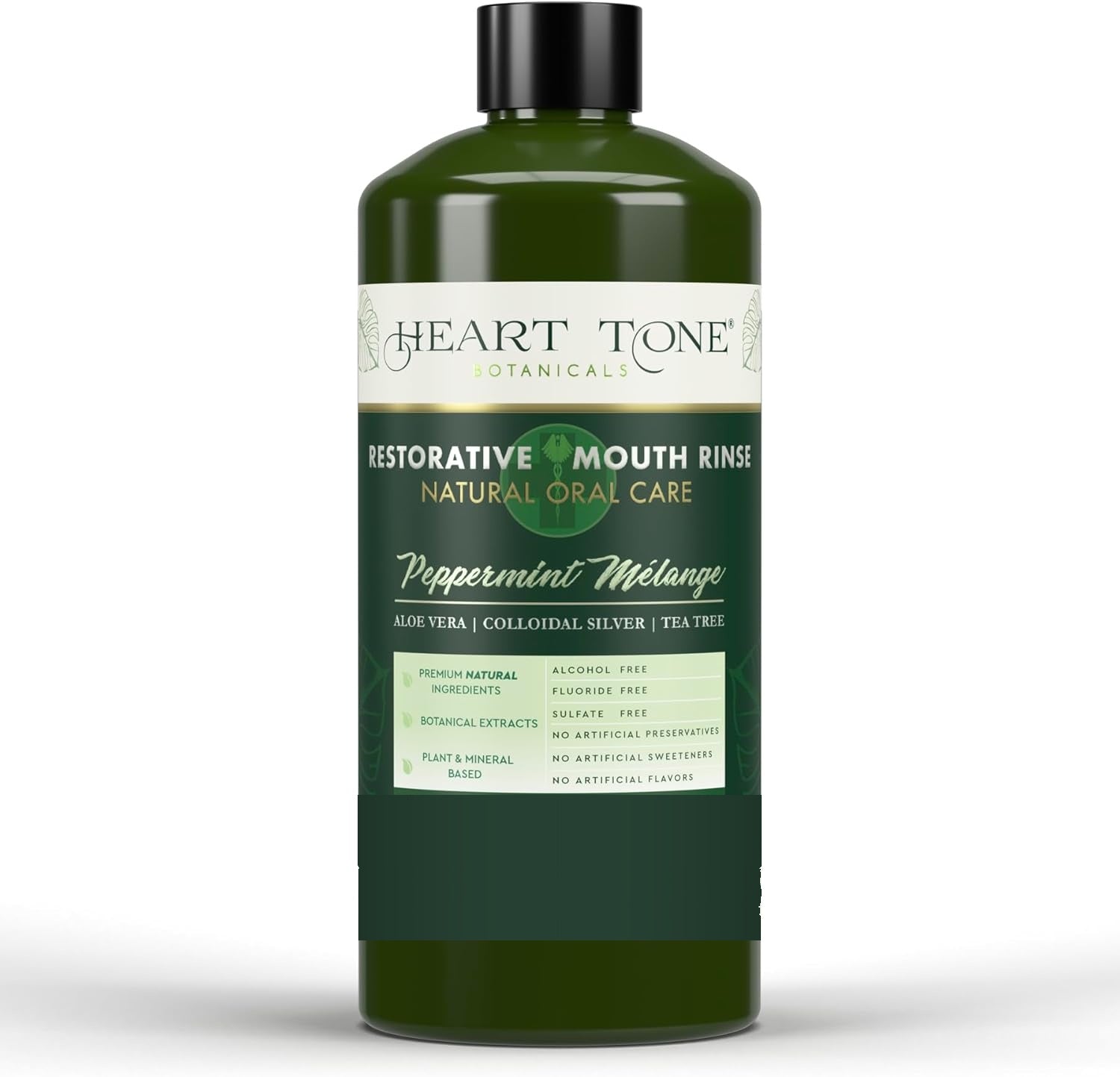
It's one of the key active ingredients in Restorative Mouth Rinse, where it works alongside botanical extracts to support the whole oral environment rather than flattening it.
2. Aloe Vera
Aloe vera is an anti-inflammatory botanical with real clinical data behind it. A 2011 study published in General Dentistry found aloe vera mouthwash was as effective as chlorhexidine at reducing plaque and gingivitis scores — without the side effects. It also soothes irritated gum tissue and supports saliva production, which is critical for natural pH buffering and remineralization.
When a brand grows their own aloe vera (rather than reconstituting dehydrated powder), you get a fresher, more biologically active ingredient. Heart Tone Botanicals grows aloe vera on its own farm in Vero Beach, Florida — that distinction matters for potency and traceability.
3. Botanical Antimicrobials: Myrrh, Clove, Thyme, and Oregano
These aren't just flavor ingredients — each has documented antimicrobial activity:
- Myrrh CO2 extract — used in traditional oral care for centuries; modern research confirms antimicrobial activity against periodontal pathogens
- Clove — eugenol has well-documented antibacterial and analgesic properties, particularly effective against Streptococcus mutans
- Thyme — thymol is the active compound in many conventional mouthwashes, but derived directly from the plant it's gentler and carries complementary botanical compounds
- Oregano — carvacrol shows significant activity against biofilm-forming bacteria in oral health research
4. Xylitol
Xylitol isn't just a sweetener. It actively inhibits the growth of Streptococcus mutans — the primary cavity-causing bacteria — by creating a metabolic dead end: the bacteria absorb xylitol but can't metabolize it, which disrupts their ability to form acid and adhere to tooth surfaces. At 1–2% concentration in a daily rinse, xylitol provides meaningful cavity protection without any synthetic chemistry.
5. Essential Oils: Peppermint, Spearmint, Wintergreen
These do double duty: they provide the clean, fresh finish you expect from a mouthwash, and they carry their own antimicrobial properties. Menthol has well-studied antibacterial activity against oral pathogens. The sensory experience matters too — a mouthwash you actually enjoy using is one you'll use consistently.
6. Licorice Root Extract
Licorice root CO2 extract contains glycyrrhizin and licoricidin — compounds with demonstrated antibacterial activity against S. mutans and Porphyromonas gingivalis, a key periodontal pathogen. It's also mildly anti-inflammatory, which makes it particularly useful in formulas targeting gum health.
What to Look for on a Mouthwash Label
Reading a natural mouthwash label can feel like decoding a different language. Here's a quick filter:
Look for:

- Named botanical extracts (not just "natural flavor")
- Aloe vera listed high in the ingredient order
- Specific antimicrobials: colloidal silver, thymol, eugenol, menthol from natural sources
- Xylitol for cavity protection
- No alcohol, no synthetic dyes, no SLS
Avoid:
- Chlorhexidine (effective short-term, problematic long-term)
- Cetylpyridinium chloride as the primary antimicrobial
- Polysorbate 80 and synthetic preservatives
- "Natural fragrance" as the only flavor source
Oil-Based vs. Water-Based Alcohol-Free Natural Mouthwash
Some natural oral care brands offer oil-based rinses (like oil pulling products) instead of or alongside traditional water-based mouthwashes. They're different tools for different purposes:
- Water-based natural mouthwash — best for daily freshness, antimicrobial support, and gum health. Fast, easy, compatible with any routine.
- Oil-based rinse (oil pulling) — a 20-minute practice that mechanically draws bacteria and debris from the oral cavity. Deeper cleanse, but requires more time and commitment.
Many people use both — an oil pull 2–3 times per week and a water-based natural mouthwash as the daily rinse. Antioxidant Oil Pull and Restorative Mouth Rinse are designed to complement each other in exactly that way.
How Effective Are Natural Mouthwashes for All-Day Fresh Breath?
Genuinely effective ones — yes. Watered-down "natural" formulas with one botanical and a lot of water — no.
The key distinction is active ingredient load. A mouthwash with 22 botanical ingredients at meaningful concentrations (like Restorative Mouth Rinse) will perform comparably to clinical formulas for everyday bad breath management. A mouthwash with "extract of mint and hint of chamomile" will underperform.
Real clinical benchmarks: aloe vera mouthwash has been shown to match chlorhexidine for plaque and gingivitis reduction. Thymol-containing formulas are well-documented for halitosis management. Xylitol-based rinses show measurable cavity reduction over time. These aren't fringe claims — they're published research.
The gap in natural oral care isn't efficacy — it's formulation quality. When brands invest in concentrated botanical extracts and farm-sourced ingredients, the results are there.
What We Use at Heart Tone Botanicals
Restorative Mouth Rinse is our alcohol-free natural mouthwash built on 22 botanical ingredients. It includes farm-grown aloe vera, colloidal silver, myrrh CO2, licorice root CO2, xylitol, clove, thyme, oregano, and a peppermint-spearmint-wintergreen oil blend.
No alcohol. No synthetic antiseptics. No fluoride. No dyes. Every ingredient is purposeful — either antimicrobial, anti-inflammatory, or both.
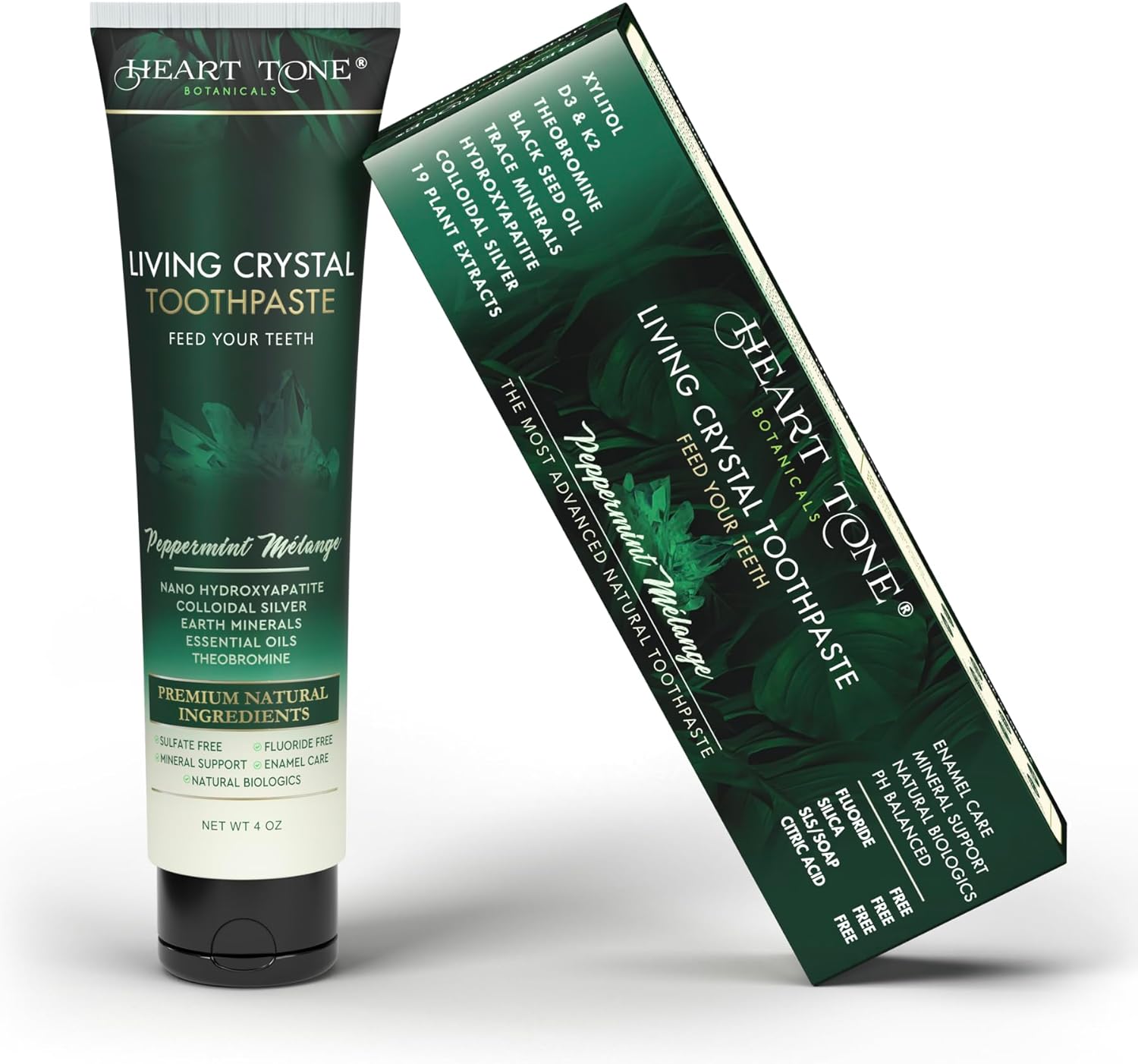
It's designed for daily use as a standalone rinse or as part of the full oral care ritual alongside Living Crystal Toothpaste and an oil pull.
Frequently Asked Questions
Are natural alcohol-free mouthwashes effective for fighting bad breath?
Yes — when they contain active antimicrobial botanicals like colloidal silver, thymol, and myrrh at meaningful concentrations. The research on aloe vera, xylitol, and essential oils in mouthwash is solid. "Natural" alone doesn't guarantee efficacy; the ingredient list does.
Is an alcohol-free mouthwash safe for daily use?
Yes. Alcohol-free formulas are gentler on oral tissue and don't disrupt the oral microbiome the way alcohol-based rinses do. Clinical alcohol-free alternatives are recommended for anyone with dry mouth, sensitive gums, or a history of oral microbiome disruption.
What makes an alcohol-free mouthwash with natural ingredients different from a standard one?
The mechanism. Conventional mouthwashes use broad-spectrum synthetic antiseptics that kill indiscriminately. Natural formulas use botanical antimicrobials that tend to be more selective — targeting pathogenic species while leaving beneficial bacteria more intact. This is better for long-term oral microbiome health.
How does alcohol-free natural mouthwash compare to oil pulling?
Different tools. Mouthwash is fast, water-based, and designed for daily freshness and antimicrobial maintenance. Oil pulling is a longer practice that physically draws bacteria and debris from the oral cavity. Many people use both — oil pulling a few times a week, mouthwash daily.
Read more about our oral care approach in the Natural Mouthwash Ingredients guide and the Fluoride-Free Mouthwash guide.

Leave a comment
This site is protected by hCaptcha and the hCaptcha Privacy Policy and Terms of Service apply.