

Why Natural Deodorant? What's Actually in Your Antiperspirant
If you've never flipped over your deodorant and read the ingredients, you might be surprised. Most conventional antiperspirants contain aluminum compounds that physically block your sweat glands, synthetic fragrances made from dozens of undisclosed chemicals, and preservatives like parabens that have raised concerns among health researchers.

The shift toward natural deodorant isn't just a trend — it's a response to growing awareness about what we put on our skin every day. Your underarms contain a high concentration of lymph nodes, and the skin there is thinner and more absorbent than most of your body. What you apply there matters.
The Aluminum Question
Your body sweats for a reason — it's how you regulate temperature and release toxins. Antiperspirants work by plugging your sweat ducts with aluminum salts. While the FDA considers this "generally recognized as safe," a growing number of consumers are choosing to let their bodies do what they were designed to do.
Natural deodorant takes a different approach: instead of blocking sweat, it neutralizes the bacteria that cause odor. You still sweat (which is healthy), but you don't smell.
This is similar to the philosophy behind choosing SLS-free personal care products — working with your body's natural chemistry rather than overriding it with synthetic chemicals.
What's Actually in Conventional Deodorant?
Beyond aluminum, here's what you'll typically find in mainstream antiperspirants:
- Propylene glycol — a petroleum-based moisturizer also used in antifreeze
- Triclosan — an antibacterial agent the FDA banned from hand soaps in 2016, but that still appears in some deodorants
- Phthalates — hidden in "fragrance" listings, these are endocrine disruptors linked to reproductive concerns
- Parabens — synthetic preservatives that mimic estrogen in the body
- Artificial fragrance — a single "fragrance" listing can contain dozens of undisclosed synthetic chemicals
When you start reading labels on personal care products — whether it's your toothpaste, your soap, or your deodorant — the pattern is clear: conventional products rely on cheap synthetic ingredients that prioritize shelf life and sensation over your health.
The Detox Period Is Real — Here's How to Get Through It
Switching from antiperspirant to natural deodorant often comes with a 1-3 week adjustment period. Your body is clearing out the aluminum buildup and recalibrating its microbiome. During this time, you might sweat more or notice stronger odor than usual.
This is normal and temporary. Tips to make it easier:
- Apply natural deodorant twice daily during the transition
- Wear breathable, natural fabrics
- Stay hydrated — it actually helps regulate odor
- Be patient — most people are through the worst of it in 10-14 days
- Use a gentle, aloe vera-based soap in the shower — it soothes irritated skin during the transition
"Most people quit natural deodorant during the first week because they think it's not working. What's actually happening is your body is finally doing what it's supposed to do — and once that detox clears, you'll wonder why you ever plugged your pores with aluminum." — JD, Heart Tone Botanicals founder
Baking Soda Free: Why It Matters
Many natural deodorants use baking soda as their primary odor fighter. While baking soda is effective, it's highly alkaline (pH 8-9) and can cause rashes, burning, and darkening on sensitive underarm skin. Up to 30% of people who try baking soda-based natural deodorants experience irritation.
Heart Tone deodorants are completely baking soda-free. We use plant-based ingredients that neutralize odor without disrupting your skin's natural pH. It's the same approach we take with our oral care — using gentle, biocompatible ingredients rather than harsh chemicals that get results at your body's expense.

What Makes Heart Tone Deodorants Different
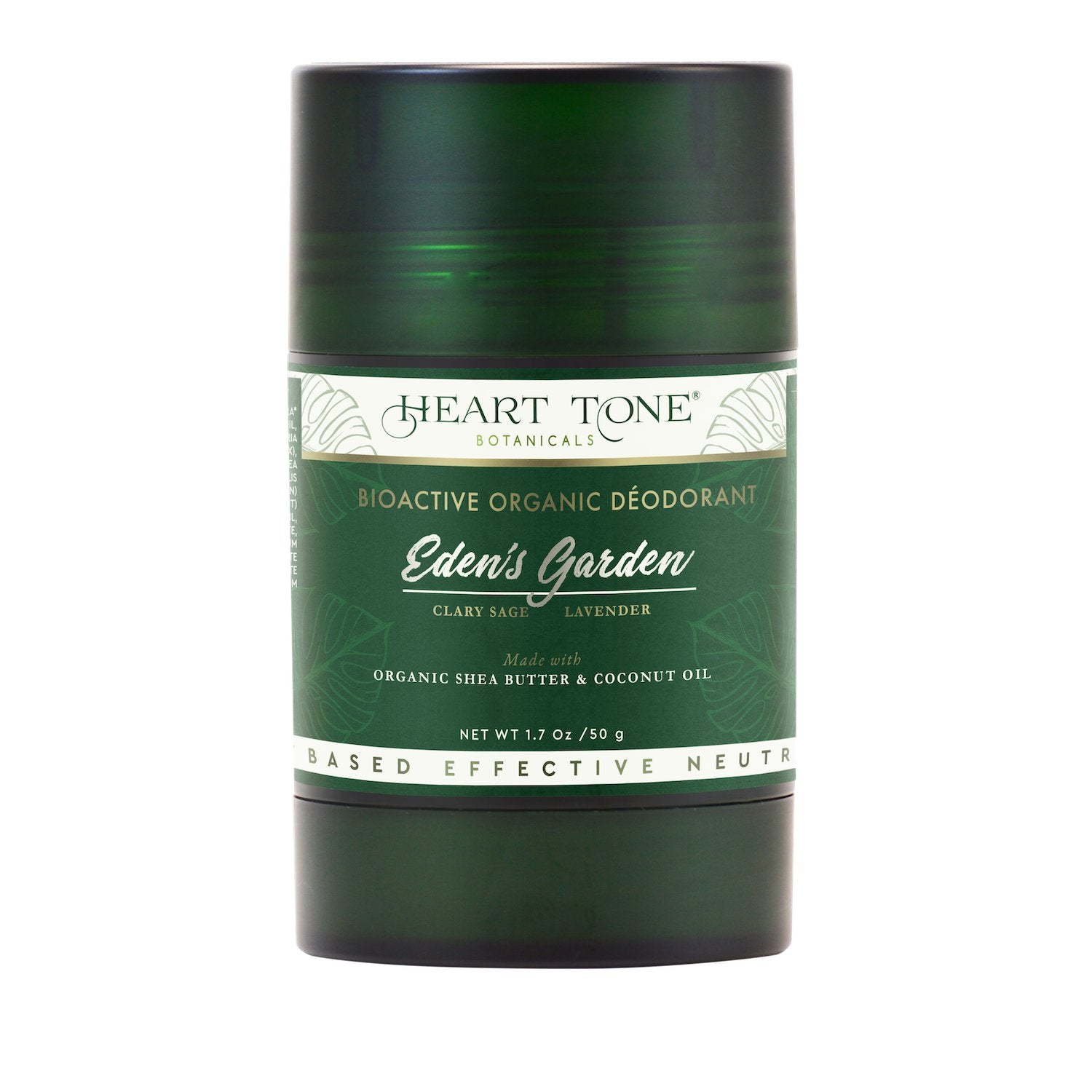
We make five bioactive deodorant formulas, each with a distinct scent profile — from the bold woodiness of Gentleman's Reserve to the tropical brightness of Grove Island. But they all share the same foundation:
- Organic coconut oil — a natural antimicrobial that fights odor-causing bacteria. The same ingredient that makes coconut oil so effective in toothpaste works beautifully in deodorant
- Shea butter — deeply moisturizes sensitive underarm skin and creates a smooth application
- No aluminum, no baking soda, no parabens, no synthetic fragrance
- Farm-grown botanicals — we cultivate our own ingredients on our biodynamic farm in Vero Beach, FL
- 24-hour protection — bioactive plant compounds that work all day, not just for the first hour
Finding Your Scent
Everyone's body chemistry is different, which is why we offer five options:
- The Classic — clean, balanced, everyday wear
- Gentleman's Reserve — bold fir needle, vetiver, and cedarwood
- Grove Island — bright citrus and tropical notes
- Jamaica Estate — warm bergamot and fir needle
- Eden's Garden — soft lavender and clary sage
Not sure which one? Most customers start with The Classic — it's our bestseller for a reason.
Natural Deodorant vs. Natural Antiperspirant
There's an important distinction: natural deodorant and natural antiperspirant are not the same thing. True antiperspirants must contain aluminum — that's what makes them "anti-perspiration." There is no such thing as an aluminum-free antiperspirant.
What natural deodorants offer is odor protection without blocking your body's natural cooling system. Many people find they actually sweat less over time after switching, because their body recalibrates once it's no longer fighting against clogged pores.
Frequently Asked Questions
How long does the natural deodorant detox take?
Most people experience a 1-3 week adjustment period when switching from antiperspirant. During this time, your body is clearing aluminum buildup and recalibrating its natural bacteria balance. The transition is usually complete within 10-14 days.
Will natural deodorant make me sweat more?
You may notice more moisture initially because your sweat glands are no longer blocked. However, many users report that their sweating actually decreases over time once their body adjusts. Natural deodorant controls odor — the sweat itself is odorless.
Is natural deodorant safe for sensitive skin?
Heart Tone deodorants are specifically formulated for sensitive skin — they're baking soda-free, aluminum-free, and made with soothing ingredients like shea butter and organic coconut oil. If you've had reactions to other natural deodorants, baking soda was likely the culprit.
Can men and women use the same natural deodorant?
Absolutely. All five Heart Tone scents are unisex. Body chemistry varies more from person to person than between genders — choose based on which scent you connect with, not marketing labels.
Why does my natural deodorant stop working sometimes?
Stress, diet changes, hormonal shifts, and illness can all affect your body chemistry. If your deodorant seems less effective temporarily, try applying a slightly thicker layer or switching to a different scent — different essential oil blends work differently with different body chemistries.

Leave a comment
This site is protected by hCaptcha and the hCaptcha Privacy Policy and Terms of Service apply.