

Walk into any natural oral care aisle or scroll through wellness Instagram and you'll see it everywhere: "10% nano-hydroxyapatite." Brands have built entire identities around that number, implying that if your toothpaste doesn't hit 10%, it's basically doing nothing. Dentists are repeating it. Influencers are preaching it.

There's just one problem. The studies most often cited when establishing hydroxyapatite as a legitimate oral care ingredient — the research this whole movement is built on — were conducted at 5%.
And at some point, someone added a zero and called it science.
Where the 10% Claim Actually Comes From
The research most frequently cited in the hydroxyapatite space used 5% to 10% concentrations in experimental settings. One widely referenced review found a measurable difference in surface performance between 5% and 10% nHA in lab models — but that same review also found: above 10%, performance did not increase meaningfully further. There's a plateau. And critically — when you look at the clinical literature comparing 5% vs. 10% concentrations in everyday practice, the data supporting a clear advantage for the higher number simply isn't there.
So the 10% figure? It's an extrapolation from lab data, amplified by marketing budgets.
More Isn't Always More
Here's what the marketing doesn't tell you: at higher concentrations, hydroxyapatite particles can actually clump together. When they clump, they adhere to enamel less effectively. The mineral that's supposed to work at the tooth surface is instead forming aggregates that rinse away.
Dr. Mark Burhenne, DDS — founder of AskTheDentist — recently published a deep dive on exactly this issue after his team studied multiple leading hydroxyapatite toothpastes. His conclusion: "The quality of particles — not quantity — makes the difference." He specifically called out the 10% claim as one of the biggest myths in oral health right now.
The takeaway from the research: particle size, particle shape, and formulation chemistry matter more than the number printed on the label.
The Micro vs. Nano Question Nobody's Asking
Most brands chasing the 10% marketing angle are using nano-hydroxyapatite — particles measured in nanometers. Nano-HA does have strong surface absorption characteristics. But there's a growing conversation in the dental research community about whether nano-particles behave differently once they reach biological tissues, and regulators in some regions have flagged this for further study.
Micro-hydroxyapatite — spherical particles slightly larger than nano — has its own well-established record of use in oral care and behaves more predictably in the mouth. Its particle geometry closely mirrors the natural mineral composition of tooth enamel, without the open questions that nano-particles carry.
It's not a settled debate. But it's one worth having.

What Actually Matters in a Hydroxyapatite Toothpaste
After stripping away the marketing, here's what stands out when evaluating a formula:
1. Hydroxyapatite with the right particle geometry.
Tooth enamel is composed of hydroxyapatite mineral. A formula that uses spherical, micro-scale particles — chosen for their compatibility with enamel's natural crystal structure — is making a more considered ingredient choice than one simply chasing a percentage on a label.
2. Supporting minerals, not just one ingredient.
A toothpaste that includes a thoughtful range of mineral ingredients zeolite, kaolin, bentonite — zinc, K-2. D-3 trace minerals, and botanicals — offers more than a formula that optimizes around a single HAP percentage. The broader mineral picture matters.
3. Theobromine — a traditional botanical from cacao.
Theobromine is a naturally occurring compound derived from cacao with a long history of use in traditional oral care preparations. It brings a distinctive botanical character to a toothpaste formula that adds depth beyond mineral content alone — an ingredient with genuine botanical heritage that stands on its own.
4. A well-rounded botanical foundation.
A toothpaste formula is more than its minerals. Plant-based ingredients contribute to the feel and fresh sensation of the brushing experience — supporting the kind of clean, comfortable feeling that makes a daily oral care routine worth keeping.
Our Take: Formula Over Figures
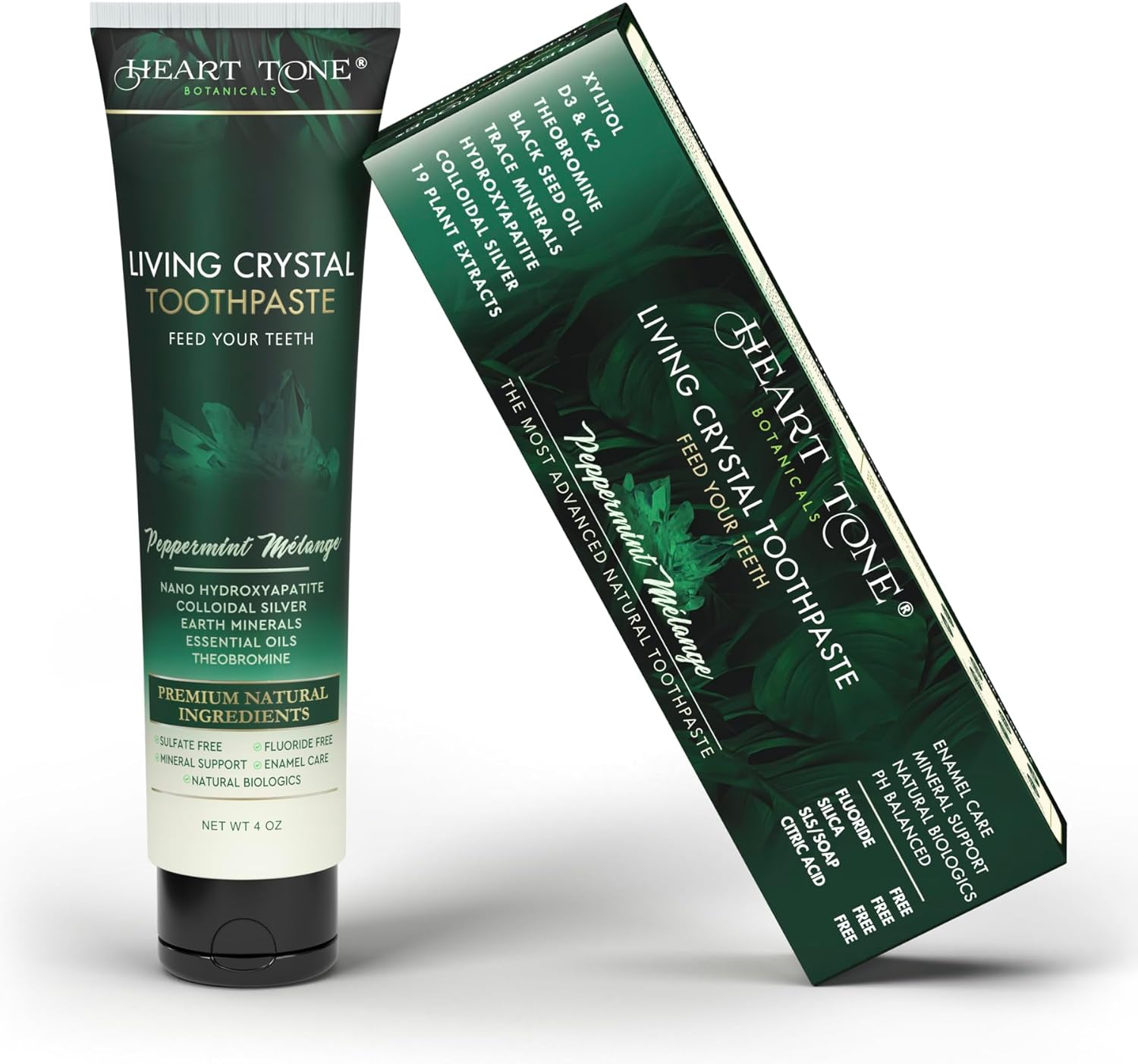
At Heart Tone Botanicals, we don't put a percentage number on our Living Crystal Toothpaste — and that's intentional. We use spherical micro-hydroxyapatite chosen for its particle geometry and enamel compatibility, not its marketing value. We pair it with theobromine as a core botanical ingredient, a mineral-rich supporting blend including zinc citrate and zeolite, and 18+ botanicals made in Florida, USA.
We're not going to tell you our formula is built around a number. We're going to tell you it's built around the tooth.
The 10% claim was never really about your enamel. It was about shelf differentiation. And at this point, the science has caught up with that reality.
The Bottom Line
- The most-cited hydroxyapatite research was conducted at 5% concentrations — not 10%
- Lab data shows a performance plateau above 10% — more isn't better
- No clinical evidence has established that 10% outperforms 5% in everyday use
- Particle quality, shape, and supporting formula chemistry matter more than concentration
- The 10% claim is a marketing extrapolation — and leading voices in natural dentistry are calling it out
When a number gets turned into a selling point before the clinical evidence supports it, that's not science. That's marketing wearing a lab coat.
Ready to try a toothpaste built on real mineral science?
Living Crystal Toothpaste — spherical mHAp, theobromine, 30+ farm-grown botanicals. Fluoride-free. Farm-made in Vero Beach, FL.
SHOP LIVING CRYSTAL TOOTHPASTE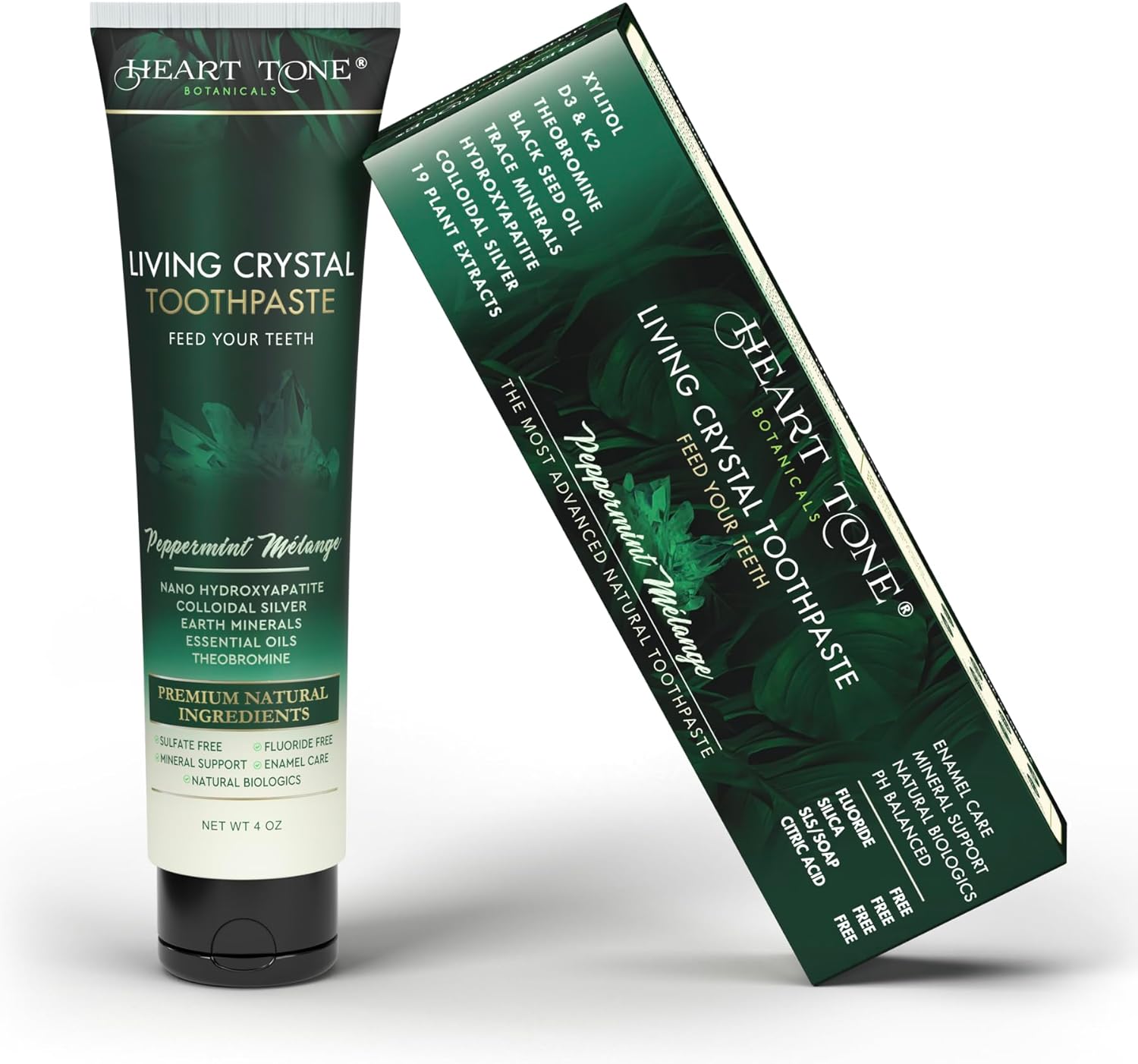

Leave a comment
This site is protected by hCaptcha and the hCaptcha Privacy Policy and Terms of Service apply.