

You've probably seen colloidal silver in mouthwashes and throat sprays. But toothpaste? Most people don't know it exists — or why it matters.

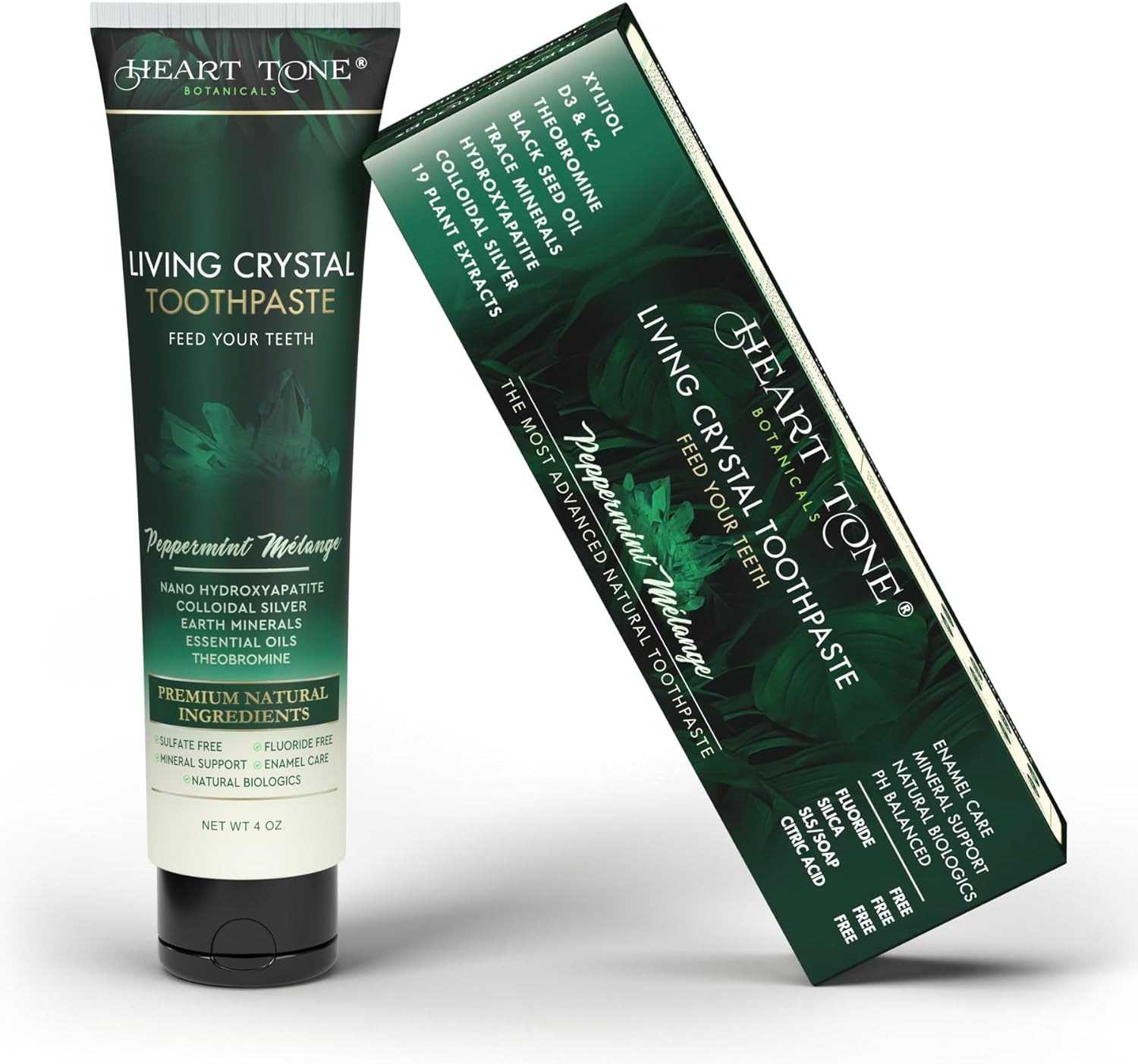
If you're researching colloidal silver toothpaste, you're asking the right question. This post breaks down what colloidal silver actually is, what the research says about its role in oral care, and why we chose to include it as a core ingredient in Living Crystal Toothpaste.
What Is Colloidal Silver?
Colloidal silver is a suspension of ultra-fine silver particles — typically nanoscale — dispersed in water. The silver particles are so small they stay suspended rather than sinking. This microscopic size is what gives colloidal silver its bioavailability: the particles can interact with surfaces, including oral tissue, in ways that larger silver compounds cannot.
Silver has been used for its antimicrobial properties for thousands of years. Ancient civilizations stored water and food in silver vessels. Surgeons historically used silver-coated instruments. Modern medicine still uses silver in wound dressings, catheters, and burn treatment.
In oral care, the application is more specific: supporting a balanced oral microbiome without disrupting it entirely.
Silver doesn't kill indiscriminately. At the concentrations used in oral care, it supports microbial balance — which is exactly what a healthy mouth needs.
Why Colloidal Silver in Toothpaste?
Your mouth hosts over 700 species of bacteria. Most of them are beneficial — they help break down food, maintain pH balance, and protect against pathogens. The problem isn't bacteria; it's dysbiosis, when harmful species like Streptococcus mutans (the primary cavity-causing bacteria) or the pathogens linked to gum disease tip the balance.
Conventional toothpastes rely on triclosan, sodium lauryl sulfate (SLS), or alcohol to knock down oral bacteria — but these ingredients don't discriminate. They suppress the bad actors alongside the beneficial ones, which can actually leave you more vulnerable to recolonization by harmful strains over time.
Colloidal silver takes a different approach. At low concentrations, it's been studied for selective antimicrobial activity against common oral pathogens, including S. mutans, Candida albicans, and periodontal bacteria, without the broad-spectrum disruption of harsh chemical antiseptics.
What Does the Research Say?
The science on colloidal silver in oral care is early but promising. Several in-vitro studies have shown silver nanoparticles inhibit the growth of Streptococcus mutans — one of the leading contributors to dental caries — at concentrations well below cytotoxic levels. Research published in dental and nanomedicine journals has also explored silver's ability to disrupt biofilm formation, the sticky matrix that bacteria form on tooth surfaces (plaque).
It's worth being transparent: most colloidal silver research is in vitro (laboratory studies) rather than large-scale clinical trials. We're not claiming colloidal silver cures cavities or replaces dentistry. What the evidence does support is that it's a meaningful supporting ingredient for daily oral hygiene — a natural antimicrobial that works alongside the formula rather than overpowering it.
How We Use It in Living Crystal Toothpaste
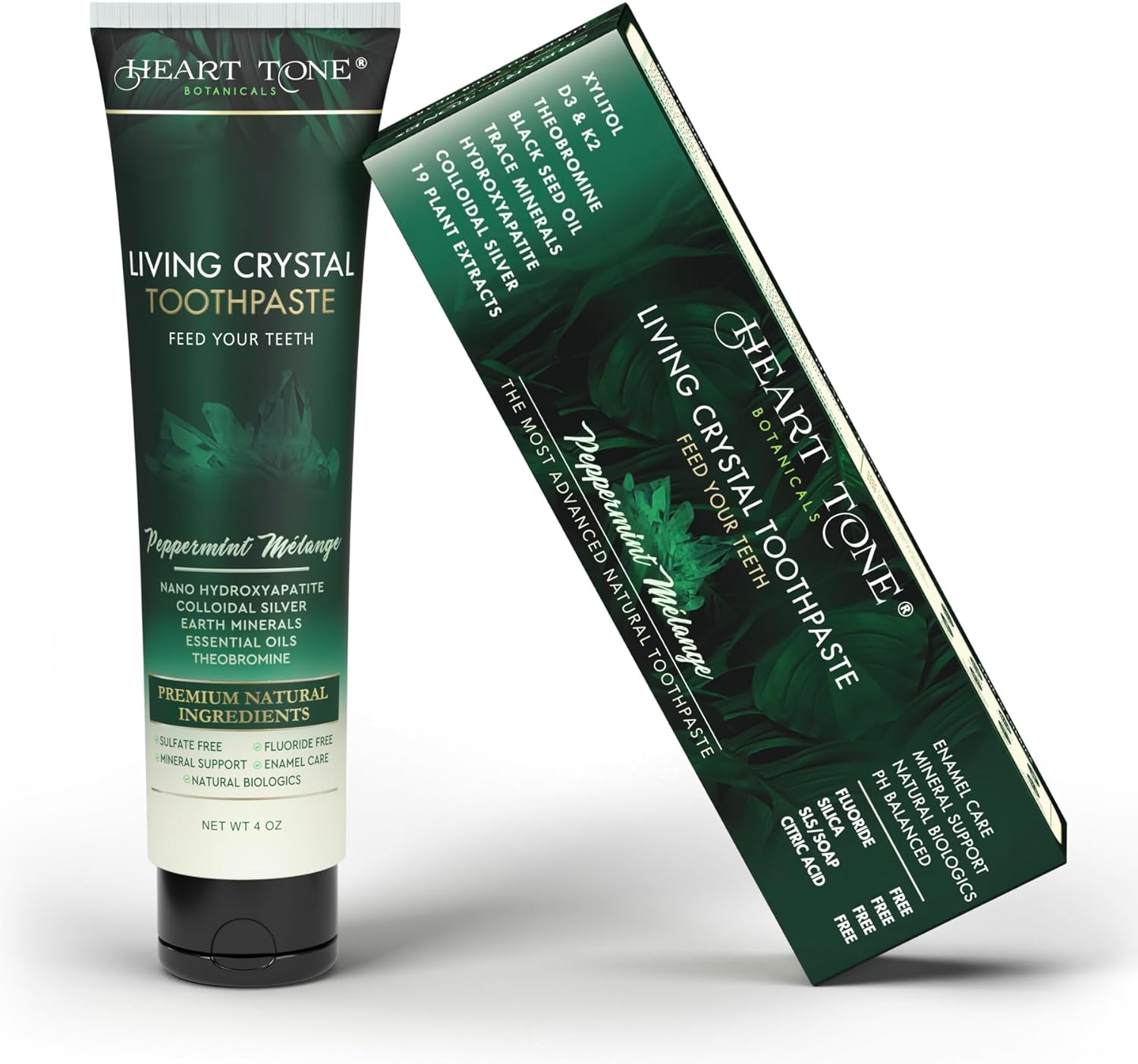
In Living Crystal Toothpaste, colloidal silver is one component of a multi-mineral formula — not a standalone active. It works alongside:
- Spherical Micro-Hydroxyapatite (mHAp) — to replenish mineral density in enamel
- Theobromine — a cacao-derived compound studied for its role in enamel support
- Colloidal Zinc (Zinc Citrate) — a proven breath-freshening and antimicrobial mineral
- Zeolite Clinoptilolite — volcanic mineral for gentle adsorption
- Xylitol — birch-derived sugar alcohol that starves cavity-causing bacteria
This mineral stack is why we call it a "crystal" toothpaste — because your enamel is literally made of hydroxyapatite crystals, and the formula is built around replenishing and protecting that mineral structure naturally.

The colloidal silver in this formula comes at a concentration designed for daily use — enough to support oral microbiome balance during a two-minute brush, not enough to overwhelm.
Colloidal Silver vs. Fluoride: A Different Philosophy
If you're switching away from fluoride toothpaste, you're not just swapping one ingredient — you're rethinking the entire philosophy of oral care.
Fluoride works by making enamel more resistant to acid. It's effective, but it's a synthetic ion that doesn't naturally occur in teeth. Colloidal silver, by contrast, doesn't modify enamel structure — it addresses the microbial side of the equation. Used in a formula with hydroxyapatite and theobromine, it becomes part of a comprehensive fluoride-free approach that covers both mineral and microbial support.
For a deeper look at the fluoride vs. natural remineralization debate, see our post: Hydroxyapatite vs. Fluoride: The Science-Backed Answer.
Is Colloidal Silver Toothpaste Safe for Daily Use?
Yes — with one important distinction: concentration matters. There's a meaningful difference between the therapeutic colloidal silver concentrations used in oral care products and the high-dose oral silver supplements that have generated safety concerns. The FDA's concerns about silver products have largely been directed at people consuming large amounts of silver orally as a supplement — not the topical, rinse-and-spit application of properly formulated toothpaste.
Living Crystal Toothpaste is designed to be used and rinsed, not swallowed. The colloidal silver works topically during the brushing process. This is consistent with how colloidal silver is used in medical-grade wound dressings — effective at the site, not systemic.
As with any oral care product, we recommend brushing twice daily, rinsing thoroughly, and using it as part of a complete oral hygiene routine that includes flossing and regular dental visits.
Pair It with Colloidal Silver Mouthwash
For a complete colloidal silver oral care routine, consider pairing Living Crystal Toothpaste with our Restorative Mouth Rinse — a 22-ingredient botanical mouthwash with colloidal silver as its signature active. Together, they cover both mechanical cleaning (toothpaste) and rinse-based microbiome support (mouthwash) with consistent colloidal silver throughout.
It's the simplest way to build a fully coherent fluoride-free routine using ingredients you can actually trace back to a source.
The Bottom Line
Colloidal silver toothpaste isn't a fringe idea — it's a natural oral care ingredient with a legitimate place in a well-formulated daily routine. At the right concentration, it supports oral microbiome balance, works alongside mineral actives like hydroxyapatite and theobromine, and gives your formula antimicrobial coverage without the harsh disruption of synthetic antiseptics.
Living Crystal Toothpaste uses colloidal silver as one part of a 30+ ingredient formula designed from the ground up to support enamel, balance, and freshness — naturally.

Leave a comment
This site is protected by hCaptcha and the hCaptcha Privacy Policy and Terms of Service apply.