

Arginine Toothpaste: What It Does and Why Natural Brands Are Adding It
If you've been exploring natural toothpaste options, you may have started seeing a new ingredient on the label: L-arginine. It sounds like something from a sports nutrition label — and that's because it is. But arginine has been showing up in oral care formulas for a good reason, and if you're switching away from conventional toothpaste, it's worth understanding what this amino acid actually does in your mouth.

This post breaks down what arginine toothpaste is, what the research says, and how it fits into a natural fluoride-free routine.
What Is Arginine in Toothpaste?
L-arginine is an amino acid — one of the building blocks of protein — that occurs naturally in many foods, including nuts, seeds, meat, and dairy. It's produced by the body, but it's also found in natural dental formulas because of something specific it does in the oral environment.
When arginine is metabolized by bacteria in the mouth, one of the byproducts is ammonia, which raises the local pH. That matters because tooth enamel demineralizes in acidic environments. The bacteria most associated with cavities — Streptococcus mutans — thrive in low pH conditions. Anything that keeps the mouth closer to neutral pH for longer creates a less hospitable environment for decay-causing bacteria.
Arginine works with your mouth's natural chemistry — supporting the bacterial balance that keeps enamel in a less acidic, more mineral-friendly environment.
This is why arginine has attracted attention in clinical oral care research and why it's now finding its way into advanced natural toothpaste formulas.
Arginine vs. Fluoride: Different Mechanisms
It's worth being clear about what arginine does vs. what fluoride does — they work through entirely different pathways.
Fluoride works by incorporating itself into enamel crystals to form fluorapatite, a harder mineral compound. It's effective at reducing acid solubility, but it requires fluoride ions to be present in the enamel structure — and at high doses it carries risks, which is why many families are now looking for fluoride-free alternatives.
Arginine doesn't replace enamel minerals. Instead, it modulates the oral microbiome environment — specifically by supporting bacteria that produce alkali (ammonia) and outcompeting acid producers. Some research has looked at arginine bicarbonate specifically as an active ingredient in clinical toothpaste formulations.
Neither replaces the other entirely. But for people committed to a fluoride-free routine, arginine offers a scientifically grounded supporting role — especially when combined with remineralizing minerals like hydroxyapatite.
How Arginine Works with Hydroxyapatite
This is where things get interesting for natural oral care. The most cutting-edge fluoride-free approach pairs arginine with micro-hydroxyapatite (mHAp) — the same calcium phosphate mineral that makes up your tooth enamel.
Here's the logic:
- Hydroxyapatite provides the mineral substrate — it can physically integrate with enamel to replenish surface mineral density
- Arginine supports the pH environment — keeping the oral chemistry closer to neutral so that remineralization can occur and isn't constantly being undone by acid attacks
Together, they address two sides of the same challenge: the minerals you need to rebuild enamel, and the environment that determines whether rebuilding is even possible.

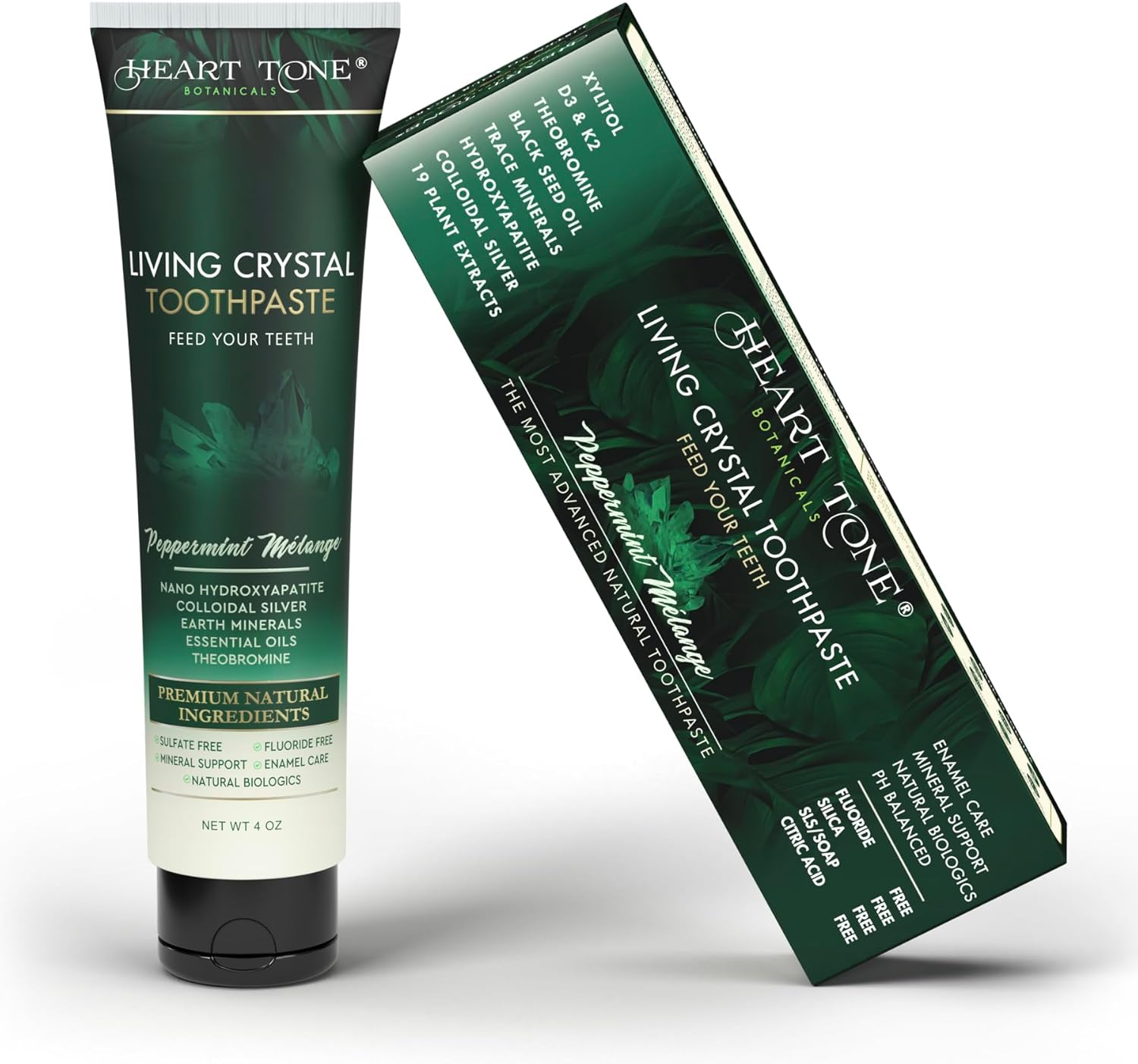
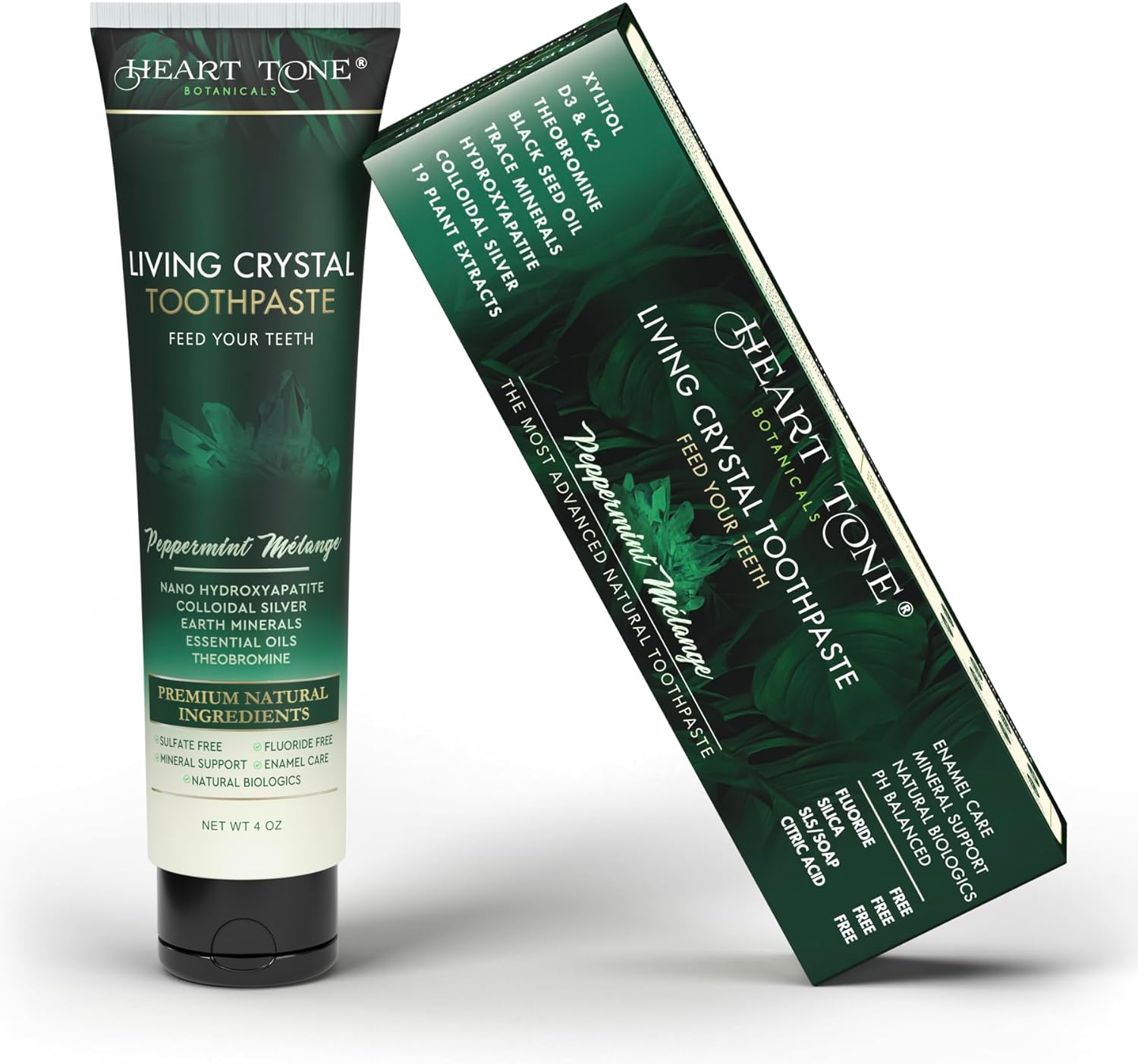
This is exactly why formulas like Living Crystal Toothpaste include both — spherical micro-hydroxyapatite and L-arginine in the same formula, alongside theobromine, colloidal silver, and 30+ botanical extracts from Heart Tone Botanicals' biodynamic farm in Vero Beach, Florida.
What Does "Arginine Toothpaste" Actually Feel Like to Use?
This is a fair question. Arginine itself is essentially tasteless in the concentrations used in toothpaste. You won't notice it directly. What you may notice is that the overall formula feels balanced — no harsh chemical taste, no burning sensation, no that-squeaky-clean-feeling-that-means-SLS-stripped-your-enamel.
Natural toothpastes that combine arginine with xylitol (a birch-derived sweetener that also supports a balanced oral microbiome) and botanical essential oils tend to have a clean, herb-forward mint flavor without artificial sharpness.
The Living Crystal formula uses Xylitol, Peppermint, Spearmint, Wintergreen, Cornmint, and Organic Cinnamon Bark for flavor — all of it naturally derived. So while the arginine is doing its pH work behind the scenes, you're tasting the botanical complexity of a well-crafted natural oral care formula.
Who Should Consider Arginine Toothpaste?
Not everyone needs to seek out arginine specifically. But it's worth considering if you:
- Are switching away from fluoride toothpaste and want a science-backed natural alternative
- Have a history of cavities or feel like your enamel has been weakening
- Eat a diet higher in acidic foods or beverages (coffee, citrus, kombucha, sparkling water)
- Grind your teeth or have sensitive teeth from enamel wear
- Want a formula that works with your body's natural oral chemistry rather than overriding it
It's also a good fit for people who are already using a botanical oil pulling rinse or a natural mouthwash as part of a complete oral care routine — because all of those practices support the same goal: a balanced, mineral-rich oral environment.
The Full Stack: What a Natural Oral Care Routine Looks Like
If you're building a fluoride-free routine around remineralization and microbiome balance, here's how these ingredients fit together:
- Brush with arginine + hydroxyapatite toothpaste — mineral replenishment + pH buffering
- Oil pull 2-3x per week — lipid-phase cleansing to complement water-phase brushing
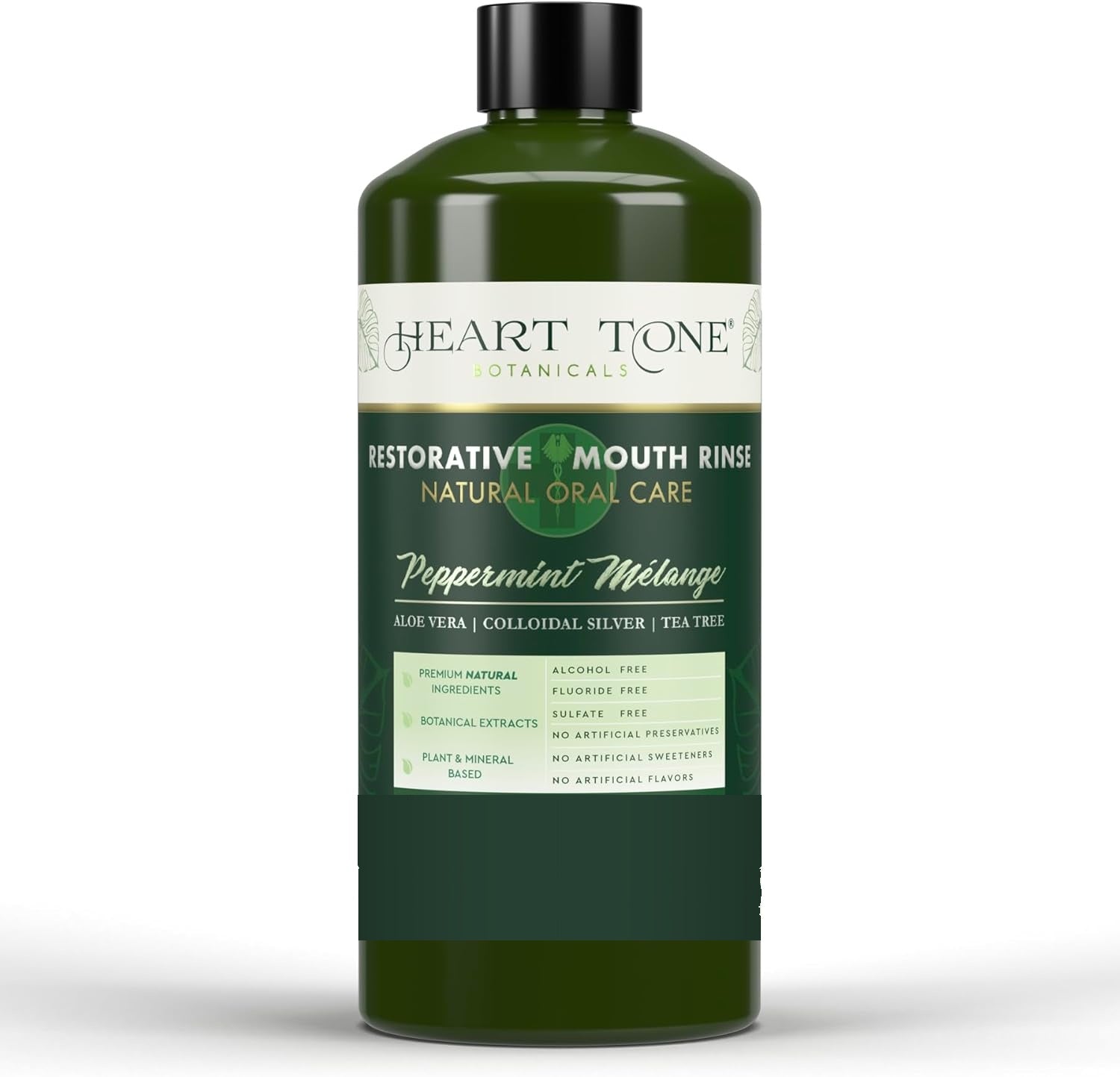
- Rinse with a botanical alcohol-free mouthwash — colloidal silver and aloe for microbiome support without the sting
This is the three-step routine behind the Heart Tone Botanicals Oral Care collection — each product designed to work at a different layer of your oral ecology.
Reading the Label: What to Look For
When shopping for an arginine toothpaste, the ingredient list tells the real story. Look for:
- L-Arginine — listed by INCI name (not just "amino acid complex")
- Hydroxyapatite or micro-hydroxyapatite — the mineral form that matches enamel
- Xylitol — ideally birch-derived
- No SLS (sodium lauryl sulfate) — a foaming agent that can irritate gum tissue
- No artificial flavors or sweeteners
If you see "arginine bicarbonate" specifically, that's a pharmaceutical-grade form used in clinical studies. In food-grade natural formulas, L-arginine achieves a similar oral environment effect through the body's natural metabolic pathways.
The Bottom Line
Arginine toothpaste represents a thoughtful, science-backed approach to natural oral care — one that works with your mouth's chemistry rather than suppressing it. When paired with remineralizing hydroxyapatite, it creates a synergistic formula that addresses both the mineral supply your enamel needs and the pH environment that determines how well that mineralization can happen.
If you're building a fluoride-free routine that actually delivers, it's an ingredient worth looking for — and one you'll find in Living Crystal Toothpaste, Heart Tone Botanicals' flagship oral care formula, handcrafted on a biodynamic farm in Vero Beach, Florida.

Leave a comment
This site is protected by hCaptcha and the hCaptcha Privacy Policy and Terms of Service apply.