

Walk into any beauty store and you'll see "clean beauty" on half the shelves. But what does the label actually mean — and does it matter for your skin's health?

The answer depends entirely on what's in the formula, not who put the word "clean" on the packaging. Here's how to tell the difference, what to look for in an ingredient list, and why a genuinely botanical formula behaves differently on your skin than a conventional one.
What "Clean Beauty" Actually Means (And What It Doesn't)
There's no FDA definition of clean beauty. No regulatory body enforces it. That means brands can print "clean," "natural," "pure," or "non-toxic" on anything — regardless of what's inside.
True clean formulation is defined by ingredient selection:
- No synthetic fragrance (often listed as "fragrance" or "parfum" — a catchall that can contain hundreds of unlisted compounds)
- No PEGs, parabens, phthalates, or formaldehyde-releasing preservatives
- No petroleum-derived emollients (mineral oil, petrolatum) that sit on skin without absorbing
- No synthetic colorants
- No sulfates in cleansers that strip barrier lipids
What it doesn't automatically mean: "fragrance-free" (botanical essential oils can be irritating too), "hypoallergenic" (plant extracts cause reactions in some people), or "better than prescription treatments."
Clean formulation is about removing unnecessary synthetic load — not about making medical claims.
How Conventional Skincare Actually Works
Conventional skincare isn't inherently harmful. Most formulas start with water, add a thickening agent, then use synthetic emulsifiers to blend in actives and oils. Parabens or phenoxyethanol preserve the mixture. Synthetic fragrance improves the experience.
The result is stable, shelf-stable, and effective at delivering certain actives. The tradeoff: you're also delivering the synthetic carrier system — the emulsifiers, preservatives, and stabilizers that keep the formula together. Over years of daily use, the question is whether that cumulative synthetic exposure matters. Research is ongoing, and "precautionary principle" clean formulation says: if you can get the same result without it, why use it?
What a Genuinely Botanical Formula Does Differently
The difference isn't marketing language — it's chemistry. A formula built on plant oils behaves differently on skin than one built on water and synthetic emollients.
Plant oils carry fat-soluble vitamins and antioxidants in their natural matrix. Sea buckthorn oil delivers carotenoids (beta-carotene, lycopene), vitamin E tocopherols, and omega-7 fatty acids in a naturally bioavailable form. You can't replicate that with a synthetic vitamin E capsule dropped into a water-based cream.
CO2-extracted botanicals retain the full phytochemical profile. Conventional extraction uses heat or solvents that degrade heat-sensitive compounds. CO2 extraction at low temperatures preserves the complete profile — including the minor compounds that enhance the major ones. Carrot CO2, for example, retains the full carotenoid and vitamin A precursor fraction that steam distillation destroys.
Fermented ingredients penetrate the barrier more effectively. Fermentation breaks down large molecules into smaller ones with better skin penetration. Fermented rice water delivers ferulic acid and amino acids that unfermented rice water cannot.
A botanical formula isn't better because it's "natural" — it's better when it uses ingredients that do something specific, in a form the skin can actually use.
Reading the Ingredient List: What Actually Tells You Something
Cosmetic ingredients are listed in descending order of concentration (INCI list). Here's how to read it:
Position of water: If "Aqua" or "Water" is first, the formula is water-based. That's not automatically bad — hyaluronic acid and niacinamide work better in water-phase formulas. But a water-first moisturizer is mostly water. An anhydrous (waterless) formula delivers concentrated botanicals without dilution.
Identify the functional actives: Look for ingredients with known mechanisms — bakuchiol (retinol alternative, verified to is traditionally valued in botanical skincare expression), niacinamide (skin nourishment, brightening, pore minimization), copper peptide GHK-Cu (collagen signaling), hyaluronic acid (water retention). If you see only vague "botanical extract" without a known mechanism, that's marketing.
Check preservative systems: Parabens (methylparaben, propylparaben) are the conventional choice. Clean alternatives include radish root ferment filtrate and lactobacillus ferment — both functional preservation systems that also deliver skin benefits. Phenoxyethanol is a middle-ground choice used by many "clean" brands; it's synthetic but well-studied.
Fragrance: The word "fragrance" without a parenthetical disclosure can mean anything. "Parfum (lavender, geranium, ylang ylang)" is meaningfully different — you know what you're getting. Essential oil disclosure by name is the clean standard.
The Ingredient Differences That Matter Most for Skin Health
Oils: Not All Botanical Oils Are Equal
Moringa oil is one of the most stable botanical oils (high oleic acid content, low oxidation rate). It absorbs quickly without leaving residue and delivers antioxidants directly to skin cells. Conventional mineral oil creates an occlusive barrier but adds no biological value — it just holds water in.

Prickly pear seed oil has one of the highest vitamin E concentrations of any plant oil — 150% higher than argan oil — plus betalains (antioxidant pigments) and unsaturated fatty acids that support barrier integrity. You won't find those compounds in synthetic emollients.
Rosehip oil delivers trans-retinoic acid (vitamin A precursor) and linoleic acid, which is depleted in acne-prone skin. Sea buckthorn delivers omega-7 (palmitoleic acid), which is naturally present in skin sebum and declines with age.
Botanical Brightening vs. Synthetic Lightening
Conventional brightening often relies on hydroquinone (effective but potentially mutagenic at high concentrations, with overuse risks). Clean botanical alternatives that have clinical backing:
- Kojic acid dipalmitate — esterified form of kojic acid (derived from fermented rice/mushrooms) that inhibits tyrosinase (the enzyme that drives melanin production) with better skin penetration than standard kojic acid and no irritation at effective concentrations
- Licorice root extract (glabridin, a botanical compound found in licorice root traditionally used in skincare,
- Carrot CO2 extract — delivers beta-carotene and retinol precursors that support cell turnover, the foundational mechanism of brightening
What to Look for in a Genuinely Botanical Facial Care Routine
A complete botanical routine covers four functions: cleansing, toning, treating, and moisturizing. Each step should do something specific with ingredients you can verify.
Toning: Hydrosols (floral waters) are the clean alternative to alcohol-based toners. Rose hydrosol and orange blossom hydrosol deliver mild astringency with no barrier disruption. Look for snow mushroom extract (tremella fuciformis polysaccharide) — it holds up to 500x its weight in water, outperforming hyaluronic acid by molecular weight for surface hydration.
Serum/treatment: Active ingredients including niacinamide, copper peptide, DMAE, and fermented probiotic filtrates do the functional work — brightening, firming, barrier building. This is where you want the highest concentration of verified actives.
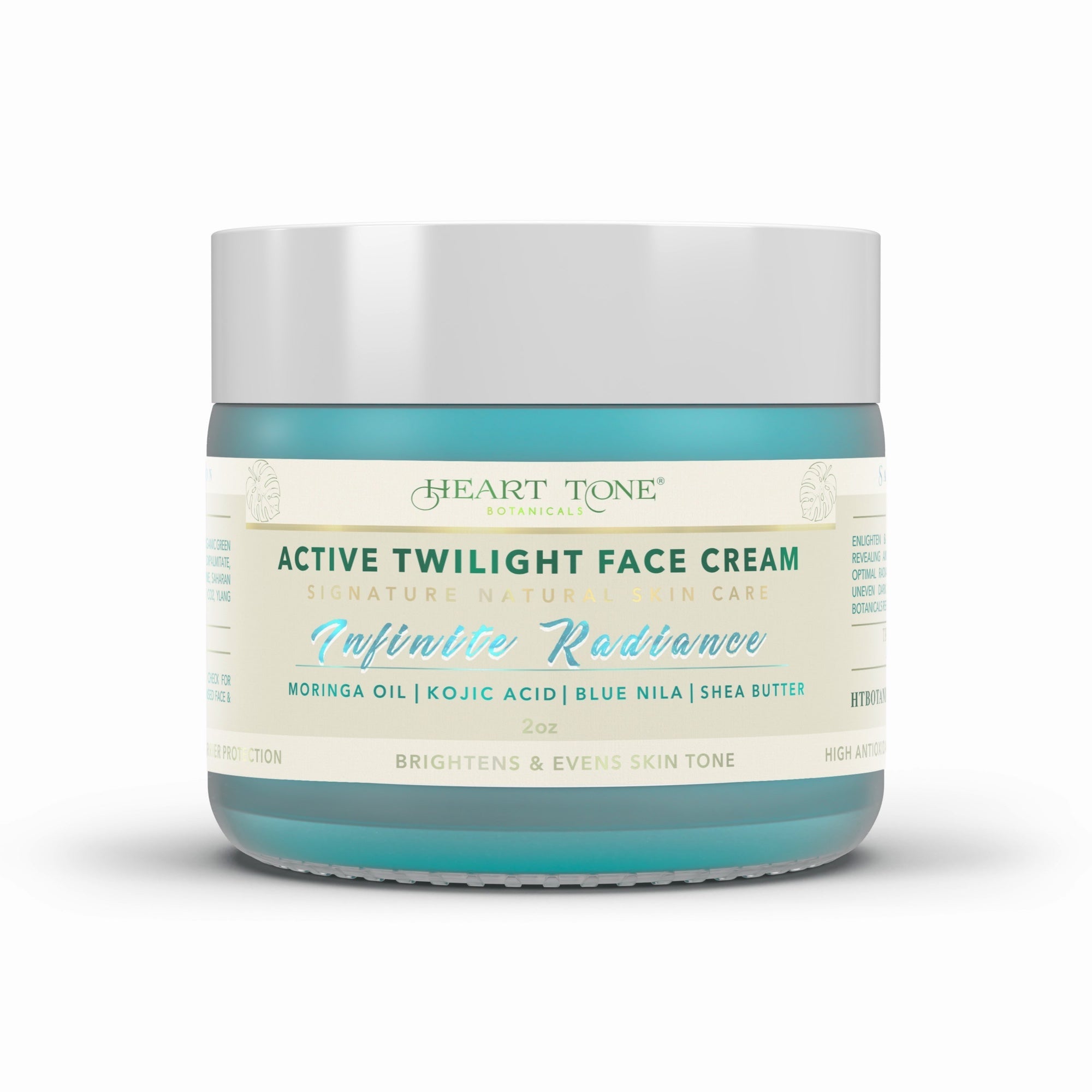
Moisturizer: A waterless, oil-based formula delivers concentrated plant actives without dilution. Look for bakuchiol as the retinol alternative — clinical trials show equivalent collagen expression and wrinkle reduction at 0.5% bakuchiol vs. 0.5% retinol, with no photosensitivity and no irritation on sensitive skin.
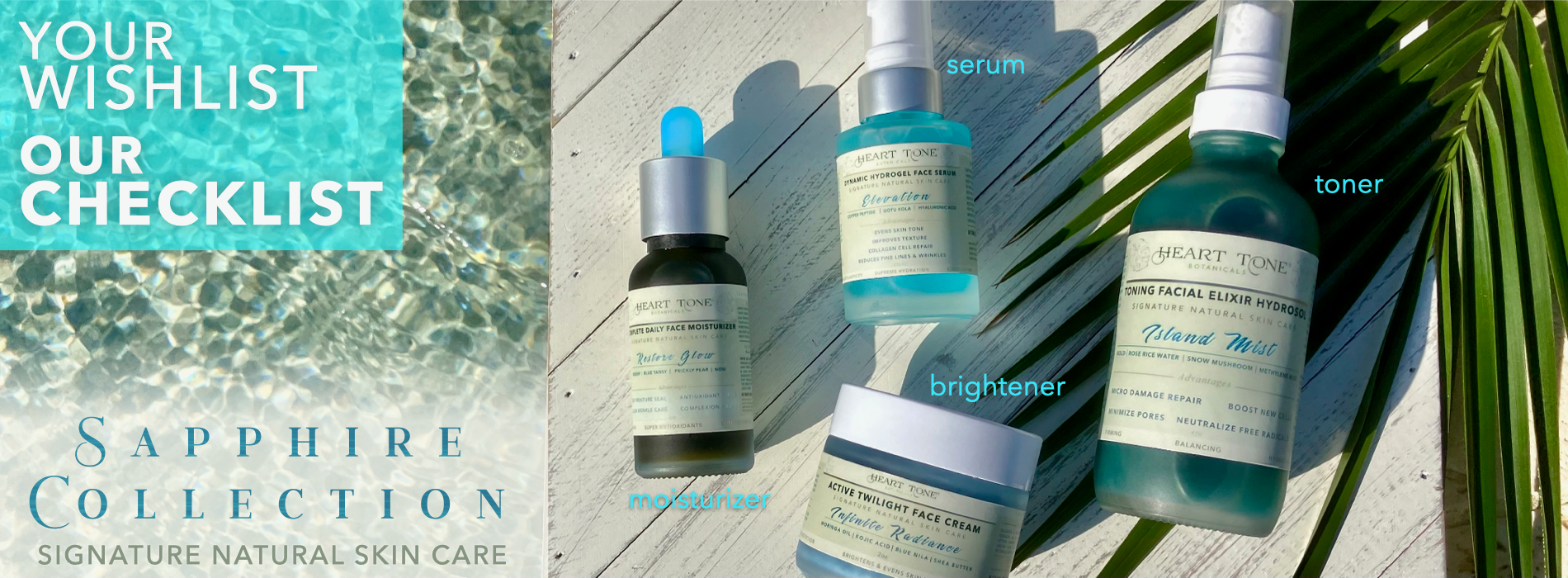
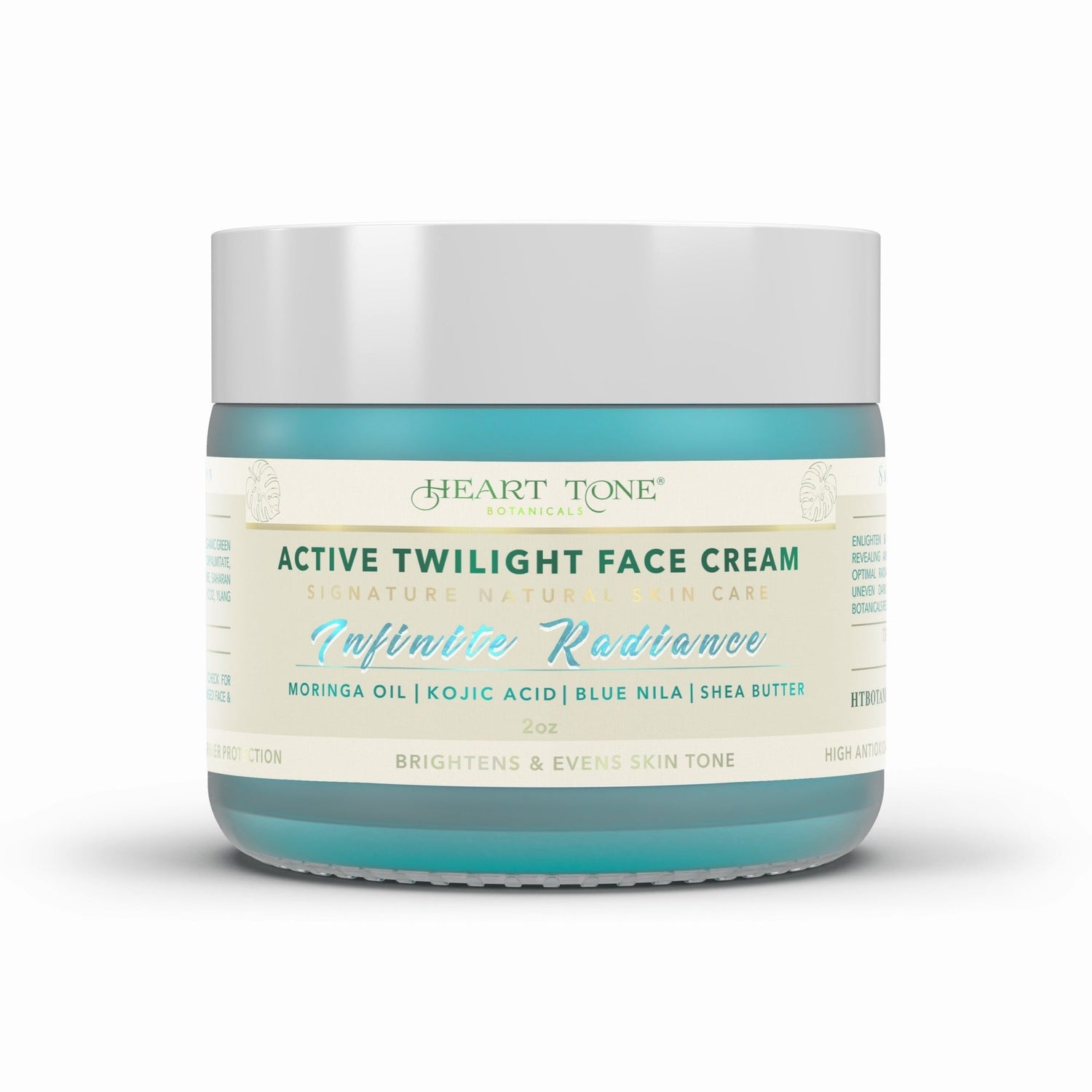
Island Mist Toning Elixir Complete Daily Face Moisturizer Active Twilight Face Cream
What "Farm-Grown" Actually Changes in a Formula
Most botanical skincare brands source ingredients from commodity suppliers — the same moringa from the same bulk supplier, regardless of how it's described on the packaging.
Farm-sourced ingredients go through a different production chain: the botanicals are grown on a known property, harvested at optimal potency, and processed without a long supply chain degrading the active compounds. Aloe vera grown and processed on-site doesn't sit in storage for months before extraction. Moringa harvested at leaf maturity has higher flavonoid concentration than moringa grown for volume yield.
This matters most for heat-sensitive compounds — the ones that degrade the fastest between harvest and extraction. Polyphenols, carotenoids, and essential oil terpenes all lose potency through time and heat exposure. The shorter the chain, the more of those compounds reach the finished formula.
The Bottom Line: How to Know You're Getting What You're Paying For
Three questions to ask about any "clean" formula:
- Is the INCI list fully disclosed? If a brand won't show you the full ingredient list, that's an answer.
- Can you identify the functional actives and their mechanisms? "Botanical extract" is not an active. Bakuchiol, kojic acid dipalmitate, niacinamide, and copper peptide are.
- Are the claims ingredient-matched? "Brightening" claims should trace to ingredients with tyrosinase-inhibiting or cell-turnover mechanisms. "Firming" claims should trace to collagen-signaling actives (copper peptide, DMAE, bakuchiol).
Clean beauty isn't a marketing claim — it's an ingredient standard. Start with the INCI list and work backwards from there.
Full INCI transparency on every product. Farm-sourced botanicals. No synthetic fragrance, parabens, or petrochemical emollients.
Shop Facial CareFrequently Asked Questions
Is clean beauty actually better for sensitive skin?
Clean formulas eliminate common irritants — synthetic fragrance, sulfates, harsh preservatives — that are top triggers for contact dermatitis and sensitization. For sensitive skin, removing those variables is genuinely beneficial. But "clean" doesn't mean reaction-free; botanical essential oils can also cause reactions in some individuals. Patch testing applies to botanical formulas too.
Do natural ingredients work as well as synthetic ones?
It depends on the ingredient. Bakuchiol has clinical trial equivalency to retinol. Kojic acid dipalmitate is studied for brightening. Hyaluronic acid from fermentation is identical to synthetic HA. But "natural" chamomile water as the first ingredient is not doing what a 5% niacinamide formula does. The mechanism, not the origin, is what matters.
How do I know if a "clean beauty" product is genuinely clean or just marketed that way?
Request or look up the full INCI list. Check for synthetic fragrance ("fragrance" or "parfum" without further disclosure), PEG derivatives (PEG-100 stearate, etc.), and petroleum-derived emollients. If the first ingredient is water and the brand claims high botanical content, ask what concentration those botanicals appear at. Ingredients past position 15-20 in most formulas appear at trace concentrations.
What's the difference between "natural" and "organic" in skincare?
"Natural" has no regulatory definition in cosmetics. "Organic" (USDA Certified Organic) does — it means the agricultural ingredient was grown without synthetic pesticides and using certified organic farming methods. A formula can be 99% water and 1% organic botanical extract and still carry an "organic" label on the front. Look for what percentage of the formula is organic, not just whether the word appears.
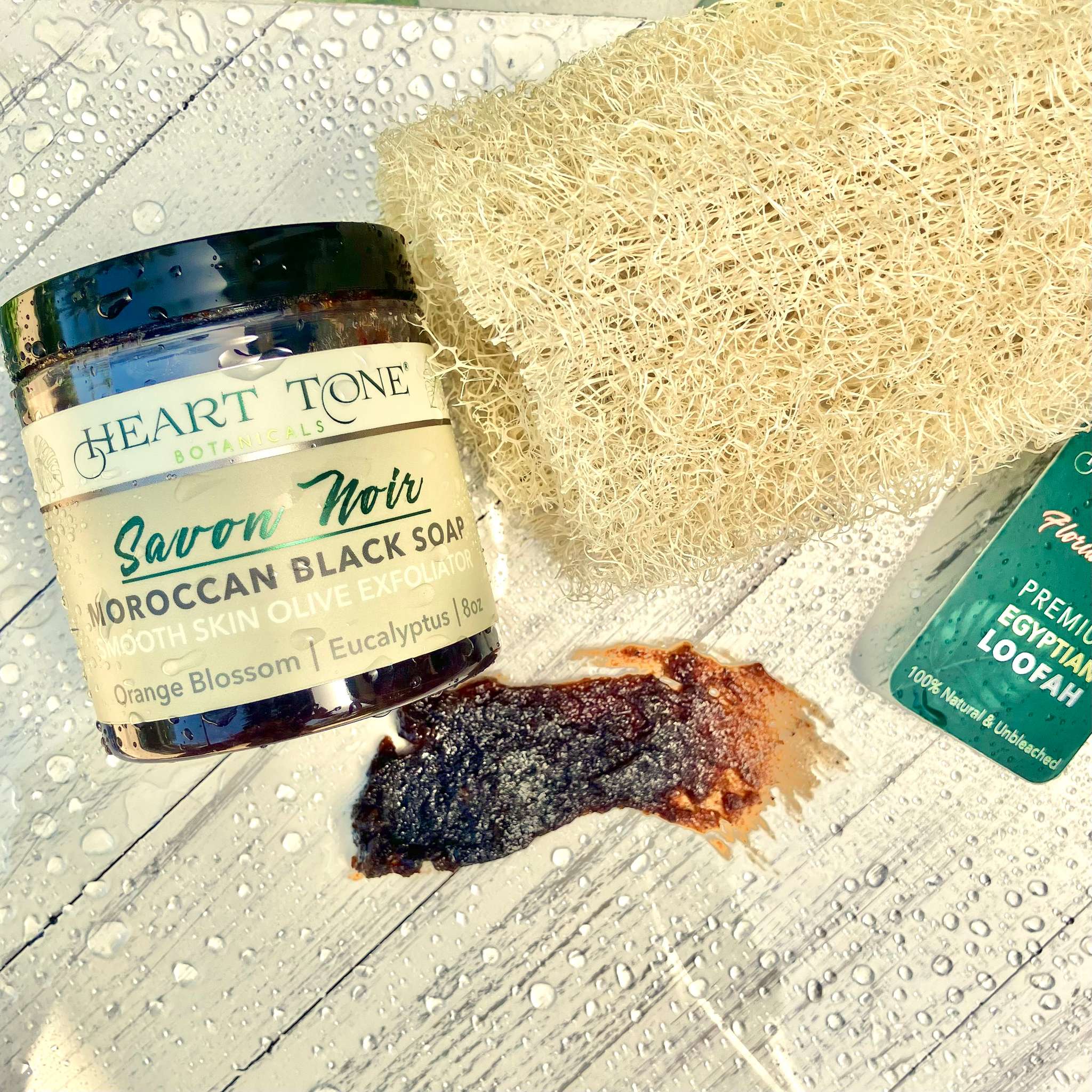

Leave a comment
This site is protected by hCaptcha and the hCaptcha Privacy Policy and Terms of Service apply.