

Bamboo Toothbrush: Why 10,000 Bristles and a Sustainable Handle Actually Matter
You switched to natural toothpaste. You ditched the fluoride. But you're still brushing with a plastic toothbrush that will outlive your grandchildren in a landfill. If that thought bothers you — it should. And there's an easy fix.

A bamboo toothbrush isn't just an eco-feel-good swap. The right one actually cleans better, feels gentler on sensitive gums, and pairs perfectly with the natural oral care routine you've already built. Here's what matters, what doesn't, and why ultra-fine bristle count is the spec nobody talks about — but should.
What Makes a Bamboo Toothbrush Actually Different
Not all bamboo toothbrushes are equal. The handle material gets most of the attention, but the bristles are what determine whether your teeth actually get clean.
Standard toothbrushes ship with relatively coarse nylon bristles — effective, but rough on enamel and gum tissue if you brush too hard (which most people do). Ultra-fine bristle toothbrushes flip that equation: more bristles, each dramatically thinner, so you get thorough coverage with dramatically less abrasive pressure.
Heart Tone's Bamboo Toothbrush uses 10,000+ ultra-fine bristles on an ergonomic biodegradable bamboo handle. That bristle density isn't a marketing number — it's the difference between bristles that sweep across enamel and bristles that actually get into the grooves and margins around each tooth.
Why Bristle Softness Matters More Than You Think
The American Dental Association recommends soft-bristle toothbrushes for most adults. Hard bristles feel more "scrubby" but they don't clean better — they just abrade more. Over time, aggressive brushing with stiff bristles is one of the leading causes of:
- Enamel erosion — the outer layer of your tooth literally wears away
- Gum recession — gum tissue pulls back, exposing sensitive root surfaces
- Increased sensitivity — once enamel and gum tissue are compromised, cold and heat hit harder
Ultra-soft, ultra-fine bristles let you brush with proper pressure — firm enough to disrupt plaque, gentle enough not to damage the tissue you're trying to protect. This matters even more when you're using a a fluoride-free toothpaste like Living Crystal Toothpaste, because the active minerals need time in contact with tooth surfaces to work. Gentler brushing means longer dwell time, not less clean.
The Bamboo Handle: Biodegradable Without Compromise
Conventional toothbrush handles are made from polypropylene — a plastic that doesn't biodegrade. The EPA estimates Americans throw away more than one billion plastic toothbrushes per year. Every single one of those handles will persist in the environment for centuries.
Bamboo is one of the fastest-growing plants on earth — some species grow over three feet per day — making it one of the most renewable materials in existence. It's naturally moisture-resistant, active, and sturdy enough to function exactly like a conventional handle. When you're done with it, the handle can be composted or returned to the earth. The bristles are still nylon and need to be removed before composting (a small cost worth acknowledging), but the handle itself? Gone within months in a compost pile.

Who Should Use a Bamboo Toothbrush
The honest answer: almost everyone. But bamboo toothbrushes with ultra-fine bristles are especially worth considering if you:
- Have sensitive gums — ultra-fine bristles clean effectively without irritating already-tender tissue
- Are using a a fluoride-free toothpaste — gentler pressure means better mineral contact time
- Have early gum recession — soft bristles are protective, not just comfortable
- Are building a fully natural oral care routine — eliminating the plastic toothbrush is the logical next step after switching your toothpaste and mouthwash
- Have kids — gentle enough for sensitive young teeth and gums
How to Get the Most Out of Your Bamboo Toothbrush
Switching to bamboo doesn't change how you should brush — it just makes your technique matter a little more. A few basics:
- Two minutes, twice a day. Consistent timing matters more than pressure.
- 45-degree angle to the gumline. This is where most people miss — angle the bristles slightly toward the gum, not flat against the tooth.
- Light pressure, circular motion. Let the bristle count do the work. You don't need to scrub.
- Rinse and air dry upright. Bamboo is moisture-resistant but not waterproof — don't leave it lying in a puddle of water.
- Replace every 3 months or when bristles splay, whichever comes first.
Pairing Your Bamboo Toothbrush With the Right Products
A bamboo toothbrush is a great starting point, but it works best as part of a complete natural oral care routine. Pair it with:
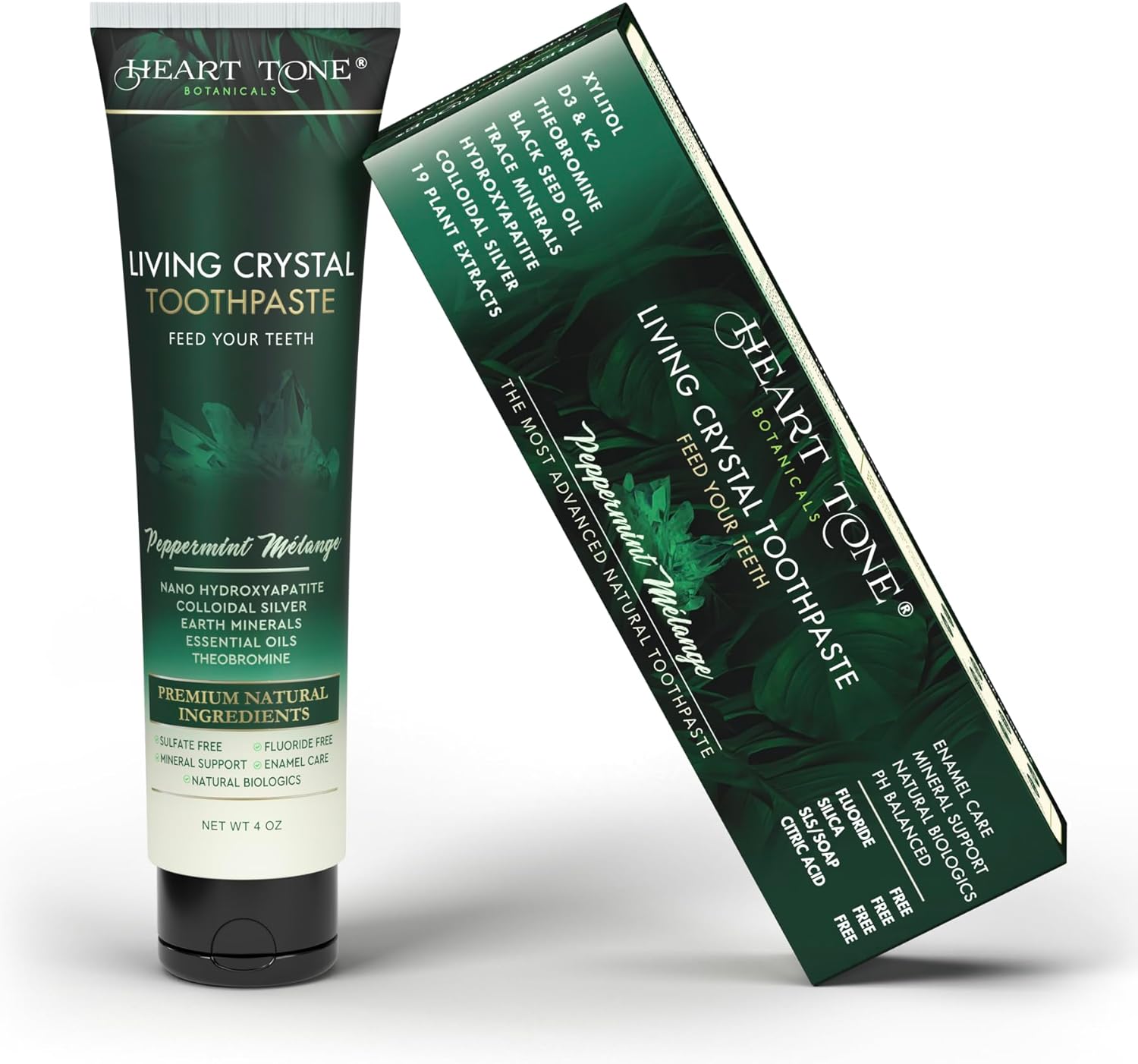
- Living Crystal Toothpaste — fluoride-free formula with micro-hydroxyapatite, theobromine, colloidal silver, and botanicals. No harsh abrasives to conflict with your ultra-soft bristles.
- Restorative Mouth Rinse — alcohol-free botanical mouthwash to complete the clean. Colloidal silver, aloe vera, and 22 botanicals.
- Antioxidant Oil Pull — use before brushing to loosen bacteria and start with a cleaner surface.
Building a natural oral care routine doesn't have to happen all at once. But if you've already made the switch to natural toothpaste, the bamboo toothbrush is the cleanest, simplest next step.
The Bottom Line
A bamboo toothbrush isn't a compromise. Done right — with ultra-fine, ultra-soft bristles on a biodegradable handle — it cleans better than a conventional brush, protects your gums and enamel more effectively, and eliminates one more piece of plastic from your bathroom and from the planet.
If you've been meaning to make the swap, this is your sign.
Shop the Heart Tone Bamboo Toothbrush →
Shop the related Heart Tone routine: Bamboo Toothbrush.

Leave a comment
This site is protected by hCaptcha and the hCaptcha Privacy Policy and Terms of Service apply.